
Hiring a Concrete Contractor Checklist: What to Review Before Your Project

What if the most important part of hiring a concrete contractor happens before the pour? A clear hiring a concrete contractor checklist helps bring the full delivery plan into view, from defining the concrete scope to coordinating related site work. It also helps you spot unclear boundaries, assumptions, or technical proposals that could leave gaps.
Comparing contractors can be difficult when each proposal describes the work differently. Schedule, safety, and site coordination add further considerations, especially when concrete work connects to excavation or other civil construction. Give those details the same attention as the finished surface or structure.
This checklist will help you define a complete project scope, understand how the work is planned and coordinated, and assess whether a contractor’s capabilities fit your needs. It covers scope, proposal details, execution planning, communication, and safety, so you can review the project as a whole rather than focusing on the concrete pour alone. For projects involving paving, slabs, structural concrete, or civil site work, a well-defined plan gives the team a practical basis for moving forward.
Key Takeaways
- Start your hiring a concrete contractor checklist by documenting the project’s location, intended use, desired outcome, and boundaries between concrete work and related site activities.
- Review how the proposed work will be sequenced, accessed, and coordinated, with safety and communication responsibilities addressed in the delivery plan.
- Compare proposals using consistent categories for included work, assumptions, exclusions, and information provided by the owner.
- Before award, align project documents, decision responsibilities, site access, and coordination milestones to support a clear mobilization plan.
- Match the full project scope to the concrete and civil capabilities it requires, such as paving, slab work, excavation, or drainage-related site work.
Start the Concrete Contractor Checklist by Defining the Project Scope
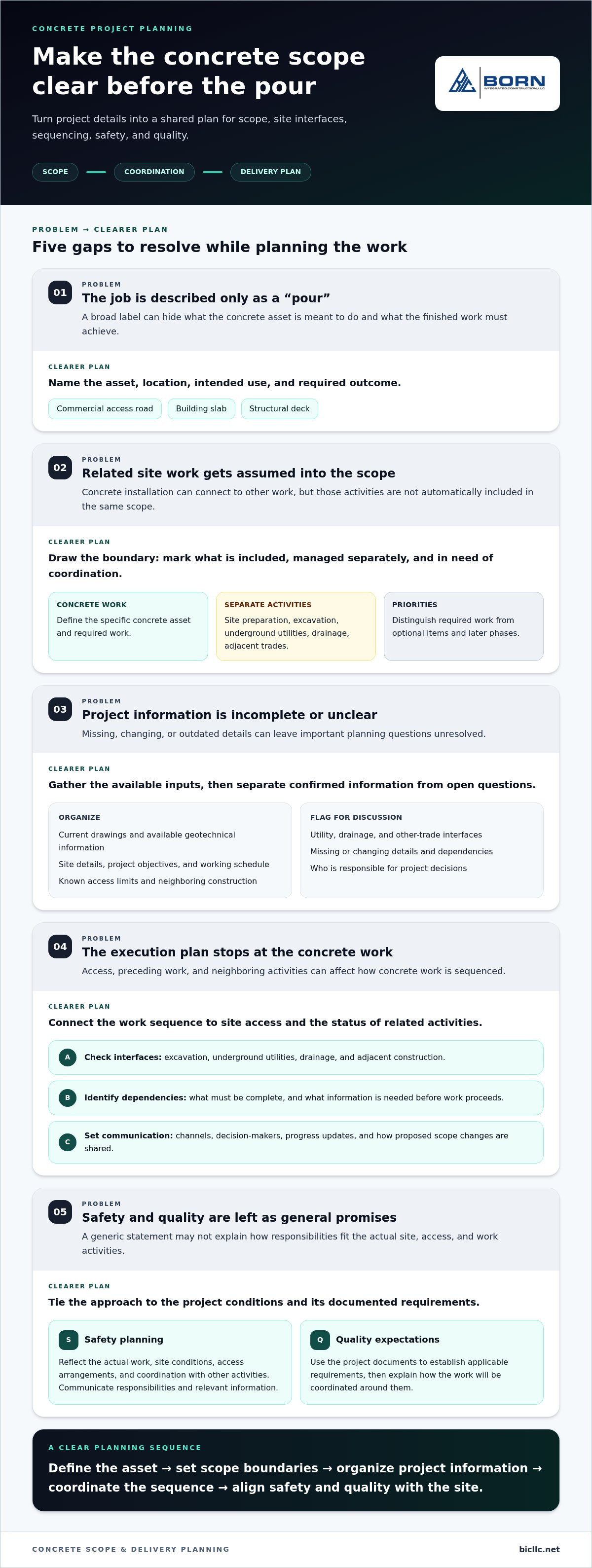
A clear scope gives the project team a shared basis for planning, pricing, and coordination. Before reviewing proposals, document the asset, its location, its intended use, and the outcome the work must achieve. For example, specify whether the project involves a commercial access road, a building slab, or a structural deck. A hiring a concrete contractor checklist is most useful when these basics are written down before technical proposals are compared.
Draw a clear boundary around the concrete work. Site preparation, excavation, underground utilities, drainage, and adjacent trades can affect concrete installation, but they are not automatically included in the same scope. Note which activities are included, which are managed separately, and where coordination is needed. Distinguish essential work from optional items or later phases so decisions reflect the project’s immediate requirements.
Which concrete scope does the project actually require?
Identify the type of concrete asset rather than describing the work only as a “pour.” Concrete paving, sidewalks and flatwork, slabs, podium decks, and structural concrete involve different project contexts and coordination needs. A garage foundation may call for cast-in-place or precast construction, depending on the project design. Reinforced concrete is a common construction material, but the project documents should establish the specific structural scope and requirements.
Keep the project category precise. Commercial paving and structural concrete are not interchangeable with residential driveway repair. They differ in purpose, setting, and overall scope. Defining the asset helps prevent a proposal from covering a related but unsuitable type of work.
What project information should be organized before planning?
Gather current drawings, available geotechnical information, site details, project objectives, and the working schedule. Record known constraints such as restricted access, neighboring construction, utility interfaces, drainage work, and dependencies on other trades. This information helps clarify where sequencing and coordination decisions may affect the concrete scope.
Separate known information from open questions. Mark which plans are current, identify missing or changing details, and record who is responsible for project decisions. This reduces ambiguity without assuming that every project has the same documentation or constraints. Where relevant, the concrete project portfolio can help illustrate the range of project types and provide context for discussing scope.
- Define: asset, location, intended use, and required outcome.
- Separate: concrete work from site preparation, utilities, drainage, and adjacent trades.
- Organize: available drawings, geotechnical information, schedule dependencies, and site constraints.
- Prioritize: required scope, optional work, and later-phase items.
Review the Concrete Contractor’s Execution, Safety, and Coordination Plan
A complete proposal should explain how the defined concrete scope will be carried out alongside the rest of the project. Review the sequence of work, site access needs, and interfaces with excavation, utilities, drainage, and adjacent construction. For example, a paving plan should account for whether the area is ready and whether other work could restrict access or affect the sequence.
Look for clear responsibilities at each interface. The plan should identify which activities depend on completed work by others, what information is needed before those activities proceed, and how the project team will handle constraints or changes. This makes the hiring a concrete contractor checklist useful beyond proposal review. It helps establish a shared understanding of how the work fits the larger schedule.
How should project coordination be represented in the plan?
Check whether the execution plan connects concrete activities to excavation, underground utilities, drainage, and adjacent trades. Note interfaces where drawings, site access, or the status of preceding work could affect sequencing. The plan should also identify communication channels, responsible decision-makers, and how progress updates or proposed scope changes will be documented and shared.
For Texas projects, use documented site conditions and project documents to guide planning. Applicable requirements may vary by location and project, so do not assume that one jurisdiction’s process or a standard sequence applies everywhere. Align the execution plan with the specific site and the requirements established for that project.
What should the safety and quality approach communicate?
Safety planning should reflect the actual work, site conditions, access arrangements, and coordination with other activities. Review how responsibilities and relevant information will be communicated to the people involved. Quality expectations should also be clear: project documents establish the applicable requirements, and the plan should explain how the work will be coordinated around them without relying on unsupported specifications or promises.
Born Integrated Construction identifies safety, integrity, efficiency, and quality as priorities in its work. For broader context on concrete industry organizations and resources, the National Ready Mixed Concrete Association Industry Links page brings together links to organizations across the industry. It can provide useful background, while project-specific expectations remain guided by the project documents and applicable requirements. Learn more about Born’s approach to safety and quality.
- Sequencing: Show how concrete work relates to preceding and adjacent activities.
- Access: Identify site constraints that may affect work areas or coordination.
- Communication: Define how progress, decisions, and scope changes are shared.
- Safety and quality: Tie planning and expectations to the project scope, site, and documents.
Compare Concrete Proposals by Scope, Assumptions, and Project Fit
Proposals are easier to assess when each one is compared against the same project requirements. A different price may reflect a different scope, an assumption about site readiness, or an exclusion that shifts work elsewhere. Separate those factors before weighing cost. The hiring a concrete contractor checklist should help decision-makers identify what each proposal covers and how well its approach fits the documented project.
Which scope details should be visible in a proposal?
Review whether the proposal describes the concrete work, labor, materials, and project management responsibilities in terms that match the plans. Note how it addresses interfaces with excavation, soil stabilization, detention ponds, and underground utilities. For example, a paving proposal should make clear how its scope relates to site readiness and related civil work, rather than leaving those connections implicit.
Record assumptions tied to drawings, site information, work sequencing, and other trades. If a proposal relies on a particular access condition or completed work by another party, capture that dependency so it can be considered alongside the included work. For paving projects, such as commercial concrete paving in Conroe, compare the proposal with the project’s actual location, documents, and delivery requirements.
How can decision-makers compare unlike proposals fairly?
Normalize the proposals by sorting their details into consistent categories. A simple comparison table can separate included work from assumptions and unresolved coordination items:
| Scope category | Proposal A | Proposal B |
|---|---|---|
| Included concrete work and project management | Record stated scope | Record stated scope |
| Assumptions about plans, site readiness, or sequencing | List dependencies | List dependencies |
| Exclusions and work assigned elsewhere | Identify exclusions | Identify exclusions |
| Owner-provided information or responsibilities | Record requirements | Record requirements |
| Open coordination points | Note unresolved items | Note unresolved items |
Use the same project documents as the reference for every column. Mark unclear items as unresolved rather than treating them as included. This helps distinguish a complete, well-aligned scope from one that leaves key interfaces or responsibilities open.
Assess project fit independently from price. Consider whether each proposed approach addresses the right concrete type, location, documented requirements, and delivery needs. A proposal that appears less costly may not cover the same work, while a higher-priced proposal may include activities that are not required. Compare like with like before drawing conclusions.
Use a Pre-Award Checklist for Texas Concrete Projects
Before moving from proposal review to project start, close the gaps between the selected scope, current documents, and field planning. A concise pre-award review helps decision-makers confirm that responsibilities and dependencies are understood before scheduling activities. Use this hiring a concrete contractor checklist to document the decisions that will guide the work, not just the proposal selection.
- 1. Align the scope. Reconcile the selected work with the current plans and known site information. Record any changes or open items that could affect what is included.
- 2. Confirm responsibilities. Document who coordinates site preparation, utilities, drainage, concrete activities, and adjacent trades. Identify who communicates progress and who has authority to make project decisions.
- 3. Resolve assumptions. Review material, access, sequencing, and site-readiness assumptions. Keep exclusions and unresolved interfaces visible rather than treating them as part of the agreed scope.
- 4. Review applicable requirements. For Texas locations, use the project documents and relevant local authority sources to identify requirements that apply to the specific site and work. Do not assume the same jurisdictional process applies to every location.
- 5. Plan mobilization. Establish the sequence for site access, concrete work, and coordination with adjacent activities. Align the schedule with the project’s known dependencies.
- 6. Organize records. Keep the approved scope, current plans, decision records, and coordination milestones accessible to the stakeholders who need them.
Prepare the team for execution
Mobilization planning should connect the agreed scope to practical site arrangements. Confirm that access expectations and coordination milestones are understood, and identify how project-specific safety and quality information will be communicated. If a structural slab is part of the work, such as a cast-in-place podium slab, keep its scope and related requirements distinct in the project records so they remain clear during planning.
Good records support consistent decisions. Keep approved documents together and make changes traceable, especially when revised plans or site information affect sequencing. This gives the project team a reliable reference as work advances and helps prevent informal decisions from creating conflicting expectations.
For a project that includes concrete construction or related civil work, review Born Integrated Construction’s approach as you consider the capabilities that fit the defined scope.
Choose a Concrete Partner Whose Capabilities Match the Full Project
The completed checklist should make the project’s needs clear: the concrete asset, required work, site conditions, coordination points, and decisions needed before mobilization. Use that record to identify the capabilities the project requires. A paving scope may involve related civil work, while a building project may call for slab, foundation, or structural concrete expertise.
How Born Integrated Construction aligns services with project scope
Born Integrated Construction provides concrete paving, slab work, cast-in-place concrete, precast garage foundations, and structural concrete for residential, commercial, and infrastructure developments in Texas. Its civil capabilities include excavation, detention ponds, soil stabilization, and underground utilities. These services can support projects where the defined concrete work connects directly to site preparation or other documented civil needs.
Project fit depends on the actual scope, not on a broad service label. A paving project with site preparation needs calls for a different combination of capabilities than a structural slab or garage foundation. The information gathered through your hiring a concrete contractor checklist gives the project team a practical basis for discussing those distinctions. Born identifies safety, integrity, efficiency, and quality as priorities in its work. Learn more about Born’s company approach and values.
What is a practical next step for project decision-makers?
Prepare a concise project brief before discussing the work. Include the project location, intended use, current plans, known schedule dependencies, access limitations, and coordination needs involving excavation, drainage, utilities, or adjacent construction. Bring forward open questions and distinguish required work from optional or later-phase items.
This preparation helps keep the conversation focused on scope and delivery. It also gives the project team a consistent starting point for reviewing responsibilities, interfaces, and planning needs. As the scope develops, keep relevant documents and decisions organized so the people involved are working from the same information.
If your project scope is defined, use these details to begin a focused discussion with Born Integrated Construction about the concrete and related civil work it requires. A clear brief helps establish the right questions and supports a measured path toward project planning.
Move Forward With a Clear Concrete Project Plan
A sound hiring a concrete contractor checklist starts with a defined scope and continues through execution planning, proposal comparison, and pre-award coordination. Clear boundaries around concrete work, site preparation, and related responsibilities help the project team compare proposals consistently and prepare for a more orderly start.
The right partner’s capabilities should align with the work at hand. Born Integrated Construction provides concrete paving, slabs, cast-in-place work, and precast garage foundations, along with civil site work and underground utilities when they relate to project needs. Its Texas coverage includes Houston, Austin, San Antonio, Dallas, Fort Worth, San Marcos, New Braunfels, Boerne, Beaumont, Conroe, the Woodlands, and Arlington.
Bring your project location, intended use, current plans, schedule, and known constraints to the next discussion. Discuss your concrete project with Born Integrated Construction and use a clear scope as the starting point for planning.
Frequently Asked Questions
What should be included in a concrete contractor checklist?
A practical hiring a concrete contractor checklist should cover the project’s location, intended use, required outcome, and defined concrete scope. Include current drawings, available site or geotechnical information, schedule dependencies, access constraints, and interfaces with excavation, utilities, drainage, and adjacent trades. Also record proposal assumptions, exclusions, decision responsibilities, safety and quality communication, and mobilization needs. This gives the team a consistent reference for reviewing scope and planning the work.
How do I compare commercial concrete contractor proposals?
Compare proposals against the same project documents and scope categories. Put included work, assumptions, exclusions, owner-provided information, and unresolved coordination points side by side. Then assess whether each approach fits the project’s concrete type, site conditions, and delivery needs. Consider price only after identifying whether proposals cover comparable work. A difference in price may reflect a difference in scope or responsibilities, so clarify those distinctions before making a selection.
What should a concrete contractor proposal include?
A useful proposal describes the work being offered, including relevant labor, materials, and project management responsibilities. It should make assumptions and exclusions understandable and identify dependencies involving site readiness, plans, access, sequencing, or other trades. For example, a paving proposal should clarify how the concrete scope relates to excavation or drainage work. The proposal should also provide a basis for discussing schedule coordination, communication, and project-specific safety and quality expectations.
How do I know whether a contractor’s concrete services fit my project?
Match the project’s defined asset and requirements to the contractor’s relevant capabilities. Paving, slab work, cast-in-place construction, precast garage foundations, and civil site work serve different project scopes. Born Integrated Construction serves Texas communities including Houston, Austin, San Antonio, Dallas, Fort Worth, San Marcos, New Braunfels, Boerne, Beaumont, Conroe, the Woodlands, and Arlington. Review whether the contractor’s capabilities align with the concrete work and related site needs documented for your project.
What should I review before starting a commercial concrete project in Texas?
Before work moves forward, reconcile the selected scope with current plans and known site information. Align decision-making responsibilities, access arrangements, schedule dependencies, coordination milestones, and project-specific safety and quality communication. Identify applicable jurisdictional requirements through authoritative project documents and relevant local sources, since requirements can vary by location and project. Keep approved scope documents and decision records accessible to the stakeholders who need them during planning and execution.
Can one construction partner handle concrete work and related civil site work?
One construction partner may be able to address both when its capabilities align with the documented scope. Born Integrated Construction provides concrete paving, slabs, cast-in-place work, precast garage foundations, and civil site work that includes excavation, detention ponds, soil stabilization, and underground utilities. For example, a project that connects paving with site preparation may involve both concrete and civil activities. Define the required responsibilities and interfaces so the proposed scope remains clear.
What project documents should I prepare before discussing concrete construction?
Prepare current plans, project objectives, the location and intended use, available geotechnical or site information, and the working schedule. Note known access limitations, neighboring work, utility or drainage interfaces, and dependencies on other trades. Separate confirmed information from open questions, and identify who will make project decisions. This organized brief helps frame a focused discussion about concrete scope, coordination, and the information needed to plan the work.