Precast Garage Foundation Contractor in Fort Worth: Engineering for 2026 Commercial Demands
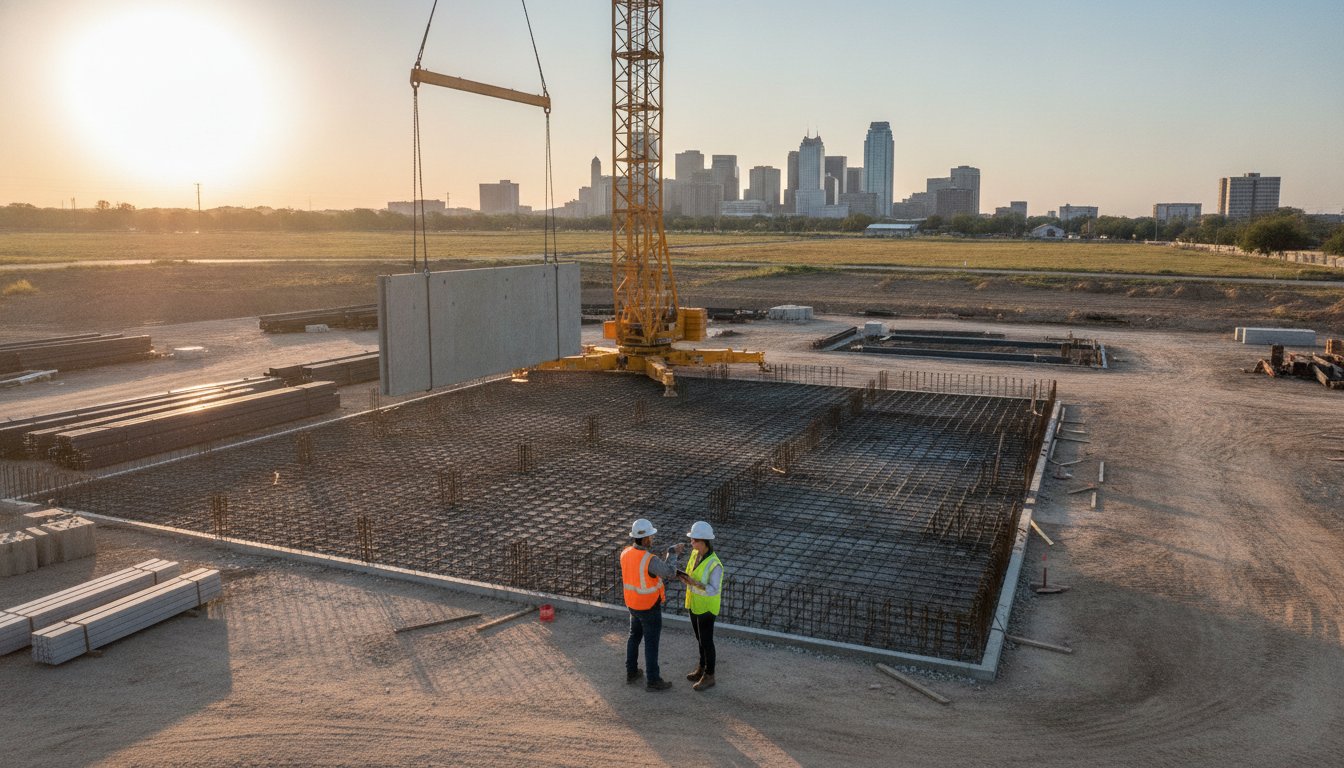
The stability of a commercial project in North Texas depends entirely on the predictability of its earliest phases, yet traditional construction methods remain vulnerable to the region's volatile weather and expansive clay. Selecting a seasoned precast garage foundation contractor Fort Worth allows developers to move the critical path into a controlled environment, effectively bypassing the delays that often plague on-site concrete work. You likely recognize that managing multiple vendors and unpredictable soil movement creates unnecessary risk for your 2026 project delivery. It's a challenge that requires a more disciplined, engineering-forward approach to sub-structure development.
This article demonstrates how precast garage foundations provide superior structural integrity and accelerated timelines while meeting the rigorous requirements of the 2021 International Building Code. You'll discover how off-site fabrication ensures consistent quality control that exceeds ASTM standards and provides a foundation specifically engineered to withstand the unique dynamics of Fort Worth soil. We provide a detailed look at the technical advantages of integrated structural systems and how they address the rising costs of skilled labor currently impacting the Dallas-Fort Worth Metroplex.
Key Takeaways
- Understand how urban density in the Dallas-Fort Worth metroplex is accelerating the adoption of precast structural systems to meet 2026 commercial demands.
- Learn the technical requirements for managing dead and live loads while navigating the unique challenges posed by Fort Worth's expansive clay soils.
- Discover why a specialized precast garage foundation contractor Fort Worth offers a more predictable schedule compared to traditional cast-in-place methods.
- Identify the essential site preparation and soil stabilization techniques required to support heavy precast components and prevent structural settlement.
- Explore the operational advantages of a turnkey civil and structural concrete partner in reducing vendor friction and ensuring project precision.
The Shift Toward Precast Garage Foundations in Fort Worth
As urban density across the Dallas-Fort Worth metroplex reaches new heights in 2026, the demand for structured parking has transitioned from a luxury to a necessity. Developers are increasingly moving away from traditional methods in favor of precast systems. A precast garage foundation involves structural elements cast in a controlled factory environment before being transported to the Fort Worth site for assembly. This method provides a level of predictability that field-poured concrete simply can't match. Engaging a qualified precast garage foundation contractor Fort Worth ensures that the sub-structure is built to handle the immense dead and live loads of a multi-level facility while accounting for the region's specific geological traits.
Schedule certainty has emerged as the primary priority for Texas developers this year. With skilled labor wages rising between 5% and 7% annually in the DFW area, every day lost to coordination errors or site inefficiencies carries a heavy financial burden. Precision engineering in a factory setting reduces material waste and minimizes the need for a large on-site workforce. This Precast concrete overview illustrates how the manufacturing process allows for tighter tolerances, ensuring that every component arrives at the site ready for immediate integration. It's a disciplined approach that prioritizes substance and long-term viability over the risks of traditional field work.
Understanding the Precast Advantage for Structured Parking
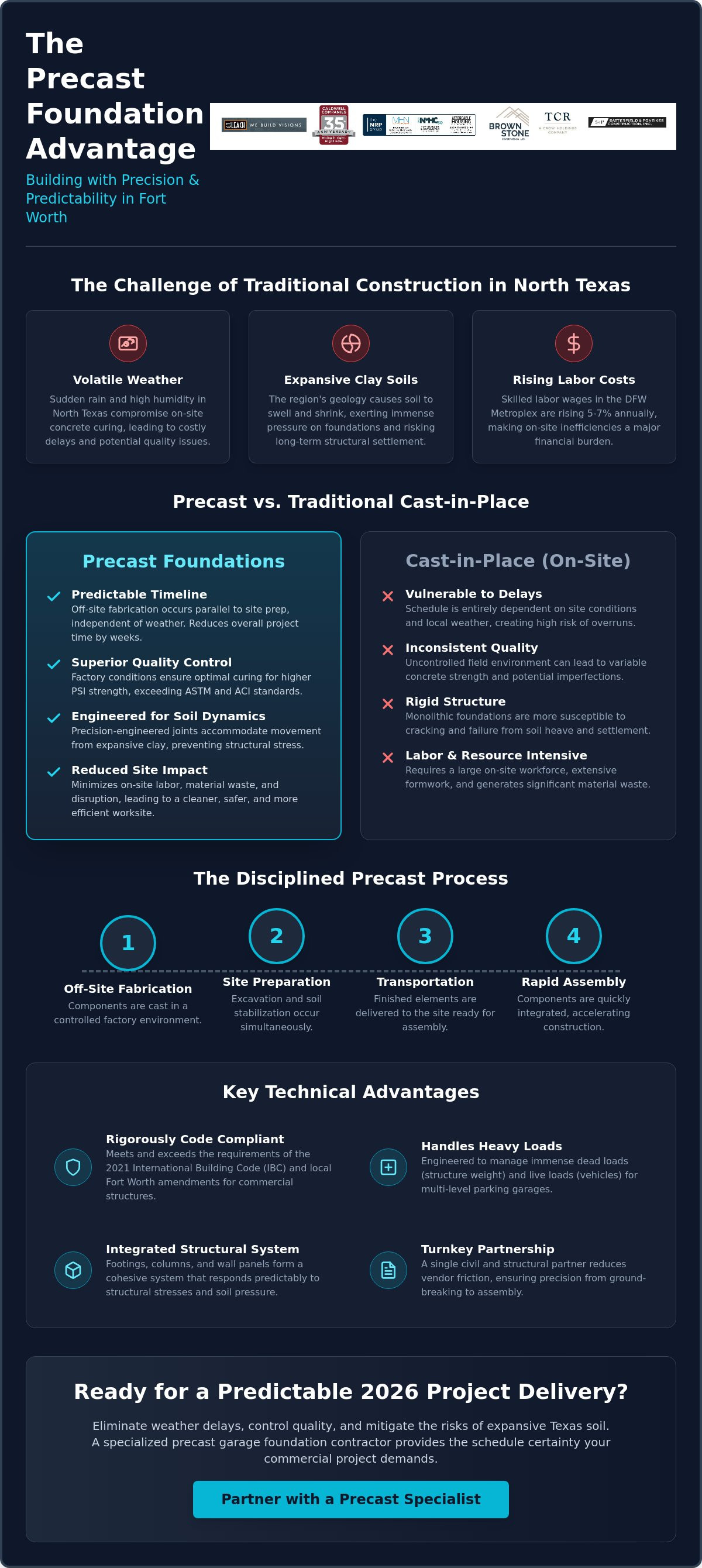
The primary technical benefit of precast elements lies in the curing process. Factory-controlled environments allow for optimal temperature and moisture regulation, which consistently produces higher PSI strength than concrete poured in the field. Field-poured slabs are often subject to the volatile North Texas spring, where sudden rain or high humidity can compromise the integrity of the mix. By moving production off-site, developers can reduce the overall construction timeline by several weeks. Components are fabricated while site preparation and excavation occur simultaneously, allowing for a rapid assembly phase that is largely independent of local weather patterns.
Meeting Fort Worth Building Codes and Standards
Adhering to the 2021 International Building Code (IBC) and local Fort Worth amendments requires a rigorous approach to structural testing. Every precast component undergoes strict quality control to meet ASTM and American Concrete Institute (ACI) standards before it leaves the facility. This ensures that the foundation can withstand the specific seismic and load-bearing requirements mandated for commercial structures in Tarrant County. Precast foundations are a high-precision structural solution for modern urban infrastructure. This methodical approach to compliance provides the long-term viability and safety that stakeholders expect from professional-grade commercial developments.
Structural Engineering: Managing Heavy Loads and Soil Dynamics
Designing a multi-story parking structure requires a meticulous understanding of load distribution. Dead loads, which represent the weight of the concrete structure itself, and live loads from moving vehicles create a dynamic environment that places constant stress on the sub-structure. In areas with shifting ground, these forces are compounded by lateral pressures. A professional precast garage foundation contractor Fort Worth must account for these variables during the engineering phase to ensure the long-term stability of the development. Integrating precast footings, columns, and wall panels into a cohesive system allows for a more predictable response to these stresses than traditional methods.
The geology of North Texas is characterized by expansive clay soils that swell when wet and shrink during dry periods. This cycle exerts significant pressure on any sub-surface structure. Understanding Soil Dynamics in Foundation Engineering is essential for mitigating the risk of settlement or upheaval. Structural concrete integrity is maintained through precision-engineered precast joints. These connections act as controlled points of movement, allowing the structure to accommodate minor shifts without compromising the overall stability of the system. This level of detail is a hallmark of disciplined engineering in the commercial sector.
Load-Bearing Capacity of Precast Elements
Calculating the weight of multi-story vehicle storage involves accounting for the peak impact of heavy-duty traffic and concentrated point loads. Precast components utilize high-strength reinforcement to manage these stresses while maintaining a more efficient footprint. Beyond physical weight, the foundation must resist chemical degradation from oils, fuels, and salts brought in by daily traffic. If you're planning a facility that requires this level of technical proficiency, consulting with an expert in structural concrete can provide the necessary engineering oversight to protect your investment for decades.
Resilience Against North Texas Soil Movement
The Fort Worth basin presents a unique challenge where foundation depth must be carefully calibrated against fluctuating soil moisture content. Precast systems are engineered to reach stable load-bearing strata, often bypassing the most volatile upper layers of the clay soil. Unlike monolithic pours that may crack under uneven pressure, a modular system of precast wall panels and footings distributes loads with greater precision. This approach provides a built-in resilience, ensuring the garage remains level and secure even as the surrounding environment undergoes seasonal changes. It's a steadfast solution for a region known for its geological unpredictability.
Precast vs. Cast-in-Place (CIP): Which is Right for Your Garage?
Choosing between precast and cast-in-place (CIP) methods is a strategic decision that affects the long-term viability of a parking structure. While CIP has been the historical standard for many Texas builds, the logistical constraints of modern downtown Fort Worth often favor a precast approach. A skilled precast garage foundation contractor Fort Worth provides a system where components arrive ready for installation, which is critical when staging areas are limited. This method moves the bulk of the technical work into a controlled environment, reducing the variables that lead to budget overruns and site congestion.
A lifecycle cost analysis often reveals that precast foundations offer better value than initial quotes might suggest. Field testing for CIP concrete is subject to environmental fluctuations, whereas precast quality control occurs under rigorous factory inspections. This consistency ensures that every column and beam meets precise design specifications before it ever reaches the job site. It's a disciplined way to manage risk while maintaining high standards of craftsmanship.
Comparing Construction Timelines and Labor
One of the most significant advantages of precast is the ability to overlap project phases. While earthwork and site stabilization occur on-site, the foundation elements are fabricated simultaneously in a factory. This parallel processing can shave months off a schedule. Additionally, the on-site crew size for precast assembly is significantly smaller than what's required for forming, reinforcing, and pouring CIP structures. For projects requiring different structural solutions, such as an Expert Podium Slab Contractor in Houston, the choice often depends on specific site layout and the desired balance between speed and on-site flexibility.
Long-Term Durability and Maintenance
The Texas climate subjects concrete to intense thermal expansion and contraction. Precast systems manage these stresses through precision-engineered joints that act as relief points. In contrast, monolithic CIP pours may develop random cracks if expansion joints aren't perfectly placed or maintained. Maintenance requirements for precast focus on these defined joints, which is more predictable than chasing structural fissures in a field-poured slab. From an aesthetic perspective, precast offers a variety of factory-applied finishes that provide a more polished appearance than the raw, often inconsistent look of field-poured concrete. This attention to detail reflects a commitment to both performance and professional presentation.
Site Preparation and Soil Stabilization: The Foundation of Success
Even the most meticulously engineered precast components are only as stable as the ground supporting them. In North Texas, where expansive clay is the norm, skipping thorough site preparation leads to structural settlement and costly rework. A reputable precast garage foundation contractor Fort Worth prioritizes mass soil excavation to remove volatile top layers and reach stable load-bearing strata. This process ensures that the heavy dead loads of a multi-story garage are distributed into soil that won't shift with the seasons. It's a disciplined approach that recognizes the earth beneath the structure as a critical engineering component.
Soil stabilization is the essential first step in any high-rise or garage foundation project. Mechanical compaction alone often isn't enough for Fort Worth's geology. Chemical treatments, such as lime or cement injection, are frequently necessary to alter the soil's chemistry and reduce its plasticity. Managing hydrostatic pressure is equally critical. Without proper drainage and detention systems, water accumulation can create significant upward pressure against the foundation. If you need a partner who understands the technical requirements of Texas earthwork, consider a firm that specializes in turn key civil solutions to manage your site from the first dig.
The Critical Role of Paving Stabilization
Stabilized subgrades are the primary defense against the 'heaving' cycles common in local clay. When moisture levels change, untreated soil expands and contracts with enough force to crack even reinforced concrete. You can learn more about these methods in our guide to Commercial Concrete Paving in Conroe, which details how heavy-duty subgrades support long-term structural integrity. This methodical approach to soil preparation ensures that the foundation remains level and secure throughout its operational life.
Excavation and Utility Coordination
Integrating underground utilities with a precast foundation layout requires exceptional precision. Because precast components are manufactured to exact dimensions, there's no room for error in the placement of conduits or plumbing lines. Expert earthwork teams must maintain tight tolerances during the excavation phase to ensure every footing and wall panel aligns perfectly with the site's infrastructure. Additionally, managing detention pond requirements is a standard part of the process for large parking structures. These ponds are engineered to handle runoff and protect the foundation from saturated soil conditions, maintaining the stability of the entire facility.
Born Integrated Construction: Precision Precast and Civil Solutions
Born Integrated Construction operates on a foundation of professional stability and ethical conduct. When you select a precast garage foundation contractor Fort Worth, you're looking for more than a simple vendor. You need a partner who understands that the success of a 2026 commercial development depends on risk mitigation and technical proficiency. We manage the transition from civil earthwork to structural assembly with a focus on long-term viability. Our team takes pride in a disciplined approach that prioritizes substance over style, ensuring that every project we undertake reflects our deep-rooted commitment to high standards.
Our integrated model reduces developer risk by consolidating responsibility under one steadfast organization. By handling both mass soil excavation and structural concrete, we eliminate the friction often found between separate civil and foundation crews. This continuity ensures that the site preparation and soil stabilization discussed previously are perfectly synchronized with the installation of precast footings and wall panels. It's a methodical way to build that protects your budget and maintains the integrity of the critical path. We've applied this rigorous standard to complex garage foundations across Texas, ensuring consistent results from the Houston coast to the Fort Worth basin.
A Partner Focused on Execution
Execution is paramount. Our methodical approach ensures that projects stay on schedule and within budget through meticulous planning and transparent communication. We don't just build structures; we build lasting professional relationships based on reliability and proven results. In a market where skilled labor shortages drive adoption of off-site methods, our expertise in precast assembly provides the stability developers need. We focus on the enduring nature of our structural output, delivering infrastructure that stands as a testament to quality craftsmanship and operational precision. This steadfast dedication to the craft is what defines our role as a quiet leader in the Texas construction industry.
Get Started on Your Fort Worth Garage Project
Engaging our team during the pre-construction phase allows for a more thorough engineering analysis and better logistical coordination. We provide turn-key civil and structural services that simplify the management of complex commercial builds. By involving a precast garage foundation contractor Fort Worth early in the design process, you can optimize your site layout for maximum efficiency and durability. We invite you to contact Born Integrated Construction for a consultation on your precast garage foundation and discover the value of a partner who values substance, safety, and unwavering consistency in every pour.
Engineering Reliable Foundations for Future Growth
The transition toward precast structural systems represents a strategic shift in how Fort Worth developers manage risk and schedule certainty. Moving fabrication into a controlled environment eliminates the volatility of field-poured concrete while ensuring compliance with the 2021 International Building Code. Success in 2026 requires a disciplined approach to soil stabilization and technical precision that traditional methods often lack. A seasoned precast garage foundation contractor Fort Worth provides the stability needed to navigate North Texas's unique geological challenges with confidence.
Born Integrated Construction brings specialized expertise in both CIP and Precast Garage Foundations to every project. Our comprehensive turn-key civil and concrete services streamline the construction process, from initial mass soil excavation to the final structural assembly. With a proven track record across Texas's major metro areas, we prioritize long-term viability and operational efficiency. It's our goal to ensure your infrastructure stands the test of time. We invite you to Partner with Born Integrated Construction for Your Next Structural Project. We look forward to establishing a secure foundation for your next commercial development.
Frequently Asked Questions
What are the primary benefits of precast garage foundations for Fort Worth developers?
Precast garage foundations offer Fort Worth developers significant advantages in schedule certainty and quality control. By moving the casting process into a factory setting, projects avoid the weather delays common to North Texas. This method also reduces the on-site labor footprint and material waste. Working with a dedicated precast garage foundation contractor Fort Worth ensures that structural components arrive with consistent PSI strength, allowing for a more predictable construction timeline and higher long-term durability.
How does precast concrete perform in expansive Texas clay soil?
Precast systems are engineered specifically to manage the swelling and shrinking cycles of North Texas clay. The precision-engineered joints in a precast assembly act as relief points, allowing the structure to accommodate minor soil shifts without the random cracking often seen in monolithic pours. When combined with proper subgrade stabilization, these foundations provide a resilient sub-structure that maintains its integrity despite the region's geological volatility and seasonal moisture fluctuations.
Is precast foundation more expensive than cast-in-place (CIP)?
While the initial material quote for precast elements may be higher than raw concrete for a cast-in-place pour, the total project costs are often lower. Precast reduces the construction schedule and minimizes the need for large on-site crews, which mitigates the impact of rising labor wages in the DFW metroplex. Developers also benefit from reduced financing costs due to faster project completion and lower long-term maintenance requirements for the structure's defined joints.
How long does it take to install a precast garage foundation?
The assembly of precast components is significantly faster than traditional forming and pouring methods. Because fabrication occurs off-site while excavation and site stabilization are underway, the foundation can often be erected in weeks rather than months. Once the components arrive at the job site, it's integrated immediately. This efficiency allows follow-up trades to begin their work sooner and keeps the project on a disciplined, predictable path toward completion.
Can precast foundations support multi-level parking structures?
Precast foundations are specifically engineered to support the immense dead and live loads of multi-level parking structures. These systems utilize high-strength reinforcement and specialized connection details to distribute weight efficiently across the structural footprint. The factory-controlled curing process ensures that every column and footing meets the rigorous load-bearing specifications required for structured parking, providing a steadfast solution for high-density urban developments in downtown Fort Worth.
What site preparation is required before precast elements arrive?
Proper site preparation involves mass soil excavation and chemical stabilization to create a firm subgrade. A precast garage foundation contractor Fort Worth will require the site to be graded to precise tolerances before the elements arrive. This ensures that underground utilities are correctly aligned and that the load-bearing strata can support the weight of the precast components. Managing drainage and detention is also a critical step to prevent hydrostatic pressure from compromising the sub-structure.
Are precast foundations compliant with Fort Worth building codes?
Precast foundations are fully compliant with the 2021 International Building Code and specific Fort Worth local amendments. Every component is manufactured and tested to meet ASTM and ACI standards, ensuring structural safety and long-term viability. Professional engineering firms seal the plans for these structures, verifying that the design accounts for local seismic requirements, wind loads, and the specific soil dynamics found throughout Tarrant County.
How do I choose between precast and CIP for my specific project?
The choice between precast and cast-in-place often depends on site accessibility and the project timeline. Precast is typically the superior choice for tight urban sites with limited staging areas or projects that require rapid delivery. Cast-in-place may offer more on-site flexibility for unique architectural geometries. It's often a matter of analyzing lifecycle costs, labor availability, and weather risks to determine which method provides the most reliable foundation for your commercial development.