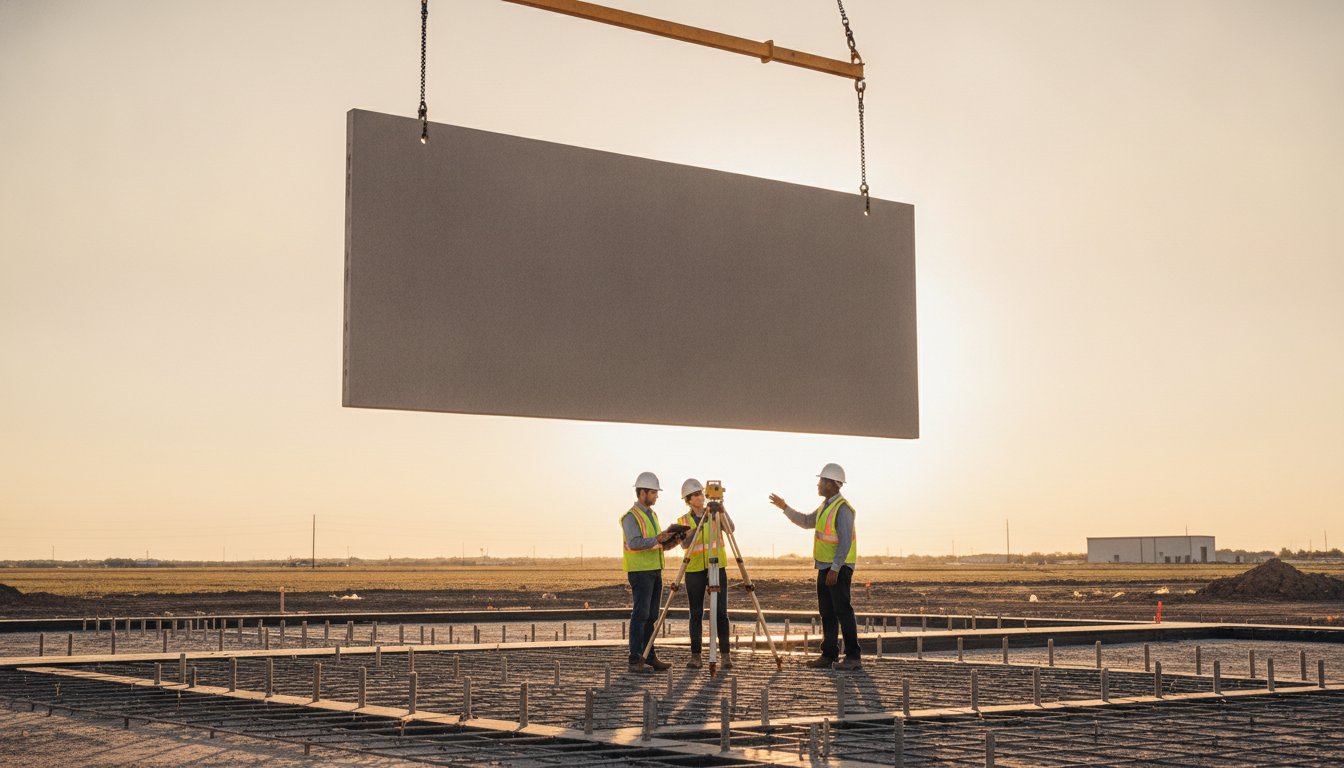
In the Texas construction landscape, structural integrity is never a given; it's a meticulously engineered outcome that must withstand some of the most volatile soil conditions in the country. You likely understand that even a minor misalignment in anchor bolt placement or a slight deviation in soil stabilization can derail an entire precast schedule and lead to costly structural failures. Partnering with a seasoned precast garage foundation contractor Texas developers rely on is the only way to ensure that your project begins on a stable, precise platform.
We recognize that the success of a parking structure depends on the seamless coordination between excavation, soil treatment, and the final slab. This guide details the technical requirements and strategic advantages of specialized foundations designed specifically for Texas's expansive clay. We'll examine how adhering to strict PCI tolerances and utilizing integrated site preparation can mitigate soil movement and prevent the coordination gaps that often plague complex builds. By prioritizing precision from the initial earthwork to the final pour, you can establish a foundation built for long-term viability and professional stability.
Key Takeaways
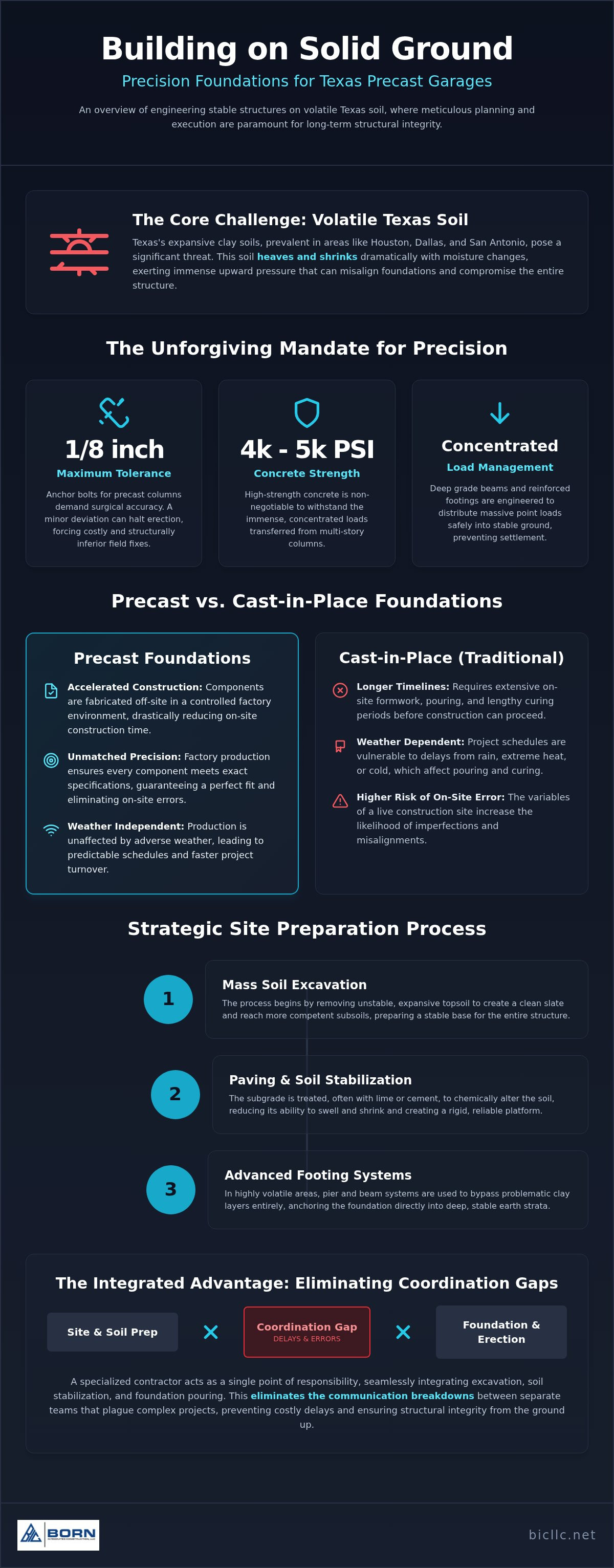
- Understand why precast garage foundations require rigorous tolerances, often within 1/8 inch, to ensure a perfect fit for factory-made components.
- Learn how mass soil excavation and paving stabilization techniques mitigate the risks posed by the expansive clay soils common across Texas.
- Compare the strategic advantages of precast foundations versus cast-in-place options, focusing on construction speed and site turnover efficiency.
- Discover why hiring a specialized precast garage foundation contractor Texas developers trust is essential for coordinating site preparation with structural concrete delivery.
- Explore the integrated approach to project management that eliminates coordination gaps between excavation teams and foundation crews.
What is a Precast Garage Foundation and Why is it Specialized?
A precast garage foundation is a high-precision structural base engineered specifically to receive factory-made concrete components. While a standard slab-on-grade for a retail shell primarily supports uniform floor loads, these foundations are designed for intense, concentrated structural demands. Every pier, footing, and anchor bolt must align with the exact specifications provided by the precast manufacturer. Selecting an experienced precast garage foundation contractor Texas developers trust is essential; the foundation serves as the rigid template for the entire vertical structure.
The primary function of this system is the transfer of loads from the multi-story Precast concrete columns down into the load-bearing strata of the earth. Each column carries significant vertical pressure from the decks and vehicles above. If the footing is not perfectly level or the steel plates are slightly askew, the structural integrity of the joints is compromised. The foundation is the interface where civil engineering meets structural precision.
The Structural Role of the Foundation in Precast Systems
Supporting a multi-level deck requires more than just weight-bearing capacity. The foundation must resist lateral forces, such as the high-velocity winds common in coastal Texas. In a precast system, "near enough" is never acceptable. If alignment is off by even a fraction of an inch, factory-made components won't seat correctly. This leads to costly delays and unnecessary structural stress. Our approach ensures that every embed and anchor bolt meets the rigorous tolerances required for a seamless installation.
Texas Soil: The Invisible Variable
The soil profiles in Houston, Dallas, and San Antonio are difficult due to high expansive clay. This soil heaves and shrinks, exerting upward pressure that can lead to structural misalignment. A contractor must integrate mass soil excavation and paving stabilization into the plan to keep the ground stable. Working with a precast garage foundation contractor Texas understands ensures these variables are managed correctly. View our work on our projects page.
Technical Requirements for Precast Garage Foundations
The transition from mass excavation to structural concrete requires a shift from heavy earthmoving to surgical accuracy. While standard commercial slabs allow for wider margins, a precast system demands a foundation that mirrors the precision of the factory-made components it supports. As a specialized precast garage foundation contractor Texas projects depend on, we focus on technical benchmarks that ensure the vertical structure seats perfectly without on-site modifications. This level of discipline prevents the coordination gaps that often lead to project delays.
Precision Placement of Embeds and Anchor Bolts
Precast columns are rigid and unforgiving. To accommodate these structures, anchor bolt placement must typically fall within a strict 1/8 inch tolerance. Achieving this across a large site requires advanced surveying equipment and robust template systems that lock bolts into place before the pour begins. Quality control is not a final step; it's a continuous process of verification. We utilize multi-stage checks to confirm that every steel plate and embed is level and correctly oriented. When bolts are misaligned, the erection schedule is compromised, forcing expensive field fixes that weaken the structural connection. Maintaining these tight tolerances is a hallmark of our professional stability and commitment to craftsmanship.
Load-Bearing Footings and Grade Beams
The engineering of a precast garage foundation centers on managing concentrated loads. Unlike traditional buildings that distribute weight along a continuous wall, a precast garage focuses massive pressure onto specific column points. This requires reinforced footings and deep grade beams that can withstand these localized forces without settling. We utilize high-strength concrete mix designs, often exceeding 4,000 to 5,000 PSI, to ensure long-term durability.
In regions with volatile clay, we often implement pier and beam systems to bypass the expansive soil and reach stable strata. This approach mitigates the risk of differential settlement, which can cause structural joints in the garage to shift or crack over time. Our team ensures consistent concrete density throughout the pour to maintain the integrity of these heavy-duty components. You can learn more about our disciplined approach to execution on our about page. By prioritizing substance over style, we deliver a structural base that serves as a dependable partner for the life of the building.
- PCI Compliance: Adhering to Precast/Prestressed Concrete Institute standards for field foundations.
- Reinforcement: Precise rebar cage placement within grade beams to handle lateral and vertical tension.
- Moisture Control: Implementing vapor barriers and proper drainage to protect the concrete's lifespan.
Precast vs. Cast-in-Place (CIP) Foundations: Choosing the Right Path
Selecting the appropriate structural framework is one of the most consequential decisions in the early stages of development. While cast-in-place (CIP) methods offer on-site flexibility, precast systems provide a level of predictability that many modern schedules demand. As a specialized precast garage foundation contractor Texas developers rely on, we often evaluate these paths based on site logistics, labor availability, and the desired turnover date. Each method has distinct merits, but the foundation must be specifically engineered to support the chosen structural path.
Speed and Efficiency in Texas Developments
Construction speed is often the deciding factor. Precast foundations allow for a faster site turnover because the structural components are produced off-site while excavation and soil stabilization occur. This parallel processing reduces the total project duration. In the Texas heat or during unpredictable rain seasons, minimizing the time crews spend on-site reduces risk. We coordinate closely with precasters to ensure the footings and grade beams are ready for "just-in-time" delivery. This synchronization is vital for maintaining the critical path and avoiding the storage costs associated with idle components.
Site constraints also play a major role. In congested urban centers, there's rarely enough space for extensive formwork or large-scale concrete staging. Precast systems thrive in these environments. They allow for a smaller operational footprint, as components are lifted directly from the delivery truck into their final position. This surgical approach to construction minimizes disruption to surrounding traffic and neighboring businesses.
Cost Analysis and Long-Term Value
Cost structures differ significantly between the two. CIP garages involve higher on-site labor costs and longer schedules, whereas precast requires a higher initial investment in manufacturing. However, the precision of a precast foundation prevents the "stacking" of errors that leads to expensive field modifications. When you hire a precast garage foundation contractor Texas professionals trust, you're investing in a partner who understands how to mitigate these initial expenses through meticulous site prep.
Over a 50-year lifespan, precast structures benefit from factory-controlled curing, which often results in higher concrete density and better resistance to environmental wear. This durability reduces long-term maintenance requirements. For projects that prioritize customized geometry over speed, Learn about our structural CIP solutions and how they integrate with complex podium designs. Our commitment to high standards remains consistent regardless of the chosen structural method.
The Critical Role of Site Preparation and Soil Stabilization
Structural integrity doesn't begin with the first concrete pour; it starts several feet below the finished grade. In the diverse geological regions of Texas, the ground is rarely ready to support a multi-story parking structure without significant intervention. Moisture control and precise mass soil excavation are the primary defenses against the expansive clay that characterizes much of our state. As an experienced precast garage foundation contractor Texas developers trust, we prioritize these early civil phases to ensure the structural concrete remains level and secure for decades.
Mass Excavation and Site Grading
Preparing a site for a precast garage involves more than just digging a hole. During the erection phase, the site must support massive crane loads that can exceed several hundred thousand pounds. If the sub-grade isn't properly compacted and graded, these machines can cause soil displacement that shifts the foundation before the garage is even finished. We focus on achieving optimal moisture content and density during the grading process to prevent future settlement. Understanding the importance of paving stabilization in Texas soil is vital for creating a work surface that remains stable under the weight of heavy-duty equipment and vertical structural components.
Chemical Soil Stabilization Strategies
Texas clay is notorious for its high plasticity, which means it expands and contracts violently with moisture changes. To mitigate this, we employ chemical stabilization using lime or cement to alter the soil's chemistry. This process creates a rigid, weather-resistant sub-base that acts as a bridge between the native soil and the concrete slab. This stabilized layer ensures the sub-grade meets the specific PSI requirements necessary to handle heavy garage traffic without cracking or heaving. By managing these dirt-work details in-house, we eliminate the coordination gaps that often occur between separate excavation and concrete crews.
Effective drainage is the final piece of the stabilization puzzle. We integrate detention ponds and specialized drainage systems into the site plan to move water away from the foundation as quickly as possible. Standing water is the greatest threat to a foundation's longevity, as it can seep into the sub-grade and trigger soil movement. A precast foundation is only as stable as the soil beneath its deepest footing. If you're ready to secure your next project with a team that manages every detail from earthwork to structural completion, partner with a turnkey civil contractor that understands the Texas landscape.
Why Born Integrated Construction is the Preferred Texas Partner
Born Integrated Construction (BIC) embodies its name through a delivery model that removes the friction between civil and structural phases. When you select a precast garage foundation contractor Texas relies on, you're looking for more than just a concrete pour; you're seeking a partner that manages the high-stakes transition from mass soil excavation to precision engineering. Our regional coverage spans the major growth corridors of Houston, Austin, San Antonio, and DFW, ensuring that local soil expertise is applied to every site regardless of the specific geological challenges. The "Integrated" philosophy is a strategic response to the fragmentation often found in commercial construction. By managing the full scope from initial earthwork to the final structural pour, we ensure that the technical requirements of the precaster are met without the typical coordination gaps between separate trades.
A Proven Track Record in Texas Commercial Developments
We maintain a diverse portfolio that includes multi-family residential complexes, large-scale retail developments, and essential infrastructure projects. By providing a single point of contact for both civil and structural phases, we eliminate the common communication failures that lead to delays and budget overruns. This integrated approach allows us to establish a clear hierarchy of importance for site prep, ensuring that the foundation is never compromised by substandard soil stabilization or imprecise grading. You can find visual proof of our craftsmanship and technical scope on our BIC Projects Page. Our experience across varied sectors allows us to anticipate the unique needs of each garage type, from high-traffic retail structures to high-density residential parking.
Integrity and Efficiency in Every Pour
The critical interface of any precast project is the relationship between the foundation crew and the component manufacturer. We engage in proactive coordination with precasters long before the first truck arrives on-site. This ensures that every anchor bolt and steel plate is positioned to accommodate the "just-in-time" delivery of vertical units. Our focus on high-register professional standards and safety protocols ensures that complex commercial sites remain secure and productive. We don't just follow a schedule; we actively protect it through meticulous planning and a disciplined approach to execution.
We prioritize substance over style, building lasting foundations through the meticulous management of details. This steadfast approach instills confidence in developers who value long-term viability and professional stability. By maintaining strong vendor relationships and a deep-rooted commitment to high standards, we deliver consistent value that honors the enduring nature of our work. Contact Born Integrated Construction for your next precast project to experience a partnership built on proven results and unwavering consistency.
Securing the Future of Your Structural Investment
Successful precast projects depend on the surgical alignment of anchor bolts and the rigorous stabilization of the underlying Texas soil. It's clear that neglecting these foundational elements can lead to costly structural misalignments. By merging mass excavation with structural concrete expertise, developers avoid the scheduling delays that often plague complex parking builds. Our integrated model ensures that your site preparation and foundation work are perfectly synchronized, creating a seamless transition from earthwork to erection.
Choosing a seasoned precast garage foundation contractor Texas professionals trust ensures that your project meets strict PCI and ASTM standards. We provide full-service civil and structural capabilities, applying localized expertise to mitigate the risks of expansive clay across the state's major metros. This steadfast commitment to technical proficiency protects your long-term viability and instills confidence in every stakeholder involved. We're ready to act as a dependable partner in building your next lasting structure.
Request a Consultation for Your Precast Garage Foundation
Frequently Asked Questions
What is the difference between a precast and a cast-in-place garage foundation?
Precast foundations are engineered as high-precision structural bases specifically designed to receive factory-made concrete components. While cast-in-place (CIP) foundations involve pouring the entire structure on-site, precast foundations focus on achieving strict tolerances for column connections. A specialized precast garage foundation contractor Texas developers hire ensures the base is ready for parallel processing. This method often allows for faster site turnover because the foundation is prepared while the garage components are manufactured off-site.
Why is soil stabilization necessary for garage foundations in Texas?
Texas is characterized by expansive clay soils that expand and contract violently with moisture changes. Without chemical stabilization using lime or cement, this soil movement can lead to structural misalignment or foundation cracking. Proper stabilization creates a rigid sub-base that mitigates heave and protects the structural integrity of the garage. It's an essential step for maintaining the tight tolerances required for precast connections and preventing differential settlement over the building's lifespan.
How long does it typically take to complete a precast garage foundation?
The timeline depends on the project's scale and soil conditions, but our integrated approach typically shortens the schedule. By managing mass soil excavation and foundation work under one roof, we reduce coordination gaps between trades. Most commercial foundations are completed in several weeks, which facilitates the "just-in-time" delivery of precast components. This efficiency is a primary reason developers choose precast systems for high-density projects where site access and time are limited.
What tolerances are required for anchor bolts in precast foundations?
Anchor bolt placement for precast systems is exceptionally strict, typically requiring a tolerance within 1/8 inch. Because factory-made concrete columns are rigid, there's no room for error during the erection phase. We utilize advanced surveying equipment and fixed templates to secure these bolts before the concrete is poured. This level of precision prevents the need for expensive field modifications and ensures that the vertical structure seats perfectly on its structural base.
Can Born Integrated Construction handle both the excavation and the concrete work?
Yes, we provide a turnkey solution that includes both mass soil excavation and structural concrete construction. This integrated model is a core benefit for our clients, as it eliminates the friction often found between separate dirt crews and foundation teams. By managing the site from initial grading through the final structural pour, we maintain total control over the project's technical requirements and safety protocols. This consistency leads to more reliable results.
What areas of Texas does Born Integrated Construction serve?
We provide comprehensive civil and structural services across all major Texas metropolitan areas. Our primary service regions include Houston, Dallas, Fort Worth, Austin, and San Antonio. We also serve growing communities such as The Woodlands, Conroe, Arlington, and New Braunfels. Our localized expertise in these diverse regions allows us to tailor soil stabilization and foundation designs to the specific geological conditions found throughout the state, ensuring long-term structural stability.
How do you ensure the foundation can handle the weight of a multi-level precast garage?
We utilize high-strength structural concrete mix designs, often exceeding 4,000 PSI, combined with reinforced footings and grade beams. These components are specifically engineered to manage the concentrated vertical and lateral loads transferred from the precast columns. Our team adheres to strict PCI and ASTM standards during every pour to ensure consistent concrete density. This rigorous approach prevents differential settlement and ensures the foundation remains a dependable partner for the life of the structure.
What happens if the foundation embeds are misaligned?
Misaligned embeds or anchor bolts can derail the entire erection schedule and lead to significant cost overruns. If a column doesn't seat correctly, the precaster may be forced to halt work, resulting in idle crane time and expensive field fixes. These modifications can also compromise the structural connection's integrity. Our proactive quality control protocols are designed to verify every placement before the concrete sets, ensuring a perfect fit for the factory-made components.