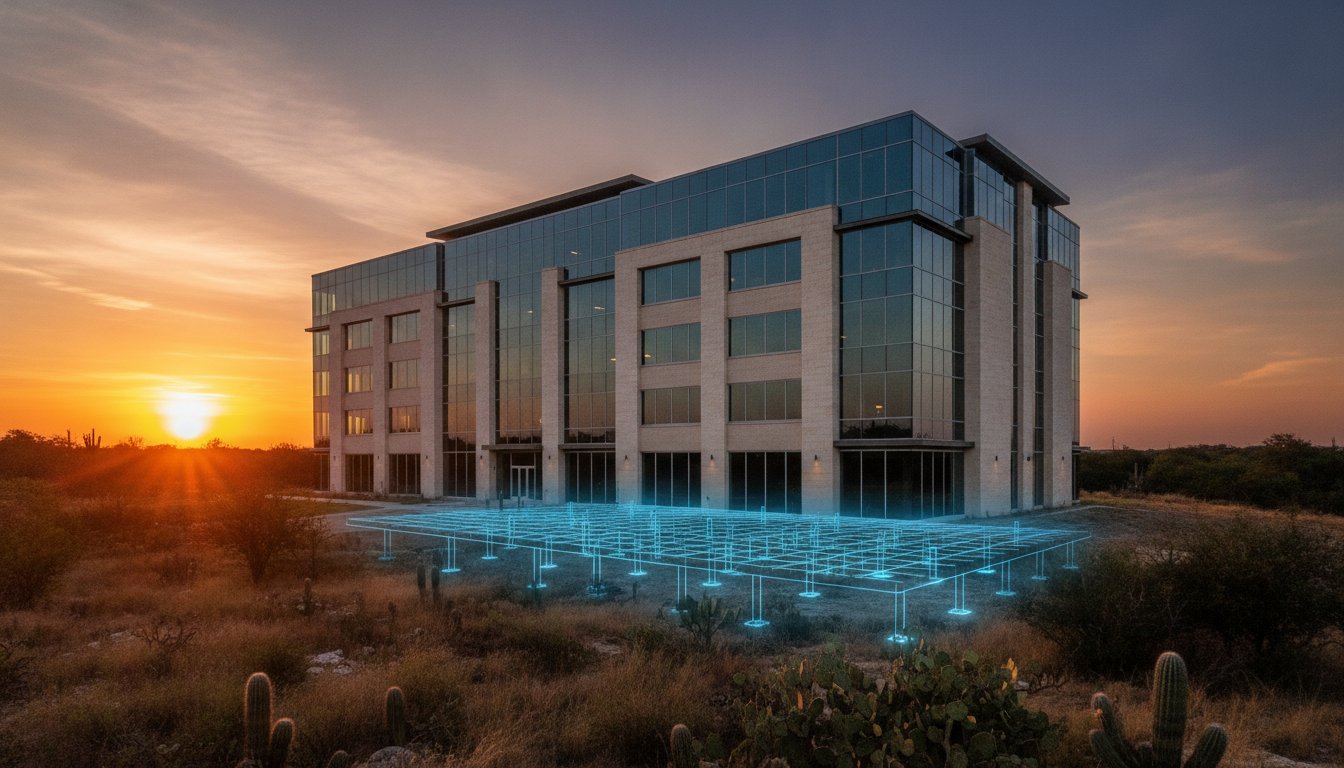
The ground beneath a Texas commercial project is often its greatest liability. Choosing a post tension slab for commercial buildings Texas is no longer just an architectural preference; it's a strategic necessity for long-term structural viability. You recognize that the highly expansive clay soils found across major hubs like Houston and San Antonio present a constant threat of foundation cracking and shifting. These soil conditions demand a foundation system that does more than just sit on the earth.
This guide clarifies how post-tensioning technology provides the essential engineering bridge between ambitious design and volatile geological realities. You'll discover how this method reduces material costs, enhances structural integrity, and overcomes the architectural limitations of traditional reinforced concrete. We will examine the mechanics of creating thinner, stronger slabs with fewer joints. We also explore how an integrated approach that combines mass soil excavation with structural concrete expertise establishes a dependable foundation for large-scale developments, ensuring the enduring quality of your professional output.
Key Takeaways
- Learn how active reinforcement creates internal compressive stress to counteract tensile loads, resulting in thinner and more durable structural slabs.
- Identify the functional differences between bonded and unbonded systems to select the optimal post tension slab for commercial buildings Texas.
- Explore how post-tensioning technology can reduce concrete volume by up to 20 percent while enabling longer spans and increased architectural flexibility.
- Understand the specific engineering advantages of using post-tensioned foundations to overcome the challenges of expansive clay soils found across major Texas hubs.
- Discover the benefits of an integrated service model that coordinates mass soil excavation and structural concrete to ensure long-term foundation stability and project reliability.
What is Post Tension Concrete? The Mechanics of Active Reinforcement
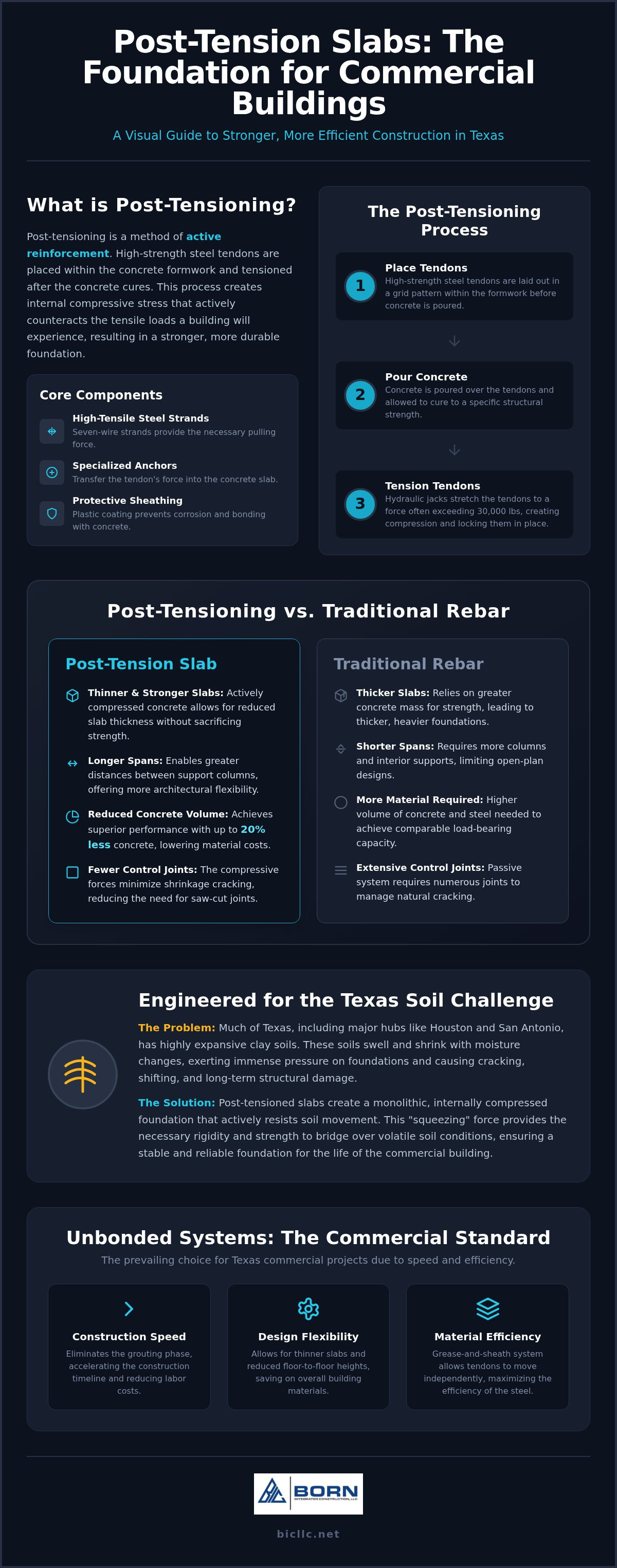
Concrete possesses exceptional compressive strength but lacks the inherent ability to resist tension. To address this, engineers utilize the method described in this guide on What is Post-Tensioned Concrete? to provide active reinforcement. This technique involves placing high-strength steel tendons within the formwork before the pour. Once the concrete reaches sufficient structural integrity, these tendons are tensioned using hydraulic equipment. Unlike traditional rebar, which is a passive system, post-tensioning creates an internal compressive stress that actively counteracts the tensile loads the building will experience.
Implementing a post tension slab for commercial buildings Texas allows for a more efficient use of materials. By squeezing the concrete together, the system increases the slab's capacity to span longer distances without the need for excessive column support. This architectural freedom is a primary driver for its use in modern office complexes and retail centers. The core components of the system consist of:
- High-tensile steel strands: These are typically seven-wire strands that provide the necessary pulling force.
- Specialized anchors: These ductile iron castings transfer the tendon's force into the concrete.
- Protective sheathing: A plastic coating prevents the steel from bonding to the concrete during the pour and protects against corrosion.
The Science of Internal Compression
The stressing process utilizes hydraulic jacks to pull the tendons to a precise tension, often exceeding 30,000 pounds of force. This force converts potential tensile failures into compressive strength distributed across the entire slab. In high-load commercial foundations, achieving this structural equilibrium is vital for long-term reliability. It's a methodical approach that ensures the foundation doesn't just support the weight of the building but actively resists the forces that cause cracking and deflection.
Post-Tensioning Terminology for Developers
Managing a project requires a clear understanding of the components involved in a post tension slab for commercial buildings Texas. The "live end" of a tendon is the point where the hydraulic jack is applied to stretch the cable, while the "dead end" is the fixed anchorage point on the opposite side of the pour. "Wedges" are small, cone-shaped steel pieces that lock the strand into the anchor head once the jack is removed. Prestressing is the broad engineering category for post-tensioning. By mastering these terms, developers can better coordinate with structural engineers and concrete contractors to ensure technical proficiency on the job site.
Bonded vs. Unbonded Post-Tensioning: Selecting the Right System
Choosing the correct reinforcement system is a critical decision for any developer. The distinction between bonded and unbonded systems impacts the installation timeline, long-term maintenance, and structural behavior of the asset. While both methods utilize the principles of active reinforcement, their application depends on the specific load requirements and occupancy of the structure. It's a matter of technical precision that dictates the long-term viability of the project.
For a typical post tension slab for commercial buildings Texas, unbonded systems are the prevailing industry standard. These systems utilize tendons coated in a corrosion-inhibitive lubricant and encased in a high-density polyethylene sheathing. This configuration allows the tendons to move independently of the concrete. It offers significant advantages in construction speed and labor efficiency, which is particularly beneficial for retail developments and multi-family structures. Maintaining the integrity of the sheathing during the pour is essential to prevent moisture intrusion, especially in the humid regions of East and Central Texas.
Unbonded Systems in Commercial Development
The grease-and-plastic sheathing of unbonded tendons provides a level of flexibility in slab design that is difficult to achieve with other methods. This system allows for thinner slabs and reduced floor-to-floor heights, which can lead to significant savings in overall building materials. Construction teams can often complete unbonded installations faster because they eliminate the need for the grouting phase. However, long-term maintenance requires periodic inspections of the anchorage points to ensure the tendons remain protected from environmental elements. For those planning large-scale commercial developments, reviewing previous structural concrete projects can provide insight into how these systems perform in real-world applications.
The Role of Bonded PT in Heavy Infrastructure
Bonded systems are typically reserved for heavy infrastructure or specific structural elements requiring maximum load-bearing capacity. In these systems, the steel tendons are placed in corrugated ducts. After tensioning, high-strength grout is injected into the ducts to create a monolithic bond between the steel and the surrounding concrete. This method provides an additional layer of protection against tendon oxidation, making it a robust choice for high-rise podium slabs and complex parking structures. Precision in the grouting process is non-negotiable; no air pockets can remain. Developers must weigh the structural versatility of Post-Tensioning vs. Traditional Rebar while considering the specific occupancy and load requirements of the building. Selecting the right post tension slab for commercial buildings Texas ensures that the foundation meets current PTI standards for durability and safety.
Post-Tensioning vs. Traditional Rebar: A Comparative Analysis
Selecting between post-tensioning and traditional rebar reinforcement is a foundational decision that dictates the efficiency of a commercial project. Traditional rebar acts as a passive reinforcement system, only engaging once the concrete begins to experience strain. In contrast, a post tension slab for commercial buildings Texas utilizes an active system that applies constant compressive pressure. This fundamental difference in mechanics allows developers to achieve a level of structural performance that passive systems cannot match. By actively compressing the slab, engineers can reduce concrete volume by up to 20 percent, which translates to a lighter overall structure and reduced demand on the foundation.
The structural versatility of post-tensioning provides architects with significant freedom in floor plan design. Because the system handles tensile loads more effectively, it supports much longer spans between columns. This reduction in vertical supports is vital for retail environments and office layouts where open space is a premium. Additionally, the construction critical path is often shortened because the specialized stressing process allows for faster formwork stripping. Once the tendons are stressed, the slab is self-supporting, enabling crews to move to the next level sooner than they could with traditional reinforced concrete.
Cost-Benefit Breakdown for Developers
While post-tensioning requires specialized labor and higher-grade steel tendons, the reduction in material bulk often offsets these initial costs. Thinner slabs lead to lower floor-to-floor heights, which can reduce the total building height in multi-story developments. This reduction saves money on exterior cladding, vertical MEP runs, and even structural steel requirements. Post-tensioned slabs exhibit superior deflection control compared to traditional reinforced concrete because the active compressive force effectively counteracts gravity loads. This precision is particularly relevant when considering a Post-Tensioning Institute analysis of ground-supported slabs, which highlights how these systems maintain structural integrity under varying load conditions.
Operational Considerations
From an operational standpoint, the reduction of control joints is a significant advantage for commercial tenants. Fewer joints mean a smoother surface for specialized flooring installations and lower long-term maintenance costs for floor finishes. However, developers must manage the "No-Drill Zone" with technical precision. Because the tendons are under high tension, any post-pour modifications, such as drilling for new plumbing or electrical lines, must be carefully coordinated using ground-penetrating radar. You can see this level of technical execution in practice by reviewing BIC projects across various commercial sectors. Proper planning during the design phase ensures that a post tension slab for commercial buildings Texas provides both immediate material savings and long-term structural reliability.
Solving the Texas Soil Challenge with Post-Tensioned Slabs
Texas soil is a volatile foundation. In major metropolitan hubs like Houston and Dallas, the high concentration of expansive clay creates a phenomenon known as the "Texas Heave," where the earth swells when saturated and shrinks during periods of drought. This constant volumetric change exerts immense upward and downward pressure on concrete structures. Standard foundations often lack the internal strength to resist these forces, leading to significant cracking and structural distress. Implementing a post tension slab for commercial buildings Texas addresses this geological reality by providing a foundation that can withstand the soil's natural movement without compromising the building's integrity.
A post tension slab for commercial buildings Texas is specifically engineered to resist the differential settlement that plagues the region. In heavy-duty commercial parking areas and industrial paving, the ability to withstand both soil movement and high-frequency axle loads is paramount. Post-tensioning provides a level of durability that traditional pavement often lacks, which reduces long-term maintenance costs for the owner. It's a strategic choice for developers who prioritize the enduring nature of their professional output and the safety of their structures.
Engineering for Expansive Clay
The primary advantage of post-tensioning in Texas is its ability to allow a slab to move as a rigid unit. Instead of individual sections of a foundation rising or falling independently, the internal compressive stress holds the entire slab together. This unity drastically reduces the risk of foundation failure in large-footprint commercial buildings. It's a disciplined approach to engineering that accounts for the specific heave and shrink cycles of local clay. For projects requiring expansive surface areas, developers often benefit from paving stabilization techniques to ensure the subgrade is as resilient as the slab itself.
Site Prep and Foundation Synergy
A reliable foundation begins before the first yard of concrete is poured. Mass soil excavation is essential to remove volatile organic material and replace it with engineered fill that provides a stable base. The placement of detention ponds also plays a critical role; if moisture levels near the slab aren't managed, localized soil swelling can occur. Coordinating these earthwork phases with the installation of PT anchor points and underground utilities prevents technical conflicts during construction. This integrated approach ensures that every component of the site works in unison. For developers seeking a partner capable of managing both the geotechnical challenges and the structural pour, contacting Born Integrated Construction provides the professional stability required for high-stakes Texas projects.
Precision Execution: The Born Integrated Construction Approach
Successful implementation of a post tension slab for commercial buildings Texas requires more than technical knowledge of concrete; it demands a comprehensive management strategy that oversees the project from initial soil disturbance to final stressing. Born Integrated Construction (BIC) operates on a philosophy of total integration. We don't view earthwork, utilities, and structural concrete as isolated phases. Instead, we manage them as a single, cohesive workflow. This model eliminates the traditional friction between separate civil and structural contractors. It ensures that the precision required for post-tensioning is maintained throughout the entire site development process.
Managing specialized labor is a core component of this approach. Post-tensioning is a high-stakes phase that involves immense stored energy within the tendons. Our teams focus on operational precision, ensuring that anchors are placed with exactitude and that stressing sequences follow the engineer's specifications to the letter. This disciplined management results in a foundation that is both cost-effective and structurally superior, providing a stable base for Texas commercial infrastructure that stands the test of time.
Safety and Integrity in Every Pour
Safety isn't a secondary consideration during the tensioning process. We maintain strict adherence to Post-Tensioning Institute (PTI) safety protocols to protect both the workforce and the structural integrity of the project. During any post-pour modifications or future tenant improvements, we utilize Ground Penetrating Radar (GPR) to map tendon locations with technical proficiency. This proactive measure prevents accidental tendon damage and maintains the slab's active reinforcement. Our commitment to these standards is a reflection of the core values found on our About BIC page, where we prioritize reliability and professional stability.
Turn-Key Civil and Structural Solutions
The transition from mass soil excavation to the completion of a podium slab is often where project schedules falter due to communication gaps. By serving as an integrated partner, we bridge this gap, coordinating soil moisture control and utility placement with the specific requirements of the structural pour. This synergy is particularly vital for complex builds, such as those requiring an podium slab contractor Houston for high-density developments. Our ability to deliver turn-key civil and structural solutions reduces project delays and establishes a clear hierarchy of accountability. This methodical execution ensures that the final post tension slab for commercial buildings Texas meets our high standards for long-term viability and professional craftsmanship.
Building for Long-Term Structural Stability in Texas
Implementing a post tension slab for commercial buildings Texas is a strategic investment in structural longevity. By utilizing active reinforcement, developers can effectively mitigate the risks posed by expansive clay soils while achieving significant material efficiencies and architectural freedom. The integration of mass soil excavation with specialized structural concrete services ensures that the foundation is built on a stable, well-prepared base. This methodical approach reduces the risk of differential settlement and provides the professional stability required for high-stakes commercial infrastructure.
Born Integrated Construction offers specialized expertise in CIP Midrise and Highrise foundations across major hubs including Houston, Dallas, and Austin. Our integrated service model coordinates site preparation and structural pours to deliver consistent, reliable results. We invite you to partner with Born Integrated Construction for your next structural project to ensure your development is built on a foundation of precision and craftsmanship. We look forward to establishing a lasting professional partnership that supports the success of your future developments.
Frequently Asked Questions
What is the primary difference between post-tension and traditional rebar?
The primary difference lies in the active versus passive nature of the reinforcement. While traditional rebar is passive and only provides strength after the concrete begins to crack or deflect, post-tensioning is an active system. It involves stretching high-strength steel tendons to create internal compressive stress. This allows for thinner slabs and significantly longer spans between columns, which is a major advantage for commercial floor plans.
Can you drill or cut into a post-tensioned concrete slab safely?
You can't safely drill or cut into a post-tensioned slab without professional mapping. Because the tendons are under immense tension, severing a cable can cause structural failure and poses a severe safety risk to personnel. Ground Penetrating Radar (GPR) is required to locate every tendon before any modifications. This technical precision ensures that tenant improvements or utility updates don't compromise the integrity of the active reinforcement system.
Why is post-tensioning so common in Texas commercial construction?
A post tension slab for commercial buildings Texas is the preferred solution for mitigating the effects of expansive clay soils. These soils, common in Houston and Dallas, swell and shrink with moisture changes. Post-tensioning allows the entire foundation to act as a rigid unit, resisting the differential settlement that often causes traditional foundations to fail. This engineering approach is essential for maintaining professional stability in volatile geological environments.
How long does the tensioning process take after the concrete is poured?
The tensioning process typically occurs between three and seven days after the concrete pour. This timeline depends entirely on the concrete reaching a specific compressive strength, which is usually around 3,000 psi. Structural engineers monitor the curing process through cylinder breaks or field-cured specimens. Once the required strength is verified, specialized hydraulic jacks are used to stress the tendons, finalizing the slab's active reinforcement and structural capacity.
Is post-tension concrete more expensive than standard reinforced concrete?
While post-tensioning involves specialized labor and high-grade materials, it often results in overall project savings. By reducing the total volume of concrete and rebar required, developers can lower material costs and decrease the building's dead load. These efficiencies frequently offset the cost of the tensioning process. For large-scale developments with long spans, it's a cost-effective solution that prioritizes long-term viability and structural performance.
What happens if a post-tension cable snaps or fails during stressing?
If a tendon snaps during the stressing phase, it releases a significant amount of stored energy. This is why strict safety protocols and no-go zones are established during the tensioning process. While a snap is rare when handled by disciplined professionals, the cable can usually be replaced or repaired by a specialized contractor. Maintaining anchor integrity and following Post-Tensioning Institute standards are the primary defenses against such technical failures.
Does a post-tension slab require special maintenance over time?
Post-tensioned slabs are remarkably durable but benefit from periodic inspections of the anchorage points. This is particularly important in environments with high humidity or chemical exposure, such as parking garages. Ensuring that the protective grease and sheathing remain intact prevents corrosion of the steel tendons. Professional management of these details preserves the enduring nature of the structural output and maintains the foundation's reliability over its entire lifecycle.
Can post-tensioning be used for multi-level parking garages in Houston?
Post-tensioning is the industry standard for multi-level parking structures in Houston and other major Texas cities. Born Integrated Construction specializes in CIP Concrete Parking Structures and podium slabs that utilize this technology. The ability to support heavy vehicle loads with fewer columns creates the open, functional space required for modern garages. It's a proven method for delivering high-quality, durable infrastructure in high-density urban environments.