The Essential Guide to Podium Slab Construction for Texas Mid-Rise Developments
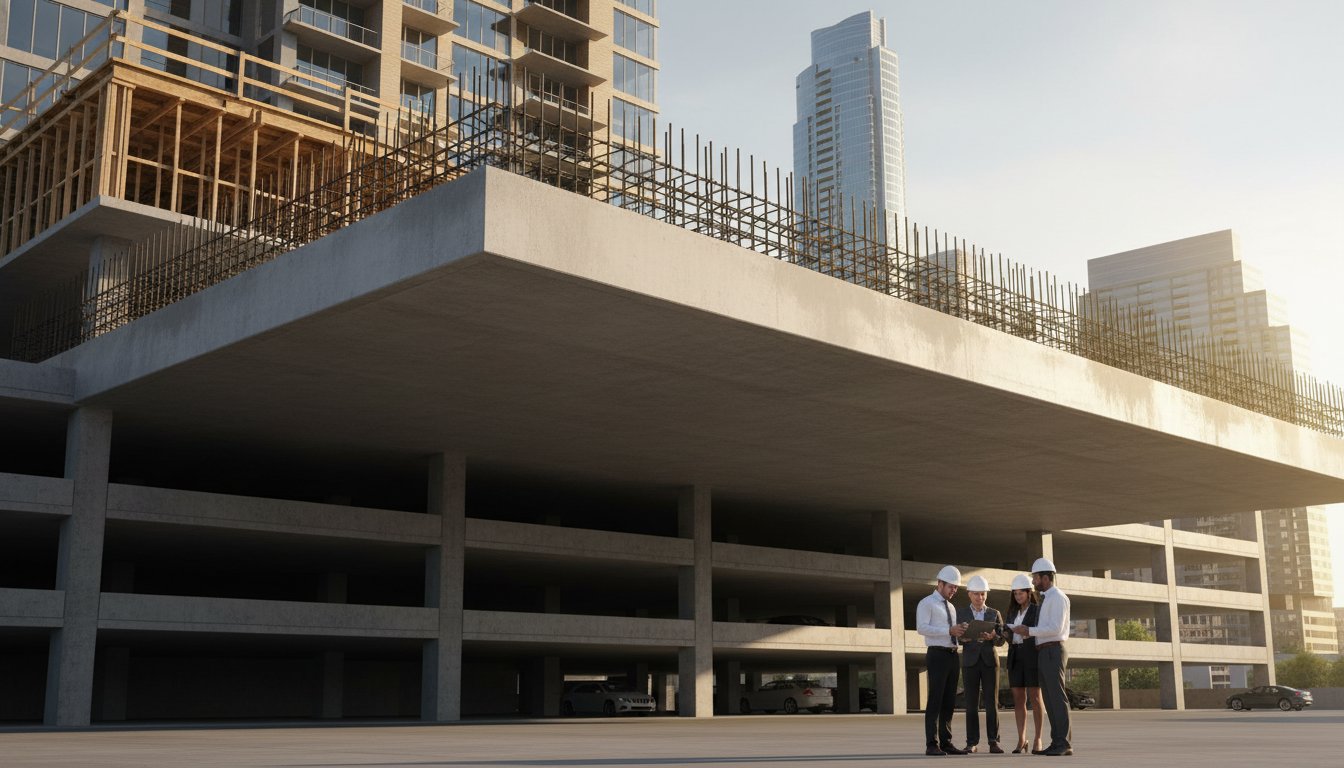
If you view a podium slab as just another concrete pour, you're overlooking the most critical structural "brain" of your mid-rise development. Developers across Texas recognize that high land costs demand maximum urban density, yet achieving that density requires a complex transfer of loads that leaves no room for error. Partnering with a specialized podium slab construction contractor is the difference between a project that flows seamlessly and one plagued by coordination failures between concrete and MEP trades.
Professional developers agree that the transition from a structured parking garage to residential units is the most high-stakes phase of any build. This guide provides the clarity you need to maximize rentable square footage while ensuring total structural integrity at the load-transfer level. We'll examine how disciplined trade coordination and adherence to the 2021 International Building Code protect your investment against modern challenges, from a 16% increase in steel prices to the May 19, 2026, OSHA Hazard Communication deadline. Through meticulous management and proven execution, you can establish a foundation that supports both your building and your long-term professional reputation.
Key Takeaways
- Understand how podium construction serves as the essential structural transfer level for maximizing urban density in Texas developments.
- Evaluate the performance differences between Cast-in-Place reinforced concrete and Post-Tensioned systems for achieving thinner slabs and longer spans.
- Identify the specific risks associated with thermal expansion and the waterproofing of interfaces between diverse building materials.
- Learn how a specialized podium slab construction contractor provides strategic value through pre-construction engineering and complex site logistics.
- Discover why a disciplined approach to structural concrete is the primary requirement for ensuring the long-term viability of mid-rise foundations.
What is a Podium Slab? The Foundation of Modern Urban Density
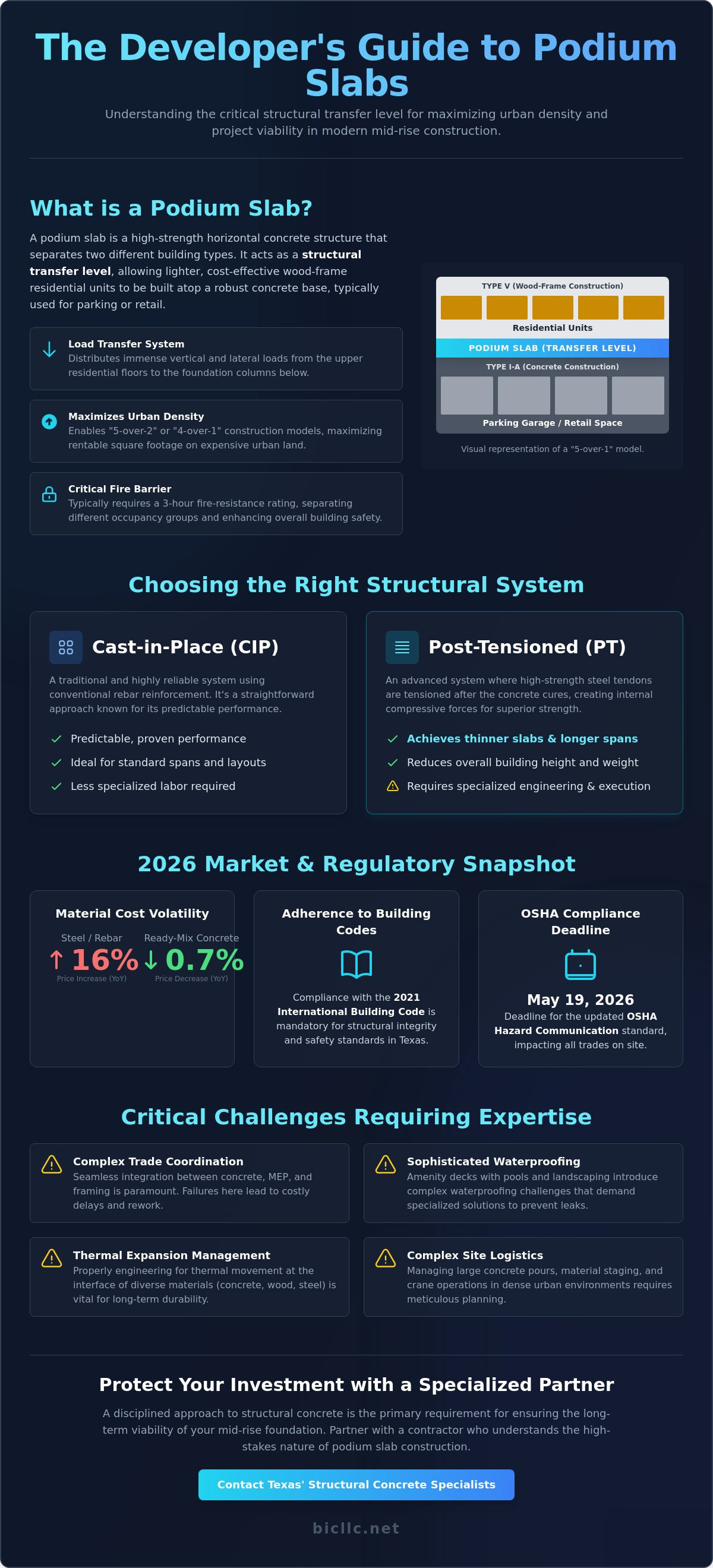
A podium slab serves as the critical horizontal separation between two distinct building types. Often referred to as pedestal construction, it provides the structural foundation for the "5-over-2" or "4-over-1" models that define the skylines of Houston and Austin. To understand What is a Podium Slab?, one must view it as more than a floor; it's a high-strength transfer level that allows developers to stack light-frame residential units atop a robust concrete base. This base typically houses parking garages or retail spaces, maximizing the utility of expensive urban acreage. It's the primary tool for achieving the density required in modern Texas real estate markets.
For a developer, this structural choice is primarily an economic strategy. By utilizing a podium, you can increase unit density beyond what traditional wood-frame construction allows on its own. This approach maximizes rentable square footage while maintaining strict compliance with fire safety regulations. Success in these projects depends on the precision of your podium slab construction contractor, as the slab must support the immense weight of several stories of wood framing while distributing those loads evenly to the columns below. It's a disciplined balancing act of engineering and execution.
The Role of the Podium in Structural Load Transfer
The slab acts as a rigid diaphragm that redistributes vertical and lateral loads from the "stick-built" levels to the primary foundation. It's a complex transition from light-gauge materials to heavy-duty structural concrete. This level also serves as a critical fire barrier, typically requiring a three-hour fire-resistance rating to separate different occupancy groups. Because the slab must handle the cumulative weight of the entire residential tower above, the structural integrity of this single pour determines the stability of the entire development. Meticulous reinforcement and concrete mix selection are non-negotiable at this stage.
Podium Construction Trends in Texas for 2026
In 2026, we're seeing a significant shift toward mixed-use developments in high-growth areas like Conroe and The Woodlands. As Texas municipalities adopt the 2021 International Building Code, the standards for these structures are becoming more rigorous. Modern podiums aren't just for parking; they now support elaborate amenity decks, including swimming pools and landscaped courtyards. These additions increase the complexity of the pour and require an experienced podium slab construction contractor to manage the increased dead loads and sophisticated waterproofing requirements. Developers are increasingly prioritizing integrated retail spaces at the street level to enhance the long-term viability of their assets.
Mechanics of Construction: Choosing the Right Structural System
Selecting the structural framework for a mid-rise development requires a disciplined evaluation of load requirements, height restrictions, and material volatility. While structural steel remains an alternative for certain builds, concrete is the standard for Texas mid-rise developments due to its superior fire resistance and vibration dampening. A qualified podium slab construction contractor must determine if a project warrants the traditional reliability of Cast-in-Place (CIP) reinforced concrete or the advanced efficiency of Post-Tensioned (PT) systems. The choice is critical. It dictates the building's total height, the speed of the vertical schedule, and the long-term durability of the transfer level.
In the 2026 market, these decisions are heavily influenced by shifting material costs. Steel mill products have seen a 16% price increase this year, which impacts the cost of rebar and PT tendons significantly. Conversely, ready-mix concrete prices have experienced a slight 0.7% decrease year-over-year. This price stability makes concrete-heavy designs particularly attractive for developers looking to maintain their margins. Partnering with structural concrete specialists during the early design phase allows for value engineering that accounts for these market fluctuations without compromising the building's integrity.
Cast-in-Place (CIP) vs. Post-Tensioned (PT) Slabs
Cast-in-Place reinforced concrete remains a staple for standard spans where traditional reinforcement provides predictable performance. It's a straightforward system that relies on the mass of the concrete and the strength of the rebar to manage loads. However, Post-Tensioned (PT) concrete offers a more sophisticated approach. By utilizing high-strength steel tendons to compress the concrete after it has cured, PT allows for significantly thinner slabs and longer spans between columns. This reduction in slab thickness can save several inches per floor. Over a mid-rise structure, these savings often add up to enough vertical space to include an additional floor of residential units while staying within municipal height limits. PT also provides superior cracking control and deflection management in heavy-load scenarios, though it requires a higher level of technical proficiency during the tensioning phase.
Precast Garage Foundations and Integrated Podiums
For projects with aggressive schedules or highly congested urban sites, integrating a precast garage foundation with a cast-in-place podium level offers a strategic advantage. Pre-manufactured components reduce on-site formwork and labor, which can accelerate the early phases of construction. The primary challenge for the podium slab construction contractor lies in ensuring structural continuity at the connection points where precast elements meet the poured-in-place transfer slab. Meticulous coordination is required to ensure that the heavy loads from the residential tower are transferred safely through these joints into the foundation. When executed with precision, this hybrid approach combines the speed of precast with the structural flexibility of cast-in-place concrete.
Critical Challenges: Why Podium Slabs Require Specialized Expertise
Texas presents a unique set of environmental variables that complicate structural concrete work. Expansive clay soils, prevalent across the Texas Triangle, exert significant pressure on foundations and ground-level transitions. When building a podium, these geotechnical factors must be balanced against the intense heat of the Texas summer. High temperatures accelerate concrete curing and increase the risk of thermal cracking. A specialized podium slab construction contractor understands that managing shrinkage is not just about the mix design. It requires a disciplined approach to pour timing and curing methods to ensure the slab remains structurally sound and dimensionally stable. These environmental stresses demand a level of professional stability that only comes from deep-rooted industry experience.
Precision is the standard in this field. A variance of even 1/4 inch in slab elevation can create cascading delays for the framing crews who follow. If the concrete isn't perfectly level, the sill plates for the wood-framed tower won't sit correctly. This leads to structural misalignments that are difficult and costly to remediate. Maintaining such tight tolerances over a massive footprint requires a commitment to meticulous management and high standards of operational precision. It's the difference between a project that stays on schedule and one that stalls during the most critical transition phase.
MEP Integration and Sleeve Coordination
Modern podiums often face what's known as the "Swiss Cheese" problem due to the hundreds of penetrations required for plumbing, electrical, and HVAC systems. Each of these sleeves must be placed with absolute precision before the concrete is poured. Early contractor involvement is essential. By utilizing 3D modeling and Building Information Modeling (BIM), we can verify every sleeve location against the structural reinforcement. This proactive coordination prevents the need for core drilling after the slab has cured. Core drilling is a high-risk activity that can compromise the integrity of post-tensioned tendons or critical rebar, creating structural risks that are entirely avoidable with proper planning.
Waterproofing and Drainage on the Podium Level
The interface where the concrete podium meets the wood-frame sill plate is a high-risk zone for moisture intrusion. Creating positive drainage on a structural deck is a complex task that requires both engineering foresight and operational precision. In the Texas heat, choosing between curing compounds and specialized waterproofing membranes is a critical decision. While some compounds offer basic protection, high-performance membranes are often required to handle the thermal expansion and contraction cycles typical of the region. Ensuring a seamless seal at every drain and penetration is a fundamental requirement for protecting the residential units below from long-term water damage.
The Strategic Value of a Professional Podium Contractor
The selection of a podium slab construction contractor is a decision that impacts the entire lifecycle of a mid-rise project. Beyond the physical act of pouring concrete, a professional partner provides strategic oversight during the pre-construction phase. This involves value engineering the slab design to mitigate the impact of current market volatility, such as the 16% increase in steel prices seen in 2026. By optimizing the reinforcement layout and concrete mix, a disciplined contractor can identify cost efficiencies that don't compromise structural integrity. This level of early involvement ensures that the project remains economically viable while meeting all engineering requirements.
Operational precision is most visible during the orchestration of trade sequencing. The podium slab serves as the critical handoff point between the civil and structural concrete teams and the wood-framing crews. A seasoned contractor sets a predictable pace, ensuring that plumbers and electricians have a clear window to install their systems before the concrete is placed. Managing these transitions requires a steadfast commitment to the schedule and a focus on long-term viability. When the podium level is managed with discipline, it creates a waterfall effect of efficiency for every subsequent trade on the site.
Pre-Pour Planning and Execution
Success on a congested urban site in Dallas or Houston depends on meticulous logistics management. A professional podium slab construction contractor coordinates a fleet of ready-mix trucks and high-reach pump trucks, requiring a detailed staging plan to avoid gridlock. Every major pour is preceded by a comprehensive checklist that covers reinforcement placement, sleeve locations, and formwork stability. During the execution phase, quality control remains the top priority. On-site technicians perform rigorous testing for slump, air content, and compressive strength to verify that the delivered concrete meets the exact specifications of the project's structural engineer. This data-driven approach instills a sense of security in the development team.
Post-Pour Management and Trade Handoff
The work doesn't end when the last truck leaves the site. Monitoring curing times is essential to ensure the slab has reached the necessary strength before it's loaded with framing materials. We provide a complete "birth certificate" for the structure, documenting every test result and pour date for the owner's permanent records. This transparency is a hallmark of professional stability. It's also important to consider how the podium interfaces with broader site infrastructure. For instance, commercial concrete paving in Conroe must be coordinated with the podium's staging areas to ensure heavy equipment doesn't damage finished surfaces. If you're ready to partner with a team that prioritizes substance over style, contact our structural concrete experts to discuss your next Texas development.
Born Integrated Construction: Texas Structural Concrete Specialists
Born Integrated Construction operates on a foundation of reliability and professional stability. For developers, the complexity of a mid-rise build requires more than a vendor; it requires a partner who manages the entire lifecycle of the concrete scope with disciplined execution. Our "Integrated" approach begins long before the first yard of concrete is placed. We manage the initial mass soil excavation and earthwork, ensuring the site is properly prepared for the structural demands of a transfer level. By overseeing everything from detention ponds and paving stabilization to the final structural pour, we eliminate the coordination gaps that often derail urban developments. This comprehensive oversight ensures that every phase of the project contributes to a stable and enduring result.
Trust is earned through proven results and unwavering consistency. As a seasoned podium slab construction contractor, we recognize that our work forms the literal and metaphorical foundation of your investment. We prioritize substance over style, focusing on the meticulous management of details that ensure long-term viability. Our team takes pride in craftsmanship and the enduring nature of our professional output. This commitment to high standards allows developers to proceed with a sense of security, knowing their project is in the hands of disciplined professionals who value operational precision as much as they do structural integrity.
Serving the Major Texas Markets
We maintain a steadfast local presence across the Texas Triangle, including Houston, Austin, San Antonio, and the Dallas-Fort Worth metroplex. Each of these regions presents distinct regulatory and geotechnical challenges. In North Texas, we manage the aggressive expansive clay soils that can compromise foundations if not handled with technical proficiency. In coastal regions, we focus on resilience and strict adherence to evolving municipal codes. Our deep-rooted understanding of the 2021 International Building Code ensures that every podium build meets the highest safety standards. We've established a track record of success with multi-family developments and commercial infrastructure, proving our ability to deliver consistent value regardless of the site's complexity.
Partner with a Leader in Structural Concrete
Choosing a leader in structural concrete is a strategic move to minimize developer risk. We manage the high-risk environment of multi-story concrete work with a focus on safety and ethical conduct. This includes strict compliance with the May 19, 2026, OSHA Hazard Communication Standard deadline, ensuring all chemical labeling and safety documentation are beyond reproach. Our goal is to provide a seamless transition between the earthwork and the vertical structure. Whether you're planning a CIP mid-rise or a structured concrete parking garage, we offer the technical proficiency required for success. We invite you to contact us for a project-based consultation to discuss the specific requirements of your next podium build.
Establishing a Foundation for Enduring Urban Growth
Successful mid-rise development in Texas requires a transition from site work to structural framing that is both seamless and structurally sound. As we've explored, the podium slab functions as the critical transfer level, redistributing immense loads while providing essential fire separation between occupancy types. Managing these complexities demands more than just concrete placement; it requires a disciplined approach to trade synchronization and a deep understanding of local geotechnical conditions. Selecting the right podium slab construction contractor ensures that your project maintains its schedule and structural integrity despite the volatility of modern material costs and shifting regulatory standards.
Born Integrated Construction stands as a dependable partner for developers across the Texas Triangle. We specialize in CIP garages and mid-rise foundations, bringing a safety-first operational culture to more than 10 major Texas cities. Our focus remains on delivering consistent value through operational precision and quality craftsmanship that stands the test of time. We invite you to Contact Born Integrated Construction for a Podium Project Consultation to secure the structural future of your next development. Building a lasting foundation starts with a commitment to substance and meticulous management.
Frequently Asked Questions
What is the difference between a podium slab and a slab-on-grade?
A slab-on-grade rests directly on the soil, whereas a podium slab is a structural transfer level that supports additional stories above it. The podium slab must distribute the cumulative weight of the upper floors to the columns and foundation. This structural requirement makes the podium significantly thicker and more heavily reinforced than a standard ground-level slab, as it must maintain integrity under high-intensity load transfers.
How many stories can be built on top of a concrete podium?
The 2021 International Building Code generally allows for up to five stories of light-frame construction to be built atop a concrete podium. This "5-over-1" or "5-over-2" model is the most prevalent design for Texas mid-rise developments. The final story count depends on the building's occupancy classification and the fire-resistance rating of the concrete slab, which must typically provide a three-hour barrier between the different use types.
Why is post-tensioned concrete often used for podium slabs in Texas?
Post-tensioned concrete is the preferred choice in Texas because it enables thinner slabs and longer spans between support columns. This system uses high-strength steel tendons to compress the concrete, which increases its load-bearing capacity. By reducing the thickness of the transfer level, developers can often fit additional residential units within municipal height limits. It also provides better resistance to the thermal expansion common in the Texas climate.
How long does it take to construct a typical commercial podium level?
The construction of a commercial podium level typically spans several weeks, depending on the project's scale and site constraints. This timeline encompasses formwork setup, the placement of reinforcement, and the concrete pour itself. A seasoned podium slab construction contractor will also account for the critical curing period required before the tensioning of tendons. Maintaining a methodical schedule during this phase is essential for ensuring that framing crews can begin their work on time.
Does a podium slab require special waterproofing?
Specialized waterproofing is a fundamental requirement for any podium slab that supports residential units or amenity spaces. Because these slabs are exposed to the elements during construction and often serve as the base for courtyards, they must be sealed with high-performance membranes. Proper drainage must also be integrated into the slab design to ensure that water is directed away from the building's interior, preventing long-term damage to the structure.
What are the main causes of cracking in podium slabs and how are they prevented?
Cracking in podium slabs is usually caused by drying shrinkage or the thermal stresses of the Texas heat. These issues are prevented through disciplined engineering and precise mix designs. Using post-tensioning tendons helps keep the concrete in compression, which naturally limits the formation of cracks. Additionally, contractors must follow strict curing protocols, such as using moisture-retaining covers, to ensure the concrete gains strength slowly and evenly without developing surface fissures.
Is a podium slab more expensive than traditional wood framing to the ground?
While a podium slab is more expensive upfront than wood framing, it is the only way to achieve the density required for urban profitability. The cost of structural concrete is offset by the ability to build more units on expensive land. Developers should evaluate the total project ROI rather than just the initial material costs. It's also important to check current local labor and material rates, as these factors fluctuate throughout the year.
How do you manage plumbing and electrical lines in a structural podium?
MEP lines are managed through the precise installation of sleeves before the concrete is placed. A professional podium slab construction contractor uses 3D modeling and BIM coordination to ensure that plumbing and electrical penetrations don't interfere with structural steel or post-tensioned tendons. This early planning is vital because core drilling after the pour is a high-risk activity that can compromise the slab's integrity. Every penetration must be meticulously sealed to maintain fire safety and waterproofing standards.