Tilt-Up vs. Cast-in-Place Construction: A Comparison for Texas Developers
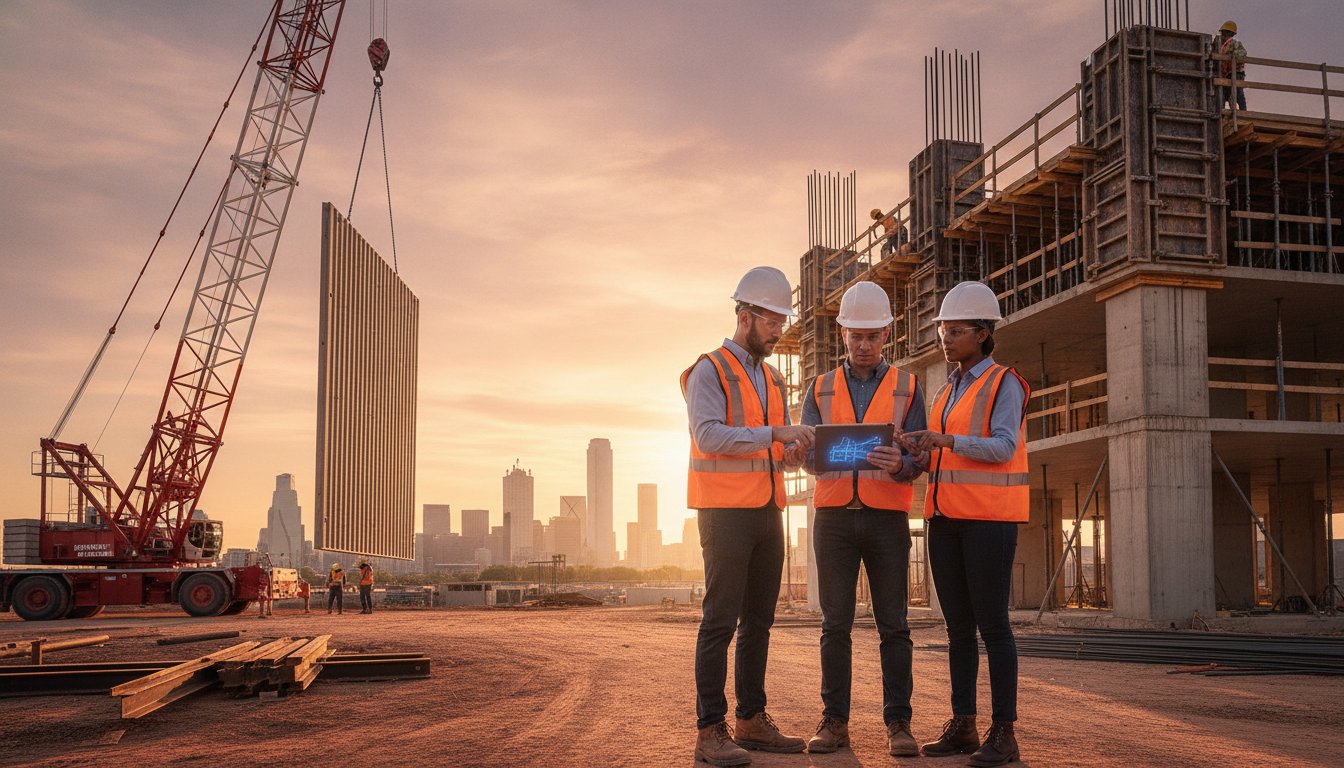
While the rapid speed of tilt-up panels often seems like the default choice for Texas industrial growth, the constraints of a high-density urban site can quickly turn that perceived efficiency into a logistical liability. This tilt up vs cast in place construction comparison is essential for developers in San Antonio and Dallas-Fort Worth who face tight footprints where there isn't room to cast large panels on-site. You're likely managing the pressure of rising material costs and the unforgiving nature of expansive clay soils that define the Houston and Austin landscapes. Choosing the wrong structural method doesn't just impact your immediate budget; it affects the long-term stability and professional viability of the foundation.
We'll provide a clear framework to help you determine which method ensures the structural integrity your project demands. This analysis examines how building height, site footprint, and the intense Texas heat influence the durability of your investment. You'll gain a thorough understanding of when to prioritize the vertical efficiency of cast-in-place concrete and when the horizontal scale of tilt-up offers a legitimate advantage. This guide serves as a reliable resource for making an informed decision that values substance and meticulous execution over temporary shortcuts.
Key Takeaways
- Understand the fundamental operational differences between pouring concrete in its final structural position versus casting panels on a horizontal bed for later lifting.
- Evaluate the tilt up vs cast in place construction comparison through the lens of monolithic strength, specifically why cast-in-place remains the standard for mid-rise and high-rise developments.
- Identify how site footprint and urban density in cities like Dallas or San Antonio dictate the feasibility of casting beds versus vertical forming.
- Learn how to mitigate the risks posed by expansive Texas clay soils through specialized foundation designs that prioritize long-term structural viability.
- Establish a decision-making framework based on building height and project complexity to ensure your commercial development is both cost-effective and enduring.
Defining the Core Differences in Concrete Construction
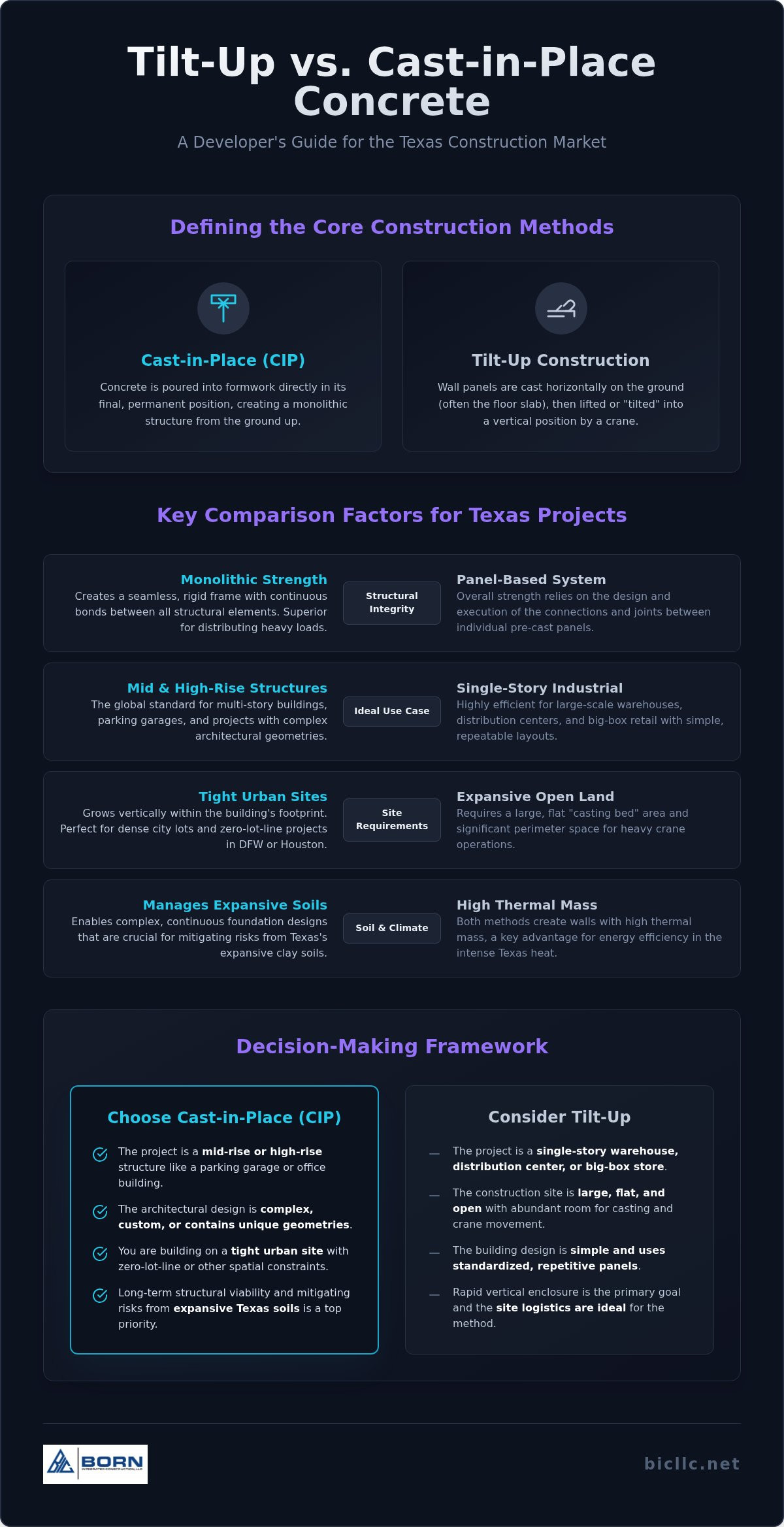
A tilt up vs cast in place construction comparison begins with the fundamental logistics of placement. Both methods utilize raw natural resources to create structures with high thermal mass, a critical factor for energy efficiency in the intense Texas climate. The primary distinction lies in where the concrete is poured and how it reaches its final structural position. While both rely on the same chemical reactions to achieve strength, their operational workflows require vastly different site management strategies. Understanding these mechanics is the first step in ensuring a project's long-term viability and structural performance.
The Cast-in-Place (CIP) Methodology
Cast-in-place concrete involves erecting formwork and placing reinforcement directly at the building's final elevation. This method has served as the global standard for high-rise structural integrity since the early 20th century. Because the concrete is poured into its permanent location, it allows for seamless, monolithic bonds between floors, columns, and walls. This creates a rigid frame that is exceptionally durable under the heavy loads associated with parking structures and mid-rise developments.
Developers often choose CIP for:
- Complex architectural geometries that require fluid, custom shaping
- Multi-story structural frames where vertical continuity is paramount
- Tight urban sites where there's no room for horizontal casting beds
This approach provides a level of structural flexibility that's difficult to replicate with pre-formed panels. It's a quality frequently evidenced in high-density Texas concrete projects where site constraints demand a vertical growth strategy rather than a horizontal one.
The Tilt-Up Construction Process
In contrast, the tilt-up construction method utilizes the building's finished floor slab as the primary casting surface. Workers lay out forms horizontally on this "casting bed," pour the concrete, and once cured, a crane tilts the panels into a vertical position. This process is inherently tied to the site's footprint. If a project lacks sufficient slab area to accommodate all wall panels at once, the schedule may suffer from "stack casting" or multiple pour phases, which can complicate the logistical flow.
Key variables for success include:
- Crane capacity and reach for safe, precise panel positioning
- Large, flat site areas to facilitate panel fabrication and temporary bracing
- Suitability for single-story industrial warehouses and large-scale distribution centers
The reliance on horizontal space makes tilt-up a preferred choice for expansive suburban developments where land is abundant. However, the requirement for a casting bed is the most significant logistical divider between these two systems. For a developer in a dense DFW or Houston corridor, the site's physical boundaries often make the choice for them. Tilt-up panels require a significant amount of room around the perimeter for crane movement. CIP construction grows vertically with the building's footprint, making it the more reliable option for projects with zero-lot-line constraints. This distinction ensures the chosen method aligns with the physical realities of the Texas landscape.
Structural Integrity and Design: The Strength of Cast-in-Place Concrete
Cast-in-place concrete provides a level of monolithic integrity that panel-based systems often struggle to match. When performing a tilt up vs cast in place construction comparison, developers must weigh the immediate speed of pre-cast panels against the enduring monolithic strength of site-poured concrete. This seamless structural bond is particularly vital for podium decks and complex foundations where loads must be distributed across a continuous, unyielding matrix. In cities like Houston and Austin, where mid-rise developments are the current standard for urban density, CIP provides the necessary stability to withstand lateral wind loads and the pressure of expansive soils. While engineers continue to study the seismic performance of tilt-up walls, the inherent rigidity of a cast-in-place structural frame remains the preferred choice for high-density environments requiring maximum long-term reliability.
Complex Geometries and Custom Architecture
The fluid nature of wet concrete allows developers to move beyond the rigid, box-like aesthetic typically associated with industrial warehouses. CIP accommodates curved walls, irregular structural footprints, and the intricate requirements of mixed-use retail-over-residential builds. This versatility is essential for podium slabs and thin shell cast-in-place structures, where the concrete must support several stories of different construction materials above a commercial ground floor. For projects requiring heavy-duty infrastructure or specialized retaining walls, the ability to form and pour on-site ensures that every square foot of a tight urban site is utilized effectively. This method also facilitates the precise integration of detention ponds and mass soil excavation plans, which are critical for site management in flood-prone Texas regions. You might explore our structural concrete projects to see how these complex designs translate into durable, physical assets.
Reinforcement and Load Distribution
Reliability in multi-level structures depends on the precision of rebar placement and the management of internal stresses. CIP allows for meticulous reinforcement density at high-stress points, such as the critical junctions between columns and slabs in structured parking garages. This level of detail is necessary for managing high-load concentrations in the massive foundations required for high-rise towers. Post-tensioning is frequently integrated into CIP slabs to create thinner, stronger floors that maximize vertical clearance and reduce the overall weight of the structure. By utilizing specialized tensioning cables within the formwork, developers can achieve longer spans between columns, which is a significant advantage for commercial interiors and parking layouts. This methodical approach to load distribution ensures that the building remains a steadfast asset, maintaining its structural integrity against the environmental demands of the Texas climate.
Speed, Logistics, and Site Constraints: When Tilt-Up Takes the Lead
The tilt up vs cast in place construction comparison often hinges on the project's timeline and the physical boundaries of the site. For expansive, single-story industrial warehouses, tilt-up panels offer an accelerated schedule that cast-in-place methods can't always match. By casting wall sections horizontally on the building's floor slab, crews can work simultaneously on multiple panels, significantly reducing the time spent on vertical formwork. However, this efficiency relies entirely on the availability of a large, flat casting bed. If a site lacks the acreage to accommodate these panels, the logistical advantage of tilt-up disappears, often making traditional concrete construction the more reliable path forward.
Logistics also extend to the heavy machinery required for execution. Lifting panels that frequently exceed 50,000 pounds requires substantial crane access and a clear perimeter around the building footprint. While precast garage foundations are manufactured off-site and transported, tilt-up panels are fabricated exactly where they'll stand. This eliminates transportation costs but increases the demand for on-site coordination. For a deeper look at the technical trade-offs, the Structural Design of Tilt-Up Concrete provides a thorough analysis of how these logistical choices impact the final structural outcome.
Urban vs. Suburban Construction Logistics
Site constraints in dense Texas city centers like Dallas or San Antonio often make cast-in-place the only viable choice. In these zero-lot-line environments, there's simply no room for the casting beds or the massive cranes required for tilt-up. Conversely, tilt-up remains the dominant force in suburban industrial corridors such as Conroe or The Woodlands, where land is plentiful. Regardless of the method, developers must prioritize thorough mass soil excavation and site preparation. Stabilizing the ground before the first pour is essential to prevent the foundation shifts common in Texas clay.
Weather Impacts on Texas Construction
The intense Texas climate introduces specific risks to the curing process that every developer must manage. When temperatures exceed 100 degrees, hydration control becomes a critical variable to prevent premature drying and surface cracking. While rain can delay the casting phase of tilt-up panels, the sheer volume of a cast-in-place pour requires a more complex mitigation strategy for moisture control. OSHA's 2026 heat illness prevention standards now mandate stricter enforcement of worker safety during these peak temperature windows, making methodical schedule management more than just a budget concern. Maintaining a consistent moisture level during the cure ensures the long-term durability of the slab and the professional standards of the finished structure.
Cost Factors and Long-Term Durability in the Texas Market
A comprehensive tilt up vs cast in place construction comparison requires an analysis of both initial capital expenditure and long-term lifecycle value. While tilt-up methods often present a lower entry cost for expansive single-story warehouses, the return on investment for cast-in-place (CIP) structures becomes evident in high-density urban environments. Developers must consider the total cost of ownership, including the maintenance of joint seals in panel-based systems versus the monolithic resilience of site-poured frames. In the volatile Texas market, where labor and material costs remained a primary concern through 2025 and 2026, choosing a method that minimizes long-term repairs is a matter of professional prudence. Soil movement dictates the budget. Without thorough subgrade preparation, the long-term viability of the structure is at risk.
Soil Stabilization and Foundation Integrity
The primary threat to structural longevity in Texas is the presence of expansive clay soils, which exert immense pressure on any foundation. In regions like Houston and Dallas, mass soil excavation and chemical stabilization are mandatory steps before any concrete is poured. Without these measures, both slab on grade and podium slabs are prone to significant cracking and movement. Effective paving stabilization ensures that the surrounding infrastructure remains as durable as the building itself. While a standard reinforced slab might cost between $6 and $11 per square foot in 2026, these figures don't include the critical site work necessary to counteract soil heave. Investing in robust site preparation is the only way to safeguard the foundation's integrity against the unique geological demands of the Gulf Coast and Central Texas.
Key factors influencing foundation reliability include:
- Mass soil excavation to remove unstable clay layers
- Chemical stabilization of the subgrade to prevent moisture-induced heave
- Precision installation of post tension slabs to manage structural loads
- Methodical installation of detention ponds to manage site runoff
Energy Efficiency and Thermal Mass
The thick concrete envelopes provided by both methods offer substantial thermal mass, which is a decisive factor in managing Texas cooling loads. This natural insulation reduces the strain on HVAC systems during 100-degree summers, leading to lower operational costs over the building's life. When performing a tilt up vs cast in place construction comparison for thermal efficiency, both systems offer excellent results, though the thickness of the concrete directly impacts R-values. CIP allows for easier integration of specialized insulation layers within custom formwork for mid-rise projects. Utilizing locally sourced aggregates and ready-mix concrete also supports project sustainability while mitigating the logistical risks of long-distance material transport. For developers prioritizing a steadfast and efficient asset, the durability of structural concrete remains unmatched. If you're managing a complex urban site, partner with BIC for reliable structural concrete solutions that stand the test of time.
Navigating Complex Structural Requirements with BIC’s CIP Expertise
A final tilt up vs cast in place construction comparison often reveals that the most critical variable isn't just the method chosen, but the partner's ability to execute complex designs under tight Texas constraints. Born Integrated Construction (BIC) provides turn-key civil and structural solutions that bridge the gap between initial site work and the final structural pour. For developers managing the dense urban corridors of DFW, Houston, and Austin, this integrated approach ensures that every phase of the project remains disciplined and methodical. Our commitment to professional stability means we prioritize long-term viability over temporary speed, ensuring each structure acts as a steadfast asset for decades to come.
Reliability in the Texas market requires a deep understanding of local infrastructure needs and a serious approach to safety. We maintain a focus on substance, delivering results through operational precision rather than stylistic hyperbole. By choosing a partner who understands the entire lifecycle of a concrete project, developers can mitigate the risks associated with multi-vendor handoffs and fragmented site management. You can learn more about Born Integrated Construction and our steadfast commitment to quality on every job site we manage.
Specialized Structural Solutions
Modern commercial developments require more than just vertical walls; they demand a comprehensive civil strategy that includes detention ponds, mass soil excavation, and intricate underground utility management. BIC specializes in the transition between these civil site requirements and the structural slabs of CIP mid-rise and high-rise developments. Our expertise in podium slabs and cast-in-place hotel structures allows us to manage high-density mixed-use projects where space is at a premium. We address the specific gap in the Texas market for structured concrete parking garages, providing the monolithic strength necessary for high-traffic infrastructure. This methodical management of details ensures that the structural core remains unyielding, even when faced with the complex geometries of contemporary urban architecture.
The BIC Advantage: Reliability and Execution
Our approach to concrete construction is rooted in a sense of duty and a focus on building lasting foundations. We don't just pour concrete; we establish a clear hierarchy of importance that prioritizes site safety and technical proficiency. This consistent performance is essential for maintaining the momentum of large-scale Texas infrastructure projects where delays can impact the entire project lifecycle. By following a logical progression from soil stabilization to the final structural finish, we ensure that every square foot of the build meets our high standards for durability and craftsmanship. BIC acts as a quiet leader in Texas concrete construction, establishing lasting value through proven results and unwavering consistency across the most demanding commercial landscapes.
Building a Resilient Future in the Texas Landscape
Selecting the right structural method is a decision that defines the long-term viability of your development. This tilt up vs cast in place construction comparison shows that while tilt-up serves expansive industrial needs, cast-in-place (CIP) remains the gold standard for urban density and structural complexity. Success in the Texas market depends on more than just speed; it requires a deep understanding of expansive clay soils and the technical precision needed for multi-level parking structures. Your choice isn't just about the current build; it's about the enduring nature of the asset you leave behind.
Born Integrated Construction brings a steadfast commitment to every project, offering turn-key civil and concrete services that prioritize safety and operational integrity. Specialized in CIP mid-rise foundations and parking structures, we maintain a proven track record across Houston, Austin, and DFW. We invite you to Partner with Texas’s structural concrete experts at Born Integrated Construction to ensure your next project is built on a foundation of professional stability. Your vision deserves the meticulous management and disciplined execution that only a seasoned partner can provide.
Frequently Asked Questions
Which is cheaper: tilt-up or cast-in-place concrete?
Tilt-up construction is typically more cost-effective for large, single-story structures like warehouses exceeding 80,000 square feet due to reduced formwork and labor. However, for mid-rise developments and tight urban sites, cast-in-place provides superior long-term value by maximizing vertical space. A detailed tilt up vs cast in place construction comparison must account for land costs, as the casting beds required for tilt-up panels often demand a larger, more expensive site footprint.
Can tilt-up concrete be used for high-rise buildings?
Tilt-up is generally limited to low-rise and mid-rise structures, typically reaching up to five stories. The weight of the panels and the limitations of crane lifting capacity make it unsuitable for high-rise construction. For buildings exceeding this height, cast-in-place concrete is the required standard. It provides the necessary monolithic structural integrity to support vertical loads and manage the intense lateral forces that high-rise towers face in the Texas environment.
How does Texas soil affect concrete foundation choices?
Expansive clay soils throughout Texas create significant pressure that can lead to foundation shifting and slab cracking. Developers must prioritize mass soil excavation and chemical stabilization before choosing a foundation method. While tilt-up relies heavily on a stable floor slab for casting, cast-in-place systems like podium slabs or deep-foundation CIP structures offer more flexibility in managing soil movement. Proper ground preparation is essential to ensure the long-term durability of any commercial concrete investment.
What is the typical curing time for cast-in-place concrete in Houston?
While concrete typically reaches its specified structural strength at 28 days, formwork for cast-in-place projects in Houston can often be removed within three to seven days depending on the mix design. The high humidity and heat of the Gulf Coast require careful hydration management to prevent the surface from drying too quickly. Methodical curing practices are vital to ensure the structural integrity of the slab and to prevent premature cracking during the initial setting phase.
Is tilt-up construction safe for areas prone to high winds?
Tilt-up construction is exceptionally safe and resilient against high winds once the panels are permanently connected to the roof system and foundation. These structures act as heavy-duty shear walls that provide substantial resistance to lateral forces. During the construction phase, however, temporary wind bracing is a critical safety requirement. Following OSHA 1926.704(a) standards ensures that panels are adequately supported until the permanent connections are secured, maintaining job site safety during hurricane-prone Texas seasons.
When should I choose a podium slab over a standard slab-on-grade?
You should choose a podium slab when your project involves high-density mixed-use development, such as residential units positioned over ground-floor retail or parking. This method provides a fire-rated structural transfer level that separates different occupancy types. While a standard slab-on-grade is sufficient for single-level industrial builds, a podium slab allows for vertical efficiency. It's the preferred solution for maximizing revenue on expensive urban lots in cities like Austin or San Antonio.
How does cast-in-place concrete improve building energy efficiency?
Cast-in-place concrete provides significant thermal mass, which helps regulate internal temperatures by absorbing and slowly releasing heat. This characteristic is especially beneficial in the Texas climate, where it reduces the demand on HVAC systems during peak summer temperatures. By creating a continuous, airtight structural envelope, CIP construction minimizes energy loss through gaps often found in multi-component wall systems. This results in lower operational costs and a more sustainable, energy-efficient building lifecycle.
What site conditions are required for tilt-up construction?
Tilt-up construction requires a large, flat, and unobstructed site to accommodate the casting beds where panels are fabricated. The site must also provide sufficient room for heavy-duty cranes to maneuver safely around the building perimeter. If your project is located on a congested urban lot with zero-lot-line constraints, tilt-up is likely unfeasible. A tilt up vs cast in place construction comparison often concludes that site geometry and the available footprint are the most decisive factors in choosing the right structural method.