Austin High Rise Structural Concrete: Developer's Guide
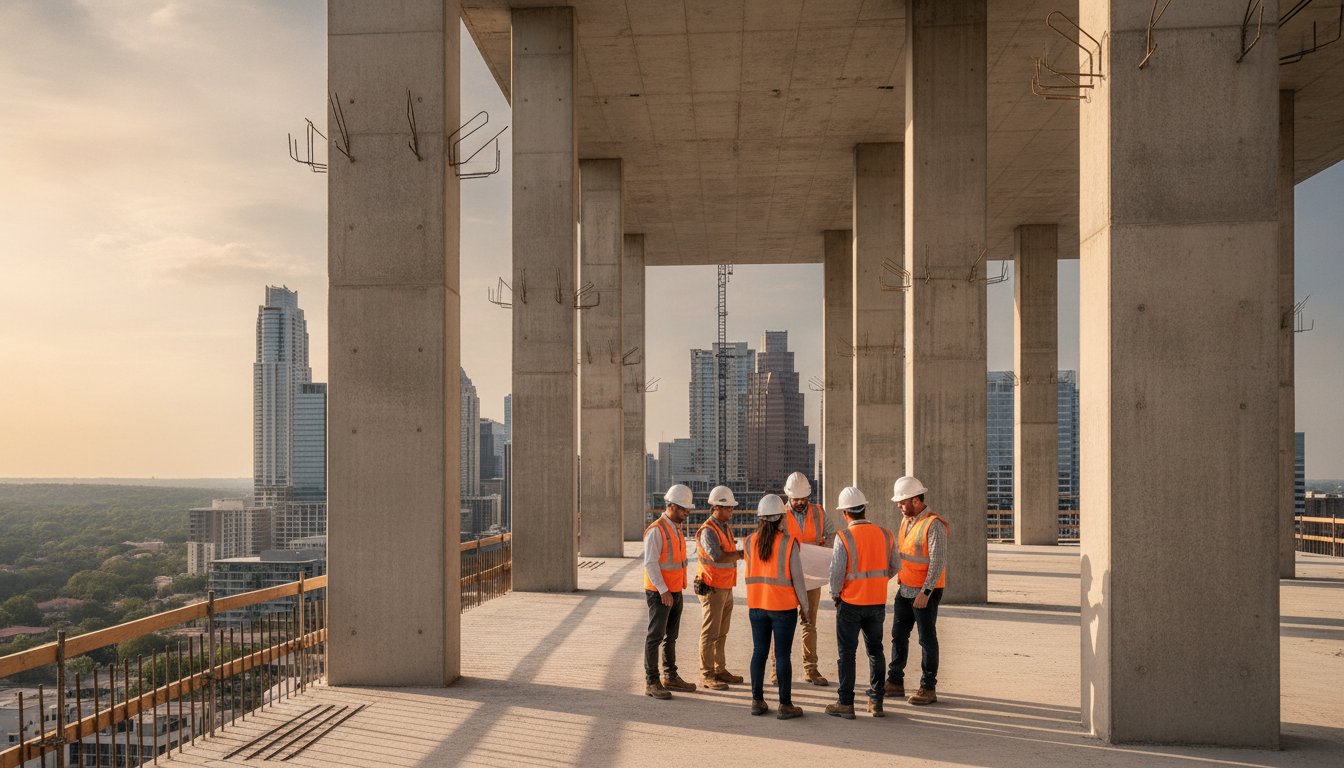
In the vertical expansion of the Texas capital, the distance between a successful topping-out ceremony and a stalled project is often measured by the coordination of the first pour. You understand that managing high-rise developments in Central Texas requires more than just a blueprint; it demands a disciplined synchronization of civil earthwork and vertical execution. Unreliable scheduling and coordination gaps between site prep and structural work often derail the predictable cadence necessary for profitable delivery. Securing reliable structural concrete for high rise buildings Austin means choosing a team that masters both the geological complexities of the Edwards Plateau and the intense thermal demands of the local climate.
This guide provides the technical insights you need to ensure foundation stability and maintain steady vertical progress. We will examine the essential geological considerations unique to the region, the nuances of managing concrete quality in high-heat environments, and the selection criteria for a turnkey partner capable of bridging the gap between mass soil excavation and the final structural slab. Discover how a methodical approach to cast-in-place construction can transform your project's reliability and long-term viability.
Key Takeaways
- Understand how Austin’s unique soil profiles, ranging from expansive clays to limestone bedrock, necessitate specific foundation strategies for high-rise stability.
- Explore the technical requirements of high-strength cast-in-place (CIP) systems and podium slabs designed for modern vertical architecture.
- Learn the essential selection criteria for structural concrete for high rise buildings Austin to mitigate risks associated with high-heat environments and unreliable scheduling.
- Discover the operational benefits of integrating civil site preparation with vertical structural work to ensure a seamless transition and a predictable construction cadence.
- Identify the professional markers of a steadfast partner who prioritizes safety, meticulous detail management, and long-term structural viability.
The Role of High-Performance Structural Concrete in Austin High-Rises
Structural concrete serves as the load-bearing backbone for every vertical development piercing the Austin skyline. It's a precisely engineered system designed to transfer immense loads from the roof down to the foundation. As developers push for greater heights and more complex geometries, the demand for high-strength materials has become the standard. The selection of structural concrete for high rise buildings Austin is a decision that dictates the project's long-term viability and safety. This material provides the essential rigidity needed to withstand environmental stressors while offering the versatility required for modern architectural expression.
Modern verticality relies on reinforced concrete structural systems to handle the immense compressive forces at the base while managing tensile stresses higher up. The shift toward sophisticated Cast-in-Place (CIP) solutions allows architects to realize bold visions without compromising the integrity of the build. This synergy between engineering and craftsmanship ensures that the finished structure remains a steadfast asset. Developers often evaluate successful high-rise projects to understand how these technical requirements translate into physical reality and operational stability.
Why Cast-in-Place (CIP) Dominates the Austin Skyline
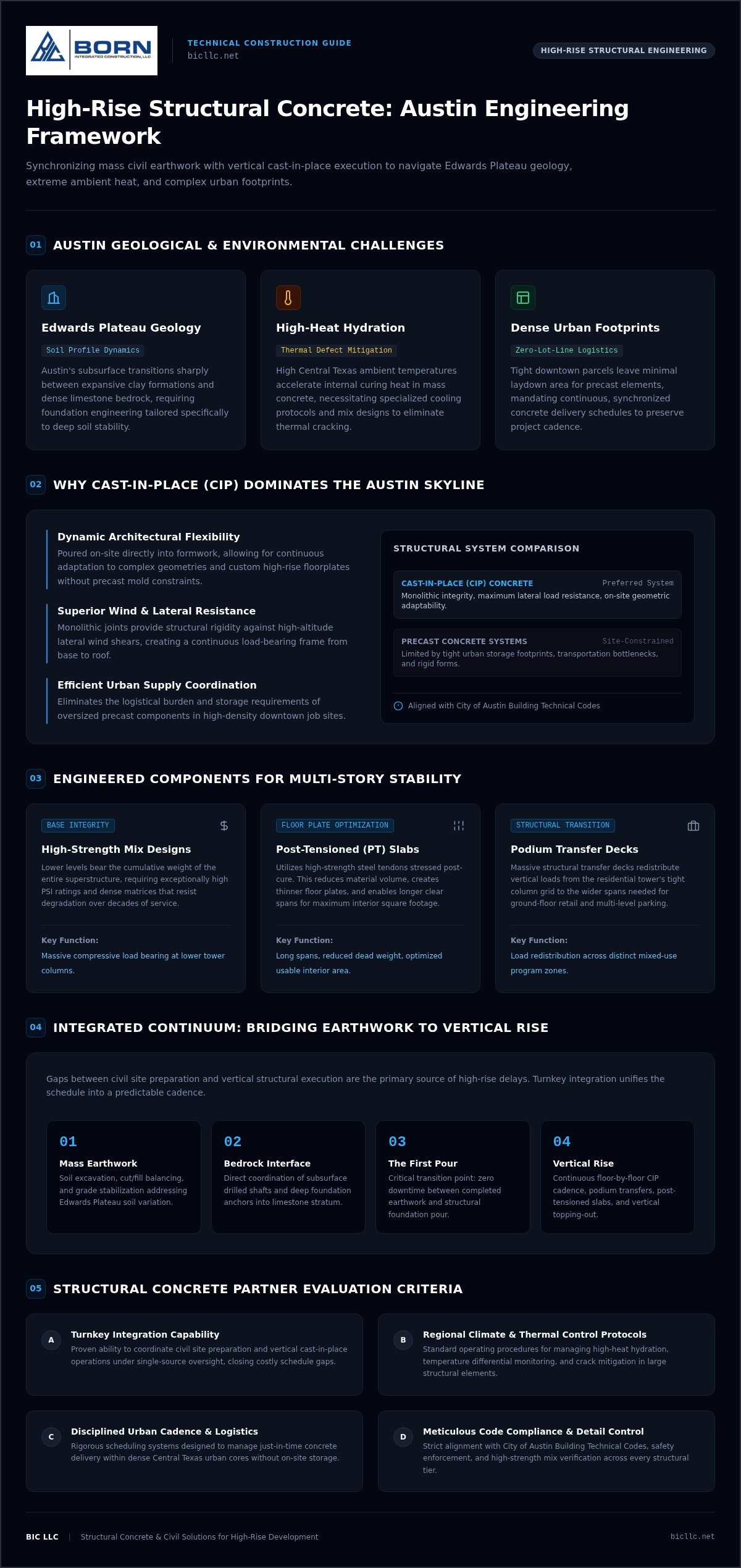
The choice of structural concrete for high rise buildings Austin often favors CIP methods due to their inherent flexibility. Unlike precast alternatives, CIP concrete is poured on-site, allowing for seamless adjustments to complex architectural geometries. This method provides superior resistance to wind loads and lateral forces, which is critical for taller structures. In the dense urban corridors of downtown Austin, the ability to pour concrete on-site is an operational necessity. Tight lots offer little room for the storage of massive precast components; therefore, the efficiency of a constant, scheduled concrete delivery is indispensable for maintaining a predictable construction cadence.
High-Strength Concrete Mix Designs for Vertical Loads
The lower levels of a high-rise bear the cumulative weight of the entire building, requiring concrete with exceptionally high PSI ratings. Engineering these mixes involves meticulous detail management to ensure the material performs under pressure. In the Texas heat, thermal control becomes a primary concern. Large structural elements generate significant internal heat during the curing process. If this isn't managed, it can lead to thermal cracking or long-term structural defects. Professional contractors utilize specialized mix designs and cooling techniques to maintain integrity. These high-performance mixes don't just support the weight; they reduce maintenance costs by providing a dense, durable matrix that resists degradation over decades of service.
Engineering Cast-in-Place Solutions for Multi-Story Stability
Vertical framing for high-rise structures requires a disciplined approach to structural engineering. It's not just about the raw strength of the material; it's about the precision of load distribution across multiple stories. We often utilize post-tensioning techniques to create thinner, more efficient floor plates. This method involves high-strength steel tendons that are stressed after the concrete has cured, allowing for longer spans and reduced material volume. It's a critical component of modern structural concrete for high rise buildings Austin, as it allows developers to optimize interior square footage while maintaining a rigid, stable frame. Every phase of this engineering must align strictly with the City of Austin Building Technical Codes to ensure long-term compliance and safety.
Podium Slabs and Structural Transfers
High-rise developments in Central Texas frequently feature a mixed-use profile, combining parking, retail, and residential spaces. This architecture requires a robust transition between the different structural requirements of each zone. We engineer podium slabs to act as massive transfer decks. These slabs redistribute the vertical loads from the residential tower’s frequent column grid to the wider spans required for commercial spaces or parking garages. For developers managing regional portfolios, consulting an expert podium slab contractor in Houston can provide valuable technical context on how these structural solutions scale across different Texas markets. Maintaining this level of engineering precision requires a partner who understands the "Integrated" philosophy. You can learn more about our commitment to these standards by reviewing our professional background and approach.
Vertical Formwork and Pumping Logistics
Execution in Austin’s congested corridors demands meticulous logistics management. A consistent vertical pour schedule is the lifeblood of a project’s timeline. We prioritize disciplined formwork management to ensure that each floor reaches its design strength before the next level begins. This involves:
- Strategic concrete pumping layouts to reach high elevations without loss of pressure or material segregation.
- Precise coordination with municipal traffic authorities for delivery in downtown zones.
- Real-time safety monitoring and wind-speed assessments during high-elevation pours.
- Meticulous cleaning and maintenance of formwork to ensure consistent surface finish and structural dimensions.
Precision in structural concrete for high rise buildings Austin isn't just about the mix; it's about the delivery. In the tight urban core, gaps in coordination lead to costly delays. A steadfast partner manages these variables to maintain a predictable construction cadence and ensures that the transition from ground-level site prep to vertical execution is seamless.
Managing Austin’s Unique Geological Challenges in High-Rise Foundations
Austin's terrain presents a distinct duality that complicates vertical development. To the east, the Blackland Prairie's expansive clays create significant volumetric changes with moisture fluctuations. Central and western districts sit atop Edwards Limestone. For developers, the goal is reaching that stable bedrock. Using high-performance structural concrete for high rise buildings Austin requires a foundation strategy that accounts for these shifts. Soil stabilization isn't a suggestion; it's a structural requirement before vertical work begins. Stability relies on this transition. We prioritize early-stage geological analysis to ensure the mix design and foundation type align with the specific soil profile of your site.
Safety and stability go hand-in-hand during this phase. We adhere strictly to OSHA cast-in-place concrete standards to ensure that shoring and structural stability controls are maintained during deep foundation pours. This prevents catastrophic failures in deep excavations where soil pressure is at its peak. Our commitment to these standards protects both the workforce and the long-term integrity of the structure. It's a disciplined approach that defines our role as a steadfast partner in the Austin market.
Deep Foundations and Mass Excavation
Tall buildings in the urban core often require drilled piers or massive mat foundations to distribute vertical loads. We integrate mass soil excavation directly with structural site readiness. This approach ensures that once we hit the design depth, the concrete pour follows immediately. Leaving an open excavation exposed to Central Texas weather can compromise the soil's load-bearing capacity. By managing both earthwork and structural concrete for high rise buildings Austin, we eliminate the coordination gaps that often plague multi-contractor sites. You can see how we apply this precision across various high-rise projects in the region.
Detention Ponds and Site Infrastructure
Managing site water is as critical as the foundation itself. In dense urban environments, we construct detention ponds and cast-in-place retaining walls to manage site elevation and stormwater runoff. This infrastructure must be perfectly synchronized with the building's core foundation. We ensure that underground utility systems remain protected during the vibration-heavy phases of foundation work. It's a duty of protecting the long-term viability of the asset from the ground up. Meticulous management of these details prevents the settling or drainage issues that can arise years after completion, reinforcing the enduring nature of our professional output.
Evaluating Structural Partners: Efficiency, Safety, and Quality Control
Selecting a partner for structural concrete for high rise buildings Austin is a decision that impacts the entire lifecycle of a development. A steadfast partner is identified by their commitment to operational precision and professional stability. Reliability isn't just a claim; it's demonstrated through meticulous quality control protocols for high-strength structural pours. These protocols ensure that every cubic yard of concrete meets the design PSI and thermal requirements discussed previously. You should look for specific markers of a seasoned expert during the evaluation process:
- Proven experience in vertical cast-in-place (CIP) execution for structures exceeding ten stories.
- Documented quality control procedures, including on-site slump testing and standardized cylinder break schedules.
- A transparent safety record that exceeds industry averages for vertical construction.
- The capacity to manage integrated civil and structural scopes simultaneously.
The Integrated Advantage: Civil Meets Structural
Efficiency in the high-rise sector is often lost in the coordination gaps between separate contractors. By utilizing an integrated model, developers reduce the friction between site preparation and vertical construction. A single point of responsibility for both earthwork and concrete work ensures that the transition from detention ponds to podium slabs is seamless. This approach is cost-effective because it eliminates redundant mobilization and streamlines the master schedule. When one team manages the mass soil excavation and the subsequent structural vertical work, the risk of scheduling delays is significantly mitigated. It's about establishing a predictable construction cadence from the first day of site prep.
Safety Standards in Vertical Construction
A transparent safety culture is the hallmark of a seasoned professional. On a high-rise site, the stakes are elevated, and the margin for error is non-existent. We prioritize the meticulous management of fall protection systems and formwork safety to protect the workforce and the project's timeline. This focus on safety is rooted in a deep sense of duty and ethical conduct. Integrity in structural work means never cutting corners on shoring inspections or material testing. Our core values and safety commitment reflect this disciplined approach to every pour. We don't just build structures; we build them with a focus on the enduring nature of our professional output.
Establishing a predictable construction cadence requires a partner who leads through proven results and unwavering consistency. If you are ready to secure a dependable partner for your next development, contact our team to discuss our integrated civil and structural services.
Integrated Concrete Solutions: Why BIC is the Choice for Austin High-Rises
Born Integrated Construction (BIC) offers a comprehensive service scope that addresses the specific challenges of the Central Texas market. Choosing a partner for structural concrete for high rise buildings Austin requires trust in their ability to manage both the physical material and the logistical complexities of a busy urban site. We provide a grounded approach that prioritizes reliability and professional stability; ensuring your project moves from the initial mass soil excavation to the final topping-out without the friction typically associated with multi-vendor coordination. Our status as a local Texas partner with a proven track record allows us to anticipate the unique demands of local regulations and environmental conditions.
Developers seeking excellence in vertical execution can view our BIC Projects Portfolio to see our commitment to structural concrete in action. We don't just provide labor; we provide a disciplined partnership focused on the enduring nature of the structures we build. This commitment to craftsmanship is what allows us to deliver consistent value to every developer we serve.
Turnkey Civil and Structural Performance
Our integrated model bridges the gap between horizontal site preparation and vertical structural work. This turnkey performance begins with mass soil excavation and detention ponds; moving seamlessly into the construction of podium slabs and CIP high-rise frames. By maintaining a single point of responsibility; we ensure that the geological considerations and site infrastructure discussed in previous sections are managed with absolute precision. This steadfast focus on long-term viability translates to on-time project completion and a reduction in the overhead costs associated with scheduling gaps. We act as a quiet leader in the field; focusing on execution and the meticulous management of details rather than disruptive innovation. It's this level of operational precision that ensures a predictable construction cadence for your development.
Partnering for the Future of Austin
Building the future of the Austin skyline requires more than technical proficiency; it requires a deep-rooted commitment to high standards and ethical conduct. We value the long-term relationships we build with developers and vendors; recognizing that complex developments succeed through unwavering consistency. Whether we are constructing CIP midrise and highrise residential buildings or structured concrete parking garages; our goal remains the same: to deliver consistent value through proven results. We invite you to learn more about our professional philosophy and integrated services to see how we can support your next vertical development. Contact our team to begin a project consultation and secure a steadfast partner for your structural needs.
Securing the Foundation of Austin’s Vertical Growth
Successful vertical development in Central Texas relies on more than just high-strength materials; it depends on the synchronization of complex logistics and geological precision. We've explored how transitioning from mass soil excavation to vertical cast-in-place execution requires a partner who understands the nuances of local soil profiles and thermal control in high-heat environments. By integrating civil and structural services, you eliminate the coordination gaps that often lead to unreliable scheduling and increased risk. Our specialized CIP midrise and highrise expertise provides the operational precision necessary for maintaining a predictable construction cadence and ensuring the durability of your asset.
Choosing the right partner for structural concrete for high rise buildings Austin means prioritizing safety, integrity, and long-term viability. We offer a grounded approach that emphasizes substance over style, delivering the reliability you need to navigate the complexities of modern urban construction. We invite you to Partner with Born Integrated Construction for Your Next Austin High-Rise and experience our steadfast commitment to safety and integrity. Let's build a lasting legacy in the Austin skyline together.
Frequently Asked Questions
What are the specific requirements for structural concrete in Austin high-rises?
Structural requirements focus on high-strength PSI ratings for lower levels and meticulous thermal control for thick elements. Austin’s climate necessitates mix designs that manage internal heat during the curing process to prevent cracking. Every project must align with the City of Austin Building Technical Codes to ensure safety. This involves standardized cylinder break schedules and slump testing to verify that the material meets the engineered specifications for load-bearing stability.
How does Austin's soil impact high-rise foundation design?
The soil profile in Central Texas varies significantly between expansive Blackland Prairie clays and the Edwards Limestone bedrock. Foundations must be engineered to reach stable bedrock to prevent shifting caused by moisture fluctuations in the clay. This often requires deep foundation systems like drilled piers or mat foundations. Developers must prioritize soil stabilization and mass excavation strategies that account for these geological shifts to maintain the long-term integrity of the vertical structure.
What is the benefit of using Cast-in-Place (CIP) concrete for multi-story buildings?
Cast-in-Place concrete provides unmatched flexibility for complex architectural geometries and superior resistance to lateral forces like wind. In the dense urban core, pouring on-site is an operational advantage because it eliminates the need to store massive precast components on tight lots. This method ensures a seamless structure with fewer joints; enhancing the overall durability and safety of the frame. It allows for a more predictable construction cadence through consistent, scheduled material deliveries.
Does BIC handle both the excavation and the structural concrete work?
Yes; Born Integrated Construction provides a turnkey solution that includes both mass soil excavation and structural concrete for high rise buildings Austin. This integrated approach eliminates the coordination gaps that often occur when using separate civil and structural contractors. By managing the project from initial earthwork to the final CIP pour; we ensure a seamless transition and a more efficient schedule. This single point of responsibility reduces developer risk and maintains high quality standards throughout.
Why is soil stabilization necessary for commercial paving and high-rise foundations?
Soil stabilization is a critical structural requirement used to modify the physical properties of the earth to increase its load-bearing capacity. In the Austin area; this process prevents the settling or shifting that can occur due to the region's expansive clays. For high-rise foundations and commercial paving; stabilization creates a predictable and rigid base. This step is essential for ensuring the long-term viability of the asset and protecting the structure from environmental stressors over its lifecycle.
What safety protocols are most critical for high-rise concrete construction?
Safety on high-rise sites centers on the meticulous management of fall protection systems and the integrity of vertical formwork. We adhere strictly to OSHA cast-in-place concrete standards; including regular shoring inspections and wind-speed monitoring during high-elevation pours. Maintaining a transparent safety culture is vital for protecting the workforce and ensuring the project's timeline remains intact. These protocols are part of a disciplined approach to execution that prioritizes the security of every professional on the site.
How does a podium slab facilitate mixed-use high-rise development?
A podium slab acts as a massive structural transfer deck that redistributes vertical loads between different building zones. In mixed-use developments; these slabs allow for the wide spans required for parking garages or retail spaces at the base while supporting the frequent column grid of residential towers above. Engineering these slabs requires precise load-transfer calculations to ensure multi-story stability. This component is essential for maximizing the functionality and square footage of high-density urban projects.
How do high-strength concrete mixes perform in the Texas heat?
High-strength structural concrete for high rise buildings Austin must be engineered to withstand the intense thermal demands of the Texas summer. Large pours generate significant internal heat; which requires specialized mix designs and cooling techniques to prevent thermal cracking. We utilize precise hydration management to ensure the concrete cures correctly without losing its design strength. This level of technical proficiency ensures that the structural elements remain dense; durable; and capable of supporting immense vertical loads for decades.