Challenges of Mass Excavation Projects: Risks, Responses, and Planning
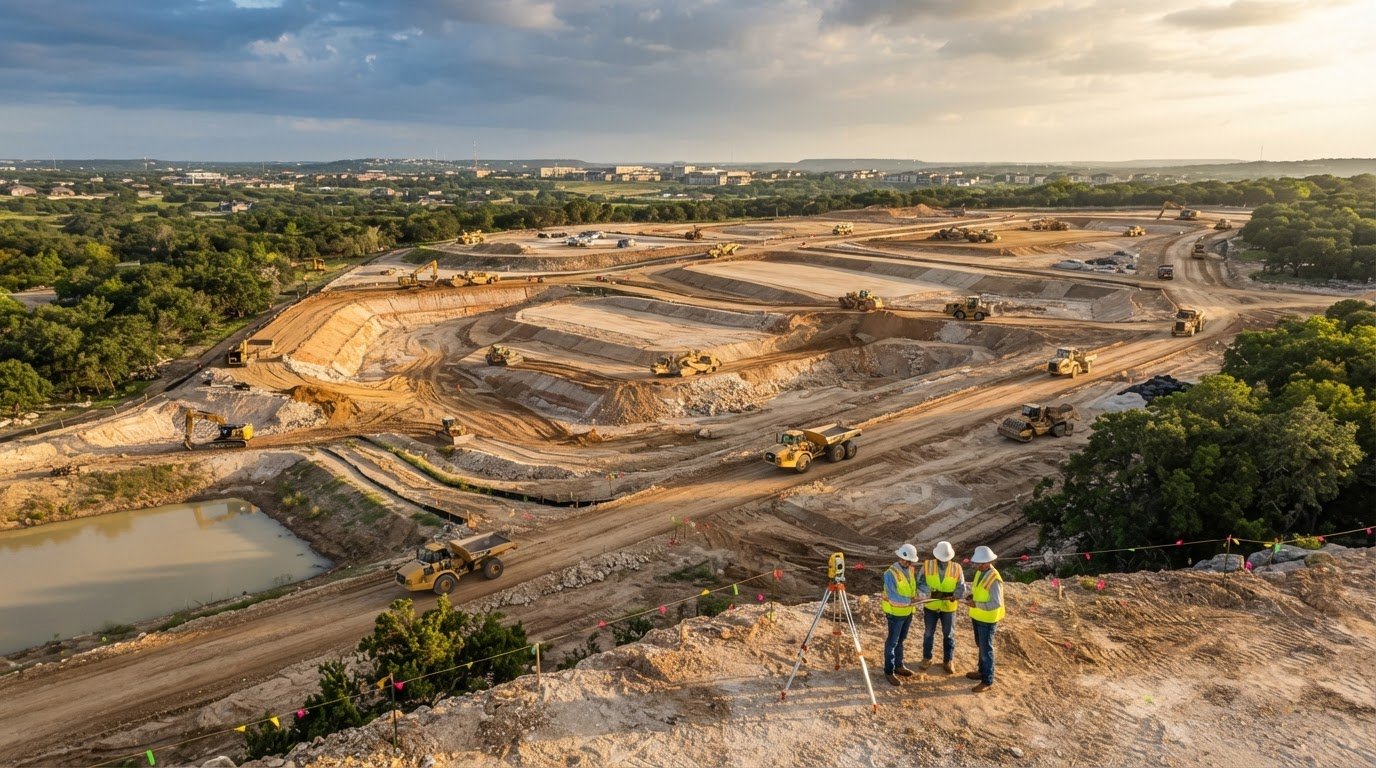
What if the excavation plan is sound, but the ground beneath the site tells a different story? The challenges of mass excavation projects often begin with uncertain subsurface conditions, then extend to water, weather, access, utilities, and the grades needed for follow-on work. These variables can affect quantities and sequencing. Identifying them early helps teams plan for their effects on safety, schedule, and the next phases of construction.
Effective planning connects excavation decisions to the full scope of site work. This article explains key risks to recognize before work begins and practical ways to respond as conditions change. It also covers coordination around earthwork, utilities, stormwater infrastructure, and stabilized subgrades. Born Integrated Construction provides mass soil excavation and turn-key civil work, coordinating related site activities to support site readiness.
Key Takeaways
- Identify how site scale, earth quantities, and sequencing increase coordination demands before excavation begins.
- Understand how soil variability, groundwater, and weather can affect grading, access, and readiness for follow-on work.
- See how utility coordination, access planning, grade control, and hauling decisions can help address the challenges of mass excavation projects.
- Use a five-step planning sequence to connect project documents and site constraints with work interfaces, controls, and field monitoring.
- Explore how coordinating excavation with earthwork, detention ponds, soil stabilization, and underground utilities supports site readiness.
What Makes Mass Excavation Projects Challenging on Texas Sites?
Mass excavation moves earth across a broad area to establish the grades and site conditions needed for construction. Unlike a localized foundation excavation or utility trench, it can affect much of a site and connect directly to earthwork, drainage, utilities, and later building activities. A change in one area can alter where soil is cut, placed, or hauled elsewhere.
That scale increases coordination demands. Crews need to meet target grades while managing cut-and-fill areas, haul routes, equipment access, and the sequence of connected work. Drawings and site investigations provide essential planning information, but they cannot describe every point underground. The challenges of mass excavation projects often arise when ground conditions, water, access, and sequencing interact.
How does mass excavation differ from smaller excavation work?
Localized excavation generally addresses a defined feature, such as a foundation footprint or utility trench. Mass excavation reshapes a wider site, so decisions about one section can affect material handling and grades elsewhere. The broad scope of excavation includes different types of earth removal, but mass work requires particular attention to how cut, fill, and hauling fit the overall site plan.
For example, moving soil through an active work area may compete with equipment access or interfere with utility installation. Target grades matter too: areas prepared for drainage or building construction need to align with the next phase. Plans and investigations guide decisions, while field conditions still require observation and coordination.
Which site conditions deserve early attention in Texas?
Texas sites do not share one uniform subsurface or weather profile. Soil composition, groundwater, drainage patterns, and rainfall exposure can differ from project to project. These conditions may affect how material is handled, whether areas remain accessible, and how the work sequence supports grading and stabilization. Review site-specific information early rather than relying on assumptions from another location.
Access deserves equal consideration. In urban settings, nearby activity, limited work areas, and constrained equipment routes can affect where excavation and hauling take place. A review of the site-work project portfolio can also show the range of work connected to civil construction, without treating one project as a template for another.
In brief, excavation risk comes from interacting ground, water, access, and sequencing conditions. Treating these as connected planning considerations helps clarify how excavation can affect the work that follows.
How Soil, Groundwater, and Weather Disrupt Mass Excavation
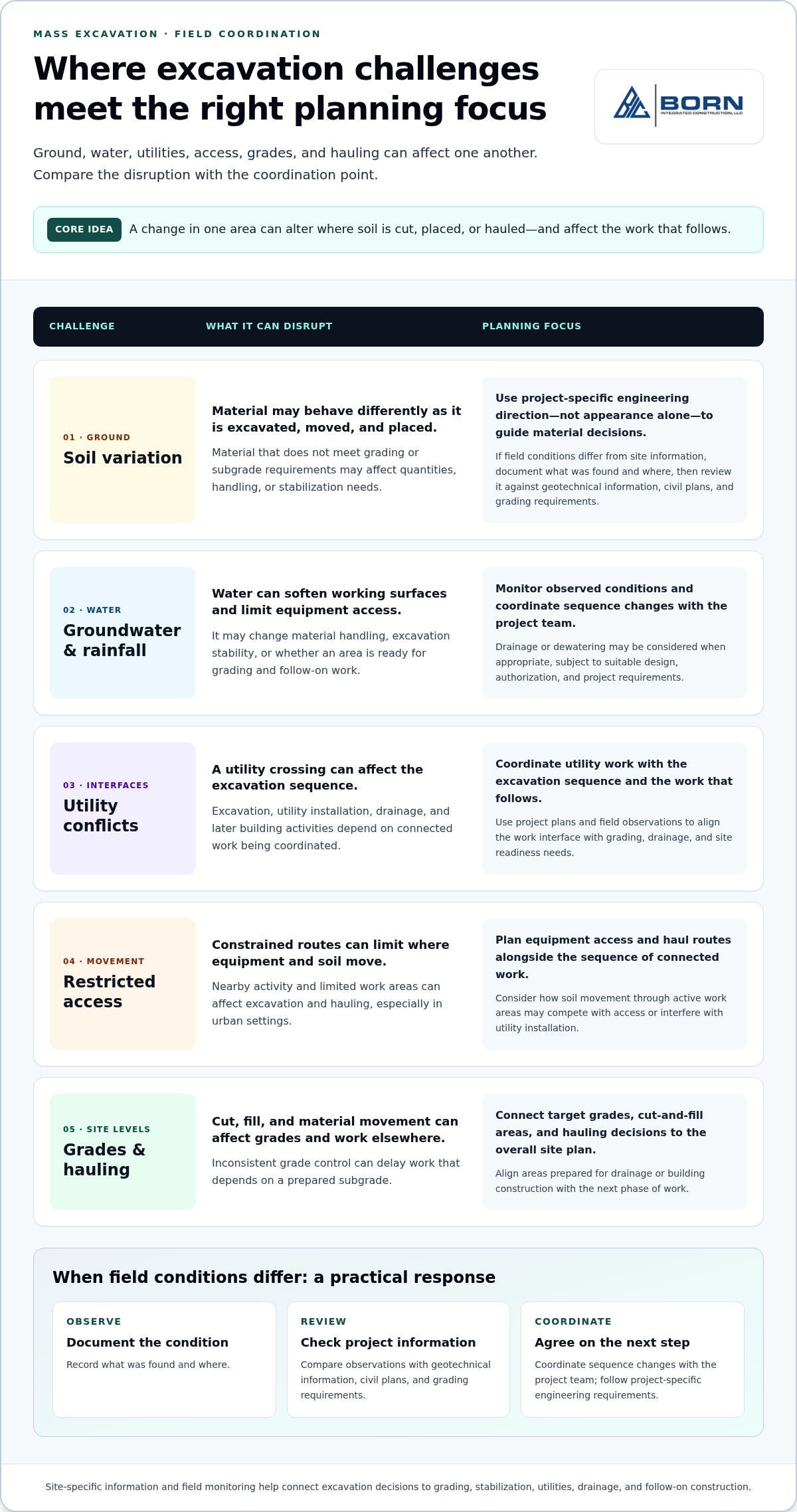
Large-scale earthwork depends on more than the planned cut and fill. Soil that varies across a site can behave differently as it is excavated, moved, and placed. Material that does not meet project grading or subgrade requirements may affect quantities, handling, and the need for stabilization. Base these decisions on project-specific engineering direction, not appearance alone.
Groundwater and rainfall can compound the issue. Water may soften working surfaces, limit equipment access, change how material can be handled, or leave areas unready for grading and follow-on construction. A change in site conditions can affect both the immediate work sequence and the handoff to utilities, drainage, or building activities.
What happens when field conditions differ from site information?
Geotechnical investigations provide evidence from sampled locations, not a complete map of everything underground. If crews encounter a material or condition that differs from the available information, start by documenting what was found and where. The project team can then review the observation against geotechnical information, civil plans, and grading requirements before determining the next step.
This process helps prevent premature decisions about removing, replacing, or treating soil. Any response should follow project-specific engineering requirements. Where unexpected ground conditions also raise excavation safety concerns, teams can refer to OSHA’s excavation safety standards to understand the hazards involved.
How do water and weather affect excavation decisions?
Conditions can change during the work. Rain may affect haul routes or working surfaces, while groundwater may influence excavation stability, material movement, and whether a subgrade is ready for the next activity. Monitor observed conditions and coordinate any sequence changes with the project team instead of assuming the original plan will remain suitable in every area.
Drainage or dewatering may be considered where appropriate, but these are project-dependent measures that require suitable design and authorization. Check geotechnical, environmental, and regulatory requirements against the documents governing the project. Broad assumptions about Texas soil, groundwater, or weather are not a substitute.
Consistent field documentation connects changing conditions to decisions about grading, stabilization, and downstream work. For examples of related civil construction in practice, explore Born Integrated Construction’s site-work project portfolio.
Comparing Responses to Utility, Access, Grade, and Hauling Challenges
Utility conflicts, restricted access, grade discrepancies, and material movement rarely occur in isolation. A utility crossing may affect the excavation sequence; a constrained haul route can limit where equipment and soil move; and inconsistent grade control can delay work that depends on a prepared subgrade. Comparing each challenge by its likely effect and coordination point helps the project team decide where to focus attention.
| Challenge | Potential project effect | Response category | Responsible coordination point |
|---|---|---|---|
| Existing or planned utilities | Conflict with excavation limits, create a need to adjust sequencing, or affect access to a work area. | Review available utility information and coordinate field verification before and during related excavation. | Sitework and utility coordination with the project team. |
| Limited access or staging space | Restrict equipment movement, material stockpiling, and truck circulation. | Plan site entry, staging areas, equipment paths, and haul routes together. | Site logistics coordination with affected work activities. |
| Grade variation | Leave areas unready for drainage, paving, or follow-on construction. | Monitor grades throughout the work and compare field conditions with project requirements. | Survey, earthwork, and downstream trade coordination. |
| Cut, fill, and hauling demands | Compete for work area or disrupt the sequence between excavation and other site tasks. | Coordinate material handling and hauling with the planned work sequence. | Earthwork planning and site logistics. |
How can teams reduce utility and access conflicts?
Utility records help inform planning, but they do not guarantee exact field locations. Review the available information, coordinate field verification, and communicate findings before excavation affects the area. If conditions or discoveries call for a sequence change, align that decision with the project team before moving into connected work.
Access planning should account for more than the route to the site. Equipment entry, turning and operating space, staging, haul paths, and nearby activity all influence how work areas can be used. Treat these as linked logistics decisions: a route that works for one phase may conflict with another crew or with material handling as the project advances.
Why do grade control and material logistics matter at scale?
Grade monitoring is an ongoing control, not just a final check. Consistent attention to target elevations supports drainage and subgrade preparation, including readiness for paving. Cut-and-fill decisions also shape where material needs to move and when areas can be released for follow-on construction.
These connected decisions are central to the challenges of mass excavation projects. Coordinating utility information, access, hauling, and grade control helps the team identify conflicts early and keep each work area aligned with the next phase.
How to Plan for Mass Excavation Risks Before Work Begins
A structured preconstruction review connects the excavation plan to the work that follows. The challenges of mass excavation projects are easier to manage when teams identify assumptions, site constraints, and work interfaces before mobilization, then maintain a clear process for responding to field changes.
Use this five-step sequence to establish that planning discipline:
- Review project documents. Consider geotechnical information, civil plans, utility information, grading requirements, and other project constraints together. Note where assumptions depend on sampled information or require field coordination.
- Assess site constraints. Identify access points, staging areas, drainage considerations, adjacent activity, and routes for equipment and material movement. These factors shape how work areas can be opened and used.
- Coordinate interfaces. Align excavation sequencing with utility installation, soil stabilization, and stormwater work. A change to one activity can affect access, grades, or readiness for another, so responsibilities and communication paths should be clear.
- Plan controls. Establish how the team will monitor grades, document field conditions, communicate deviations, and coordinate decisions. Controls should support safe, orderly work and the project’s documented requirements.
- Monitor conditions. Compare observed conditions with the plans as work proceeds. Communicate changes promptly and coordinate adjustments with the appropriate project decision-makers before changing scope or sequence.
What should the project team review before mobilization?
Review geotechnical information, grading plans, utility information, and project constraints as one coordinated set. Look for areas where excavation may meet existing or planned utilities, where drainage affects the work sequence, or where limited staging could constrain material handling. Document key assumptions and establish how the team will share field observations and updates about changed conditions.
How should teams manage changing conditions during excavation?
Consistent field observation helps the team recognize when actual conditions differ from the information used for planning. Record the location and nature of the deviation, communicate it promptly, and coordinate the response with the appropriate project decision-makers. This supports informed adjustments without presuming that scope, method, or schedule can remain unchanged as conditions and requirements vary.
Coordinating excavation with stabilization, underground utilities, and stormwater infrastructure can help limit avoidable conflicts between connected work. To see examples of related site and civil construction, review Born Integrated Construction project examples.
Coordinating Mass Excavation with Texas Civil Site Work
Mass excavation establishes more than building grades. It can also prepare areas for utilities, stormwater infrastructure, stabilized subgrades, and other civil work. When these scopes are planned separately, decisions about access, material movement, or finished elevations can create conflicts at handoffs. Coordinating related work helps the project team align the sequence and understand how one activity affects the next.
Born Integrated Construction provides mass soil excavation, earthwork, detention ponds, soil stabilization, underground utilities, and turn-key civil work, alongside concrete construction. These capabilities support broader site readiness when excavation is one part of the project. For example, excavation sequencing may need to align with utility installation, detention pond construction, or subgrade preparation for follow-on work. The appropriate sequence depends on project plans and conditions.
When does integrated civil work help manage site complexity?
Integrated coordination is useful when multiple civil scopes share work areas, grades, or access routes. A detention pond may connect to site drainage planning, while utility work and soil stabilization may depend on areas being excavated or prepared in a particular sequence. Clear coordination helps establish when an area is ready for the next activity and who needs to know if field conditions affect that handoff.
Born Integrated Construction’s project portfolio provides examples of completed work. Each project has its own requirements, so examples offer context rather than a promise of a particular result on another site.
What should owners expect from a dependable excavation partner?
Owners should expect clear communication about work interfaces, field observations, and decisions that may affect sequencing. Safety-conscious planning, integrity in addressing project conditions, and disciplined coordination support efficient execution and quality workmanship. These principles matter across excavation and related civil scopes, as well as the transition to concrete construction.
Born Integrated Construction’s civil and concrete capabilities include earthwork, detention ponds, soil stabilization, underground utilities, and concrete construction. The company emphasizes safety, integrity, efficiency, and quality in its work. Coordinated site work does not remove uncertainty, but it gives project teams a clearer framework for managing connections between scopes.
For examples of completed work, explore Born Integrated Construction’s project experience.
Build a Stronger Foundation for the Work Ahead
The challenges of mass excavation projects rarely stand alone. Variable ground, water, access, utilities, and grade requirements can affect one another, so early document review, coordinated sequencing, and consistent field communication help protect safety and support downstream construction.
Planning also needs to connect excavation with the civil work that follows. Born Integrated Construction provides mass soil excavation alongside related capabilities that include detention ponds, soil stabilization, underground utilities, and turn-key civil work. Coordinating these scopes helps teams plan site readiness and handoffs in line with project requirements.
Careful planning cannot remove every uncertainty, but it can help project teams respond deliberately as conditions change. Explore Born Integrated Construction’s project experience and get in touch to discuss coordinated site work for your Texas project.
Frequently Asked Questions
What are the most common challenges of mass excavation projects?
Common challenges include variable soil, groundwater, weather, restricted access, utility conflicts, grade control, and hauling logistics. Their importance depends on the site and the planned sequence of work, so no single issue affects every project in the same way. Conditions can also interact: accumulated water, for example, may affect equipment access and leave a subgrade unready for follow-on construction.
How does soil variability affect a mass excavation project?
Soil conditions can differ across a site, affecting excavation methods, material handling, grading, and decisions about stabilization. Geotechnical information offers evidence from sampled locations, but it is not a complete map of every underground condition. Teams should compare that information with field observations and coordinate findings with the project’s technical decision-makers. Any treatment or material change should follow project-specific engineering direction.
Can groundwater delay mass excavation work?
Yes. Groundwater or accumulated water can affect working surfaces, equipment access, material movement, and readiness for later construction. The effect depends on site conditions, weather, and project design. If water changes how an area can be worked, the team may need to reassess the sequence and coordinate an appropriate response. Do not assume a particular dewatering method or schedule without project-specific direction.
How are unexpected utilities handled during excavation?
Review available utility information and coordinate it with field conditions before and during related excavation. If a discrepancy or potential conflict appears, communicate its location and the observation to the responsible project parties before making decisions that could affect the work. Records help inform planning, but they do not guarantee exact field locations. The appropriate response depends on project documents, site conditions, and direction from those responsible for the work.
What causes grade-control problems on large excavation sites?
Large work areas, changing elevations, and overlapping work sequences can make consistent grading difficult to maintain. Grade decisions also affect drainage, subgrade preparation, and readiness for follow-on construction. Project plans establish the required grades, while field checks help teams monitor progress and identify deviations. Tolerances and technical requirements are project-specific, so determine them from the governing design documents.
How can a project team reduce mass excavation delays?
Review available geotechnical, civil, grading, and utility information before work begins. Identify access constraints, plan material movement, coordinate excavation with connected scopes, and observe field conditions as work advances. Timely communication gives the team a basis for evaluating changes and coordinating next steps. These practices can help limit avoidable conflicts, but planning cannot eliminate every unknown or guarantee a particular schedule outcome.
Why coordinate mass excavation with utilities and stormwater work?
Excavation, underground utilities, detention ponds, grading, and soil stabilization may share space or depend on one another’s sequence. Coordination helps clarify work interfaces, area handoffs, and how a change in one activity could affect another. This applies across Texas projects, including work in Houston, Austin, San Antonio, Dallas, Fort Worth, San Marcos, New Braunfels, Boerne, Beaumont, Conroe, the Woodlands, and Arlington. The sequence depends on project plans and site conditions.