
Commercial Concrete Paving in Conroe: Engineering Heavy-Duty Roads for 2026
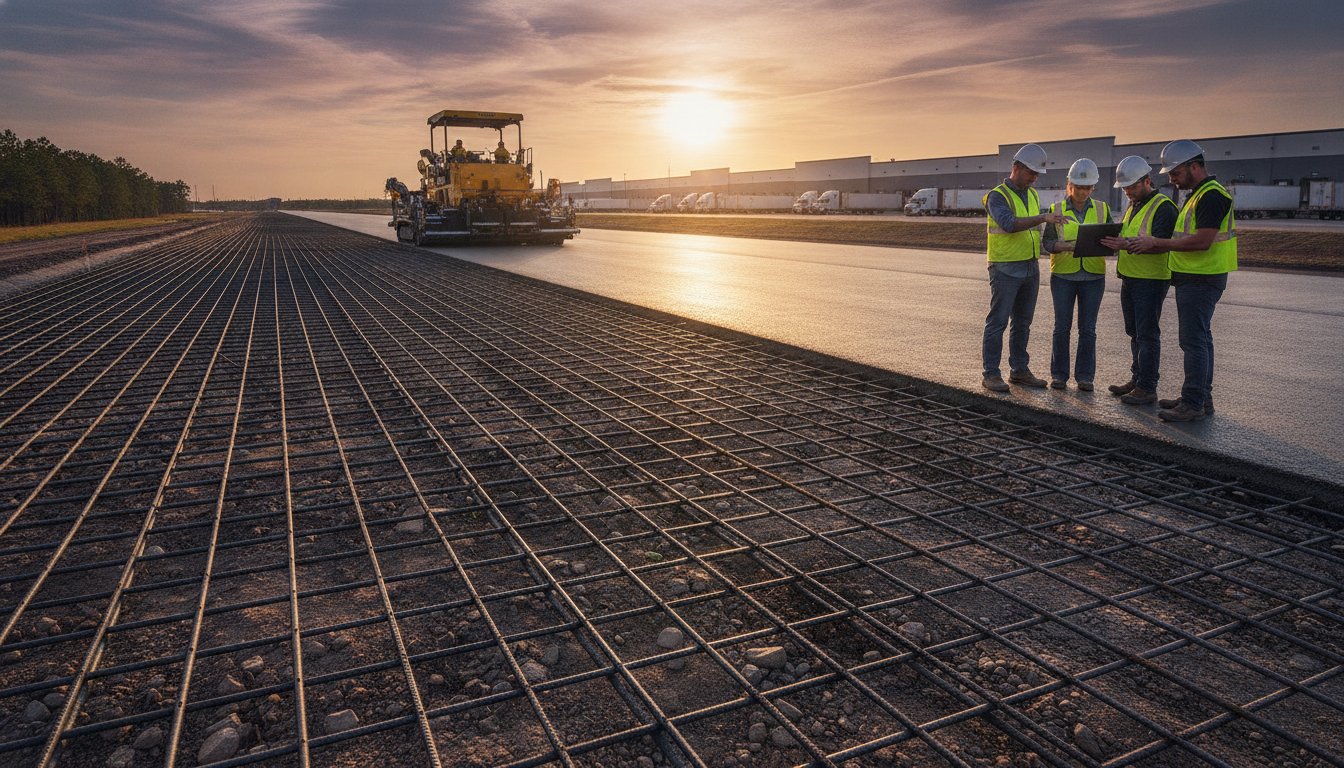
The most expensive concrete pour in Montgomery County isn't the one with the highest material cost; it's the one that fails prematurely because the subgrade wasn't properly stabilized. You're likely aware that Conroe's industrial landscape presents a difficult environment, where high-plasticity clay soils often lead to cracking and shifting. When project management is fragmented between separate excavation and paving contractors, the risk of structural instability increases. Achieving a reliable result for industrial concrete paving Texas projects requires a steadfast commitment to engineering precision from the initial earthwork through the final finish.
This article provides the technical standards and integrated civil strategies required to build high-capacity, durable roads. You'll learn how to navigate evolving drainage codes and infrastructure requirements while maintaining a focus on long-term viability and operational safety. This overview covers how turn-key civil site work, including mass soil excavation and paving stabilization, creates the foundation for a maintenance-free heavy-duty road that supports consistent logistics traffic without compromise.
Key Takeaways
- Identify the technical standards for heavy-duty roads, including high PSI concrete and reinforcement techniques designed for logistics traffic.
- Understand the necessity of chemical soil stabilization in Montgomery County to mitigate the risks posed by expansive clay and ensure long-term structural integrity.
- Learn how an integrated approach to industrial concrete paving Texas combines mass excavation and utility management to deliver a more reliable end result.
- Discover the strategic benefits of turn-key civil site work in streamlining project timelines and reducing the friction between separate contractors.
- Gain insights into the synergy between structural concrete and underground infrastructure to prevent drainage issues and future pavement failure.
The Evolution of Commercial Concrete Paving in Conroe
Conroe has transitioned from a quiet regional center into a primary hub for logistics and retail distribution in Montgomery County. This rapid expansion has fundamentally altered the requirements for surface durability. As heavy-duty traffic increases, the standards for pavement must evolve to keep pace. Achieving success in industrial concrete paving Texas projects now requires a steadfast commitment to engineering precision. It's no longer sufficient to apply standard commercial specs to environments that face the constant stress of heavy machinery and high-capacity logistics fleets.
The disciplined management of these projects is essential for long-term viability. When developers overlook the specific demands of the local landscape, they risk premature structural failure. A grounded approach to construction prioritizes reliability, ensuring that every square foot of concrete is engineered to withstand the rigorous operational loads of a growing industrial sector. This evolution represents a shift toward professional stability and a deep-rooted focus on enduring craftsmanship.
Infrastructure Demands in Montgomery County
High-growth corridors like the I-45 frontage roads and the Conroe Park North industrial complex face unprecedented 18-wheeler volume. This surge in heavy traffic shortens the lifecycle of traditional pavement significantly. To maintain operational efficiency, developers are moving toward high-strength concrete solutions that exceed 4,000 PSI. These specifications are necessary to minimize maintenance and prevent structural fatigue. You can see the results of this rigorous engineering in our integrated civil projects, where we focus on building lasting foundations for commercial hubs.
Why Standard Paving Fails in Conroe
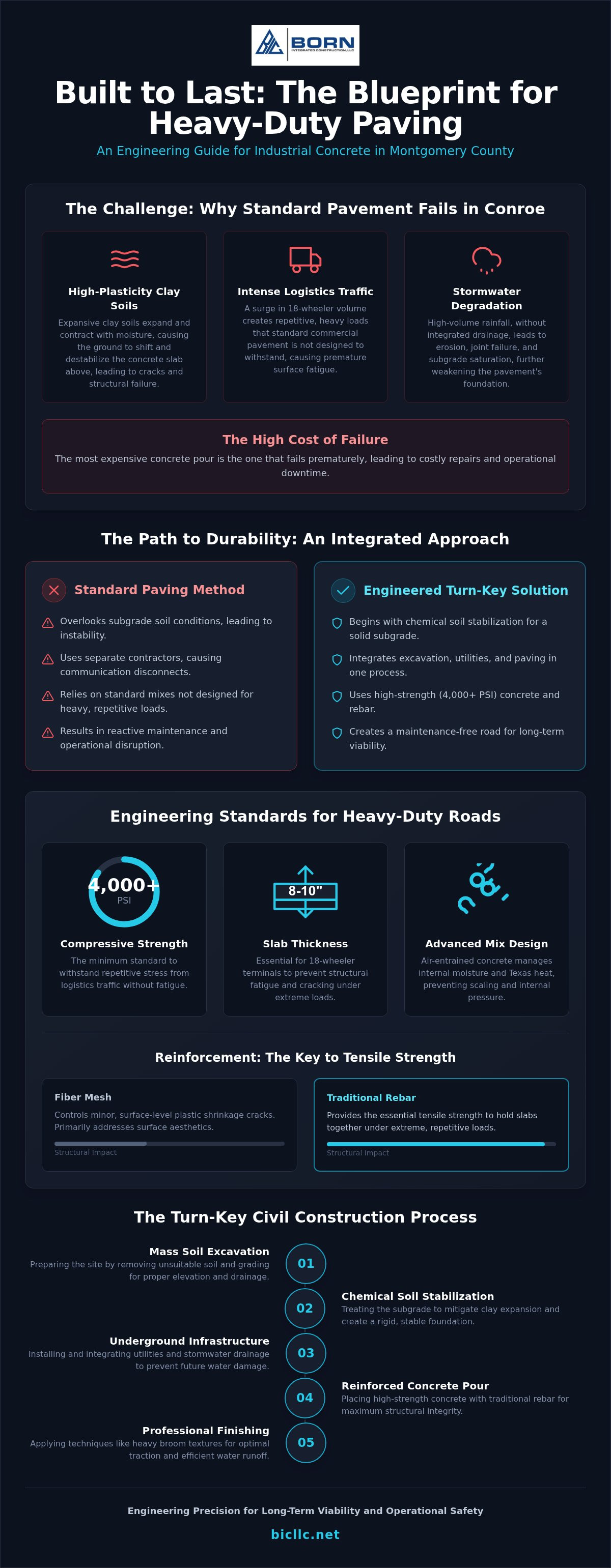
Standard paving often fails in Montgomery County because it doesn't account for the high-plasticity clay soils. These soils expand and contract with moisture changes, leading to subgrade settling and surface scaling. Common failure points include:
- Subgrade Instability: Clay-heavy areas require specialized stabilization to prevent shifting beneath the slab.
- Stormwater Degradation: High-volume rainfall can cause joint failure and erosion if the civil site work isn't integrated with the paving plan.
- Surface Fatigue: Standard concrete isn't designed for the repetitive, heavy loads of modern logistics traffic.
Moving from reactive maintenance to proactive civil engineering is the only way to ensure pavement integrity. By addressing soil stabilization and underground utilities before the pour, we create a predictable environment for the concrete. This methodical process reduces the risk of cracks and preserves the professional image of the facility for years to come.
Engineering Standards for Heavy-Duty Concrete Road Construction
Engineering heavy-duty roads requires moving beyond surface-level aesthetics to prioritize structural integrity. For industrial concrete paving Texas projects, a minimum compressive strength of 4,000 PSI is the baseline for success. This ensures the slab can withstand the repetitive stress of high-capacity logistics traffic. In many commercial hubs, thickness specifications for 18-wheeler terminals typically range from 8 to 10 inches to prevent structural fatigue. Adhering to heavy-duty concrete road construction standards established by the Federal Highway Administration provides a reliable framework for these high-stakes developments.
The choice of reinforcement is equally vital. While fiber mesh is effective for controlling plastic shrinkage cracks, traditional rebar remains the preferred option for high-traffic zones. Rebar provides the tensile strength necessary to hold slabs together under extreme loads, whereas fiber mesh primarily addresses surface-level durability. A disciplined approach to reinforcement ensures that the pavement maintains its integrity over decades of use. We also implement advanced finishing techniques, such as heavy broom textures, to ensure optimal traction for heavy machinery while facilitating efficient water runoff during intense storm events.
Material Specifications and Mix Design
Concrete mix design must account for the intense Texas heat. We utilize air-entrained concrete to manage internal moisture and temperature fluctuations, which prevents the internal pressure that causes scaling. Specific additives are often included to regulate set times during summer months, allowing for a controlled and precise finish. This methodical attention to chemical composition results in a slab that is both resilient and predictable. It's a process that prioritizes long-term viability over speed, reflecting a deep-rooted commitment to high standards.
Structural Integrity and Joint Design
Strategic joint placement is the primary defense against uncontrolled cracking. Control joints are saw-cut at precise intervals to direct thermal expansion, while expansion joints allow the slab to move without damaging adjacent structures. Load transfer is the ability of a joint to share traffic weight across slabs. To achieve this, we utilize dowel bars, which are smooth steel rods that bridge the gap between slabs. These bars allow for horizontal movement while preventing vertical displacement, ensuring a smooth transition for heavy vehicles. Maintaining these high standards requires a partner who values substance over style. If you're planning a facility that demands this level of operational precision, you can learn more about our commitment to professional stability and engineering excellence.
The Critical Role of Paving Stabilization in Montgomery County
Montgomery County is known for its high-plasticity clay soils. These soils are notoriously unstable. They expand when wet and contract when dry. This cycle creates a heaving effect that can snap a standard concrete slab within a few years of installation. For industrial concrete paving Texas projects, ignoring this subgrade behavior is a recipe for premature failure. Professional stabilization is the disciplined answer to this geological challenge. It transforms the native soil into a rigid, load-bearing platform that supports heavy logistics traffic without shifting. By managing the soil before the pour, we ensure the concrete above remains maintenance-free and structurally sound.
This steadfast approach to ground preparation is what separates a long-term infrastructure investment from a temporary surface. When the subgrade is properly treated, the risk of settling and cracking is significantly reduced. This leads to a higher return on investment for developers who value professional stability. It's a methodical process that prioritizes the enduring nature of the work over rapid, surface-level completion.
Understanding Paving Stabilization
The process begins with a rigorous analysis of the soil's moisture content and density. This data determines the precise chemical mix required. A stabilizer, typically lime or cement, is blended into the soil to initiate a chemical reaction. This reaction reduces the soil's plasticity and increases its compressive strength. It essentially creates a semi-rigid base layer that acts as a bridge between the soft clay and the heavy concrete slab. You can view our successful paving and stabilization projects to see how this integrated foundation supports high-capacity industrial hubs.
Stabilization vs. Soil Replacement
In the past, contractors often resorted to mass soil replacement. This involved hauling away the clay and bringing in stable fill material. This method is often prohibitively expensive and logistically complex for large industrial sites. Modern paving stabilization techniques are more sustainable and cost-effective because they utilize the existing soil. By treating the ground in-situ, we reduce the environmental impact and the logistical burden of heavy trucking. This strategy protects the structural integrity of the facility while keeping the project on a predictable schedule.
| Soil Type | Recommended Stabilizer | Primary Engineering Benefit |
|---|---|---|
| High-Plasticity Clay | Lime | Reduces moisture sensitivity and swelling potential. |
| Low-Plasticity/Sandy Soil | Cement | Rapidly increases load-bearing capacity and rigidity. |
Choosing the right stabilizer depends on the specific plasticity index of the site. Lime is the standard for the heavy clays typically found in Conroe, while cement is often used for sandier deposits. This methodical approach ensures that the investment in concrete is protected from the ground up. It's a strategy that reflects a deep-rooted commitment to high standards and the meticulous management of technical details.
Navigating the Integrated Civil and Concrete Construction Process
Successful industrial concrete paving Texas projects start long before the first delivery truck arrives on site. A fragmented approach, where excavation and paving are handled by separate contractors, often leads to communication gaps that compromise the project's timeline. We prioritize an integrated strategy that ensures the physical site preparation aligns perfectly with the structural requirements of the concrete. By managing the earthwork and the paving as a single, turn-key civil project, we eliminate the friction that causes delays and structural weaknesses. This methodical execution is essential for building high-capacity roads that support heavy logistics traffic without compromise.
The synergy between mass soil excavation and paving readiness is the foundation of our philosophy. When a single partner manages both the subgrade and the surface, there's a higher level of accountability for the final result. This grounded approach provides developers with a sense of security, knowing that every phase of the project is coordinated to meet the highest standards of professional stability. It's a process that values substance over style, focusing on the enduring nature of the infrastructure.
Phase 1: Mass Excavation and Site Prep
Site preparation is about more than just clearing land; it's about establishing the precise subgrade elevation required for effective drainage. In Conroe, managing runoff is a critical regulatory requirement for every industrial hub. Detention ponds are engineered to manage local runoff and flood regulations, acting as a buffer during intense rainfall events. Mass excavation sets the stage for paving stability by ensuring the foundation is uniform and properly graded. This disciplined preparation prevents water from pooling beneath the slab, which protects the subgrade from moisture fluctuations.
Phase 2: Underground Utilities and Infrastructure
Once the site is graded, the focus shifts to the installation of underground infrastructure. Storm sewers and sanitary lines must be placed with absolute precision before the concrete is poured. If utility trenches aren't compacted to exact specifications, the soil will eventually settle. This settling creates voids that lead to paving sinkholes and surface cracking in high-traffic zones. Our integrated planning ensures that the utility layout doesn't conflict with the paving joints or load-bearing zones. This level of operational precision protects the long-term integrity of the road and prevents costly repairs down the line. If you're ready to partner with a team that values substance and meticulous management, contact BIC for turn-key civil site work today.
Choosing Born Integrated Construction for Your Conroe Development
The name Born Integrated Construction reflects more than a business structure; it defines an operational philosophy rooted in professional stability and grounded reliability. For developers managing high-stakes industrial concrete paving Texas projects, the value of an integrated partner cannot be overstated. We don't view paving as a standalone task. Instead, we approach every project as a complex system where soil stabilization, underground utilities, and structural concrete must work in perfect harmony. This steadfast commitment to high standards ensures that the foundations we build today remain viable for decades of heavy-duty use.
Our specialized focus extends beyond industrial roads to include high-rise foundations, CIP garages, and complex structural concrete. This breadth of expertise allows us to act as a dependable partner for multi-phase developments in Montgomery County. By maintaining a disciplined focus on execution and safety, we provide a sense of security to our clients. We understand that in the commercial sector, substance matters more than style. Every detail, from the compaction of a utility trench to the final finish of a heavy-duty slab, is managed with meticulous precision to deliver consistent value.
Our Commitment to Safety and Integrity
Safety is the cornerstone of our professional output. On complex industrial and commercial job sites, maintaining rigorous safety standards is a matter of ethical conduct and operational efficiency. We believe that a disciplined work environment leads to better craftsmanship and more predictable timelines. This focus on integrity has made us a trusted partner for large-scale commercial developers who require a contractor capable of delivering consistent performance under demanding conditions. You can learn more about Born Integrated Construction and our deep-rooted commitment to high-register professional standards on our about page.
Ready for Your Next Conroe Project?
Choosing a single-source contractor for turn-key civil and concrete work eliminates the fragmented project management that often leads to failure. When you partner with BIC, you gain a seasoned expert who manages the synergy between mass soil excavation, detention ponds, and paving stabilization. This integrated approach reduces the logistical burden on the developer and ensures that every phase of the infrastructure supports the next. Whether you're breaking ground on a new logistics hub or a multi-level commercial structure, we provide the authoritative leadership needed to see the project through to a successful, enduring completion.
Our experience in the greater Houston area allows us to navigate local infrastructure codes with ease. We bring the same level of operational precision to Conroe that we provide as an expert podium slab contractor in Houston, ensuring that your development is built on a foundation of excellence. If you value a partner who leads through proven results and unwavering consistency, we're ready to discuss the specific requirements of your next industrial development.
Building Lasting Foundations for Industrial Growth
Securing the structural integrity of a commercial development requires more than a standard pour; it demands a disciplined approach to every stage of the process. You've seen how integrating mass excavation with technical engineering prevents the common failures associated with high-plasticity clay. By prioritizing high-strength mix designs and professional soil stabilization, developers can establish high-capacity roads that support continuous logistics traffic. Industrial concrete paving Texas projects succeed when they're built on a foundation of operational precision and professional stability.
Born Integrated Construction remains a steadfast partner for complex commercial sites. Our specialization in CIP garages and high-rise foundations, combined with turn-key civil site work and underground infrastructure, ensures a seamless transition from earthwork to finished surface. We maintain a deep-rooted commitment to safety and operational efficiency, managing every meticulous detail to deliver enduring results. If you're ready to break ground on a facility designed for long-term viability, contact Born Integrated Construction for a professional consultation today. We look forward to establishing a reliable foundation for your next development.
Frequently Asked Questions
Why is concrete preferred over asphalt for industrial roads in Conroe?
Concrete offers superior load-bearing capacity and longevity compared to other materials in high-traffic industrial zones. In Conroe's environment, where expansive clay soils are common, the rigidity of concrete prevents the rutting and surface deformation often seen in flexible pavements. This makes it the preferred choice for industrial concrete paving Texas projects that demand a maintenance-free surface capable of supporting heavy logistics fleets and constant heavy truck traffic without structural compromise.
How long does a heavy-duty commercial concrete road typically last?
A well-engineered heavy-duty commercial concrete road can last 30 years or more when properly maintained. The exact lifespan depends on the initial engineering standards, including the PSI of the mix and the thickness of the slab. By utilizing a steadfast approach to subgrade stabilization and structural reinforcement, we ensure the pavement resists environmental stressors. This long-term viability provides developers with a sense of security and a higher return on their infrastructure investment.
What is paving stabilization and is it necessary for my Conroe site?
Paving stabilization is a chemical process that mixes lime or cement into the native soil to create a rigid, moisture-resistant foundation. In Conroe, this step is essential due to the high-plasticity clay that expands and contracts with moisture changes. Without stabilization, the subgrade shifts, which leads to cracks and structural failure in the slab above. Implementing this methodical ground treatment ensures the enduring nature of the pavement and maintains professional stability for the entire site.
Can Born Integrated Construction handle both excavation and concrete paving?
Yes, Born Integrated Construction specializes in turn-key civil site work that includes both mass soil excavation and concrete paving. Our integrated philosophy ensures that the subgrade preparation and underground infrastructure are perfectly aligned with the final paving specifications. By acting as a single partner for both phases, we eliminate the fragmented management that often causes project delays. This comprehensive oversight results in a more reliable and structurally sound end product for commercial developments.
How do detention ponds affect the design of a commercial parking lot?
Detention ponds are critical for managing stormwater runoff and meeting local flood regulations in Montgomery County. Their placement and capacity directly influence the grading and drainage layout of a commercial parking lot. An integrated design ensures that water flows efficiently from the paved surfaces into the pond without causing erosion or subgrade saturation. We coordinate the construction of these ponds with the paving plan to maintain operational efficiency and protect the long-term integrity of the site.
What is the typical cure time before heavy trucks can use new concrete pavement?
Most heavy-duty industrial concrete requires a cure time of at least seven days before it can support standard vehicle traffic. However, for high-capacity logistics hubs and heavy trucks, a full 28-day cure is often recommended to reach maximum compressive strength. Some high-early strength mixes can shorten this window, but we prioritize a methodical timeline that ensures the slab has achieved the necessary PSI to handle heavy loads without risking surface damage or internal structural fatigue.
Do you provide underground utility installation as part of your paving services?
We provide comprehensive underground utility installation, including storm sewers, sanitary lines, and domestic water systems. Integrating these services with our paving and excavation work allows for better coordination and site efficiency. We ensure that all utility trenches are compacted with professional precision to prevent future settling that could lead to paving sinkholes. This turn-key approach provides a more organized and transparent construction process for developers who value substance and meticulous management.
What standards do your Montgomery County concrete projects follow?
Our projects in Montgomery County adhere to rigorous engineering standards, including TxDOT specifications and local city design manuals. We typically utilize concrete mixes of 4,000 PSI or higher for heavy-duty roads to ensure they meet the demands of industrial traffic. Every project is executed with a focus on safety, integrity, and operational precision. We follow established technical frameworks to ensure that all sidewalks, retaining walls, and structural slabs meet or exceed professional industry requirements.