
Concrete Paving Repair Contractor in Houston: A Commercial Buyer’s Guide
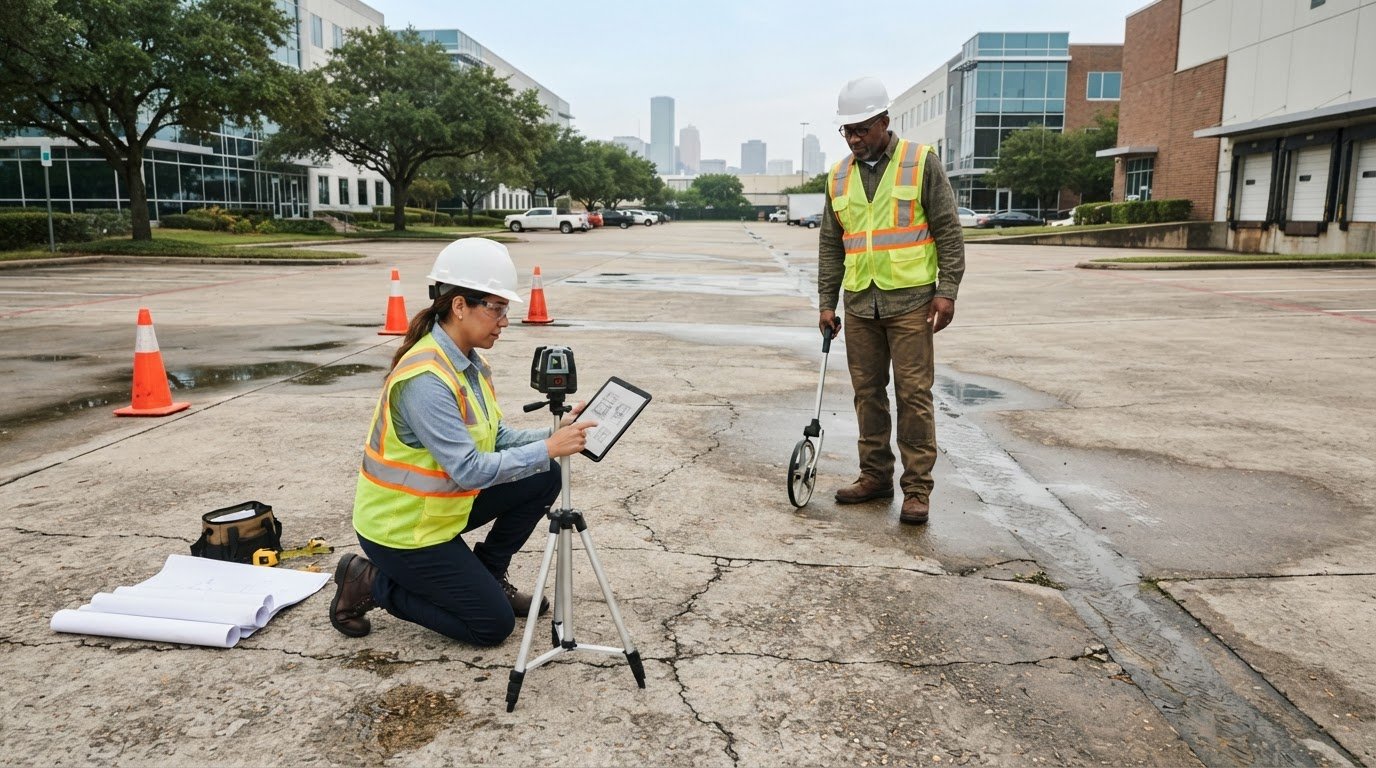
Could the lowest patch proposal leave the reason your pavement failed untouched? Choosing a commercial concrete paving contractor Houston businesses can rely on starts with more than comparing repair methods. An assessment should explain what is damaged, how far the problem extends, and whether the proposed work addresses the conditions contributing to deterioration.
It’s reasonable to be cautious when one proposal recommends localized repairs and another calls for broader reconstruction. Without a clear, site-specific diagnosis, it can be difficult to tell whether the difference reflects the pavement’s condition or simply a difference in scope. A dependable proposal should state its assumptions, work limits, schedule, and project responsibilities.
This guide explains how to assess commercial concrete pavement damage, compare contractor proposals, and identify a Houston-area partner suited to your project. You’ll learn what to look for in an evaluation, which scope details to clarify, and how to plan for access, work sequencing, and safety. The goal is a sound basis for choosing an approach, not just a patch description.
Key Takeaways
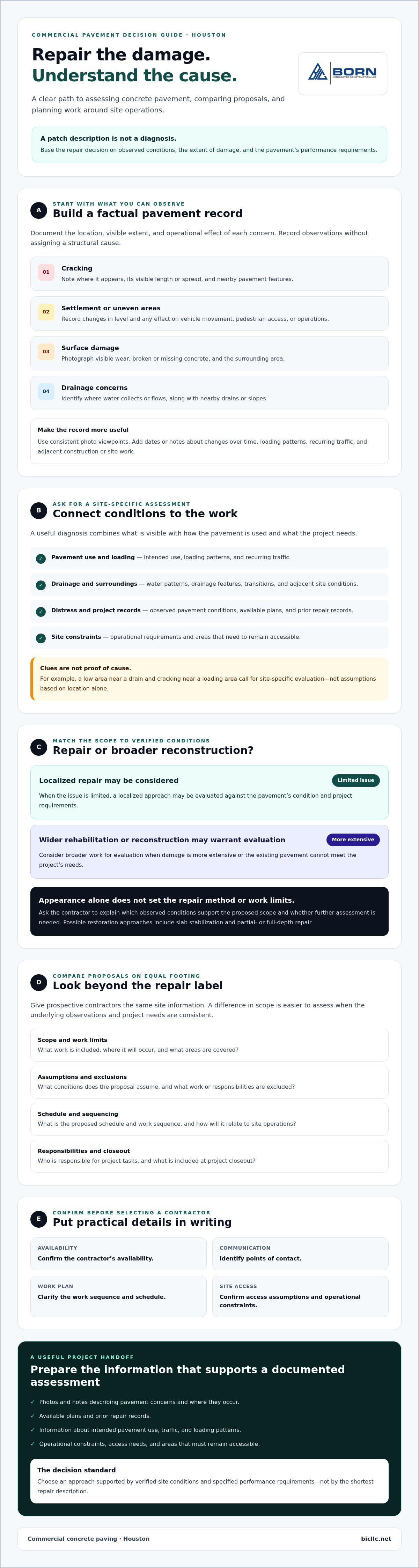
- Document visible cracking, settlement, surface damage, and drainage concerns before deciding whether localized repair or broader reconstruction may be appropriate.
- A thorough assessment considers pavement use, loading, drainage, project records, and observed distress to support site-specific recommendations.
- Compare proposals against the same site information, then clarify each contractor’s scope, assumptions, exclusions, sequencing, and closeout.
- Confirm availability, points of contact, work sequence, and access assumptions in writing before selecting a contractor.
- Organize site details, operational constraints, and available plans to help prospective contractors prepare a documented assessment.
When Does Commercial Concrete Paving in Houston Need Repair?
Document the pavement problem before deciding whether repair or replacement is appropriate. Cracks, settled areas, surface deterioration, and water that collects or flows across the pavement can signal a need for assessment. On their own, however, these signs don’t establish why the damage occurred or whether a localized repair will meet the project’s needs.
In Houston, drainage patterns and ground conditions should be assessed at the specific site rather than assumed from its location. A low area near a drain, for example, may call for a different investigation from cracking near a loading area or recently completed site work. Share these observations with any commercial concrete paving contractor Houston property teams are considering, and ask how they will be evaluated before a repair scope is proposed.
Which pavement symptoms should a commercial site manager document?
Build a factual record that helps the contractor inspect the right areas. Note each defect’s location, visible extent, and effect on vehicle movement, pedestrian access, or site operations. Photos taken from consistent viewpoints, together with dates or notes about changes over time, can make the record more useful. Describe what you observe without assigning a structural cause.
- Cracking: Record its location, visible length or spread, and nearby pavement features.
- Settlement or uneven areas: Note changes in level and any effect on traffic or access.
- Surface damage: Photograph visible wear, broken or missing concrete, and the surrounding area.
- Drainage concerns: Identify where water collects or flows, and note nearby drains or slopes.
Also flag loading patterns, recurring traffic, and adjacent construction or site work that may be relevant to the inspection. These are clues for the contractor to consider, not proof of the cause.
Can concrete paving be repaired, or does it need replacement?
The answer depends on an inspection of the pavement, the extent and condition of affected areas, and the project’s performance requirements. A localized repair may be considered when the issue is limited. Wider rehabilitation or reconstruction may warrant evaluation when damage is more extensive or the existing pavement cannot meet the project’s needs. Appearance alone is not enough to select a method or define the work limits.
Concrete pavement restoration can involve different approaches, including slab stabilization and partial- or full-depth repair. The overview of Concrete Pavement Restoration (CPR) techniques provides context, not a site-specific recommendation. Ask the contractor to explain the observed conditions behind its proposed scope and identify what further assessment may be needed.
Repair suitability depends on verified conditions and specified performance requirements. Keeping the decision grounded in documented site needs is more useful than relying on a patch description or a remote judgment.
How Should a Houston Contractor Diagnose Commercial Concrete Pavement?
A useful diagnosis connects visible site conditions with how the pavement is used and what the project requires. A walk-through may identify areas of concern, but the assessment should also consider available records, loading, drainage, traffic patterns, and site constraints. When evaluating a commercial concrete paving contractor Houston project teams may engage, ask how those factors inform the proposed work.
The Federal Highway Administration’s pavement distress identification manual offers a reference for describing pavement conditions consistently. It can help owners and contractors discuss what they observe, while leaving the cause and repair decision to a project-specific assessment.
What should a commercial pavement site assessment include?
A disciplined review generally moves from records to site observations, then to written recommendations. Provide available plans, prior repair records, information about intended pavement use, and operational constraints such as areas that must remain accessible. During the walk-through, the contractor should inspect affected pavement, relevant transitions, drainage features, and adjacent site conditions.
Request findings that distinguish observations from assumptions and identify what still needs verification. Written recommendations should connect those findings to proposed work limits, explain why the scope is being considered, and note any information or access assumptions that could affect it. If the proposed scope extends beyond visibly affected areas, ask the contractor to explain the reasoning.
How do Houston site conditions affect repair planning?
Houston’s location is a reason to investigate the actual site, not to assume every property has the same ground or drainage behavior. Ask how water moves through the area, whether nearby surfaces or drainage features may affect the pavement, and which ground conditions are known or still need verification. Pavement use and loading matter too: an area serving recurring heavy vehicles may have different demands from a pedestrian route.
Planning should also account for traffic access, weather exposure, and work sequencing. Clarify which areas may be restricted during each phase and how the proposed sequence relates to site operations. These details help distinguish a technically described scope from a workable project plan.
Before comparing recommendations, review the contract documents and project specifications for references to TxDOT, ASTM International, or American Concrete Institute requirements. Confirm which, if any, apply to the work rather than assuming a standard governs every project. The contractor should identify what is known, what needs verification, and why. For examples of completed work, you can also review the company’s project portfolio.
How Can You Compare Commercial Concrete Paving Repair Proposals?
A fair comparison starts with a common basis. Give each bidder the same drawings, site information, operational constraints, and written repair limits. If one proposal covers only visible defects while another includes broader work, their totals do not represent the same scope. Ask each commercial concrete paving contractor Houston property teams are considering to identify unresolved conditions that could affect the work, schedule, or responsibilities.
Review more than the proposed repair approach. A low initial proposal may exclude access coordination or leave important work boundaries undefined. Clarify differences before comparing costs or selecting a partner, and request written revisions where assumptions do not match.
What should a commercial paving repair proposal spell out?
Check whether the proposal identifies the work areas, repair approach, boundaries, and assumptions in terms that can be compared across bidders. It should also make clear what is excluded and how the contractor will document and communicate changes if field conditions differ from those assumed.
Use a consistent checklist for each submission:
- Scope: Work locations, proposed approach, limits, and exclusions.
- Assumptions: Conditions or information the proposal relies on, including unresolved items.
- Sequencing and access: Planned work order, access needs, and anticipated effects on site operations.
- Responsibilities: Who coordinates access, traffic management, safety requirements, and adjacent trades.
- Closeout: What records or handover information the contractor will provide at completion.
If a responsibility is unclear, ask who owns it and have the answer reflected in the proposal or contract documents. This can help surface coordination gaps before work is underway.
Which contractor qualifications and project evidence should you review?
Ask for commercial paving experience relevant to the proposed scope, along with references appropriate to the project. Discuss who will lead the work, how updates will be communicated, and what safety processes the contractor proposes for the site. Confirm any project-specific qualifications against the contract requirements rather than assuming they apply uniformly.
Review documented work for relevance. The commercial project portfolio may help you assess comparable experience when relevant examples are available and verified. For each bidder, note whether the evidence supports the work under consideration and which items still require confirmation.
A clear comparison makes the differences visible: what each bidder will do, what the owner must coordinate, and what could affect the scope. Select based on the strength and completeness of the documented plan, not on a patch description or an initial figure alone.
What Should You Confirm Before Hiring a Houston Concrete Paving Contractor?
Before awarding the work, turn proposal discussions into written confirmations. A commercial concrete paving contractor Houston property teams are evaluating should be able to explain how it will validate repair boundaries, document field conditions, and communicate if actual conditions differ from the proposal. Confirm availability and the expected start window directly rather than assuming they from an estimate.
What questions should you ask before awarding the work?
Clarify who is responsible for site access, safety coordination, schedule updates, and closeout records. Ask who will serve as your primary point of contact and how proposed changes will be reviewed and recorded. Request references for comparable commercial paving scopes, then verify directly that the work and coordination demands are relevant to your project.
- Scope: Are repair boundaries and the process for documenting field conditions clear?
- Coordination: Who manages access, safety requirements, and communication with affected site users?
- Schedule: Is the work sequence documented, and how will schedule changes be shared?
- Closeout: What records will be provided when the work is complete?
- Project requirements: Which insurance, credentials, or other documents does the owner require, and have they been verified?
Confirm requirements against the contract and project documents. Don’t rely on broad assurances where a specific credential or document is required.
How can you reduce disruption during commercial pavement repairs?
Before mobilization, map business hours, delivery routes, emergency access, and other operational constraints. Ask the contractor to propose a phased sequence that accounts for those needs and explain how affected users will receive updates. Put access assumptions and communication responsibilities in writing so the owner and contractor share the same expectations.
Choose a contractor based on project fit, not only price. Review Born Integrated Construction’s company background as one step in assessing its commercial concrete and civil capabilities. Before requesting a proposal, confirm directly whether the specific repair scope is within its current services, and discuss the project’s requirements and communication expectations.
How to Move Forward With Commercial Concrete Paving Repairs in Houston
Prepare the information a prospective contractor needs, define the site’s operating constraints, and request a documented assessment. This gives each bidder a consistent starting point and keeps early discussions focused on observed conditions and project needs, not assumptions about cause or repair method.
What information should you prepare before contacting a contractor?
Assemble a concise project brief with the site location, how the pavement is used, and the concerns you have observed. Include photos, available drawings, and known restrictions on access or site operations. Describe where problems occur and how they affect use, but leave technical diagnosis and repair selection to the assessment.
- Site details: Location, pavement use, affected areas, and relevant photos.
- Project records: Available plans, prior repair information, and applicable specifications.
- Operational constraints: Delivery routes, access needs, business hours, and areas that must remain available.
- Procurement requirements: Steps for submitting a proposal and any vendor documentation the owner requires.
Providing these details early helps prospective contractors identify what they can evaluate and what additional information they may need.
How should the first contractor conversation establish project fit?
Ask directly whether the contractor currently accepts the described commercial repair scope in the Houston area. Then discuss what an assessment would involve, who would coordinate with your team, and what information is needed to determine next steps. A useful conversation should distinguish what is known from what still needs verification.
Before requesting a proposal, establish the expected point of contact, how site access and operations will be addressed, and whether project specifications or procurement documents affect the scope. These early confirmations help determine whether the contractor’s capabilities and communication approach align with the work.
For owners evaluating a commercial concrete paving contractor Houston projects may require, project fit should be confirmed rather than assumed from a general service description. Born Integrated Construction provides concrete paving and broader concrete construction services for commercial and infrastructure developments. Confirm directly whether the company currently accepts Houston repair work and whether the specific scope fits its services.
If Born Integrated Construction confirms it accepts your project type and location, contact its team to discuss whether the work fits its confirmed concrete paving capabilities. A first conversation can establish whether a documented assessment is an appropriate next step, without committing to a repair approach before site conditions are reviewed.
Move Forward With a Clear, Site-Specific Plan
Commercial pavement decisions are stronger when they begin with documented site conditions and a clear explanation of what the work includes. Assess visible damage, ask how the contractor will investigate contributing conditions, and compare proposals using consistent repair limits, assumptions, schedules, access plans, and responsibilities. This helps distinguish a suitable scope from a low initial figure that leaves important questions unanswered.
Evaluate a commercial concrete paving contractor for project fit, relevant experience, communication, and the ability to coordinate work safely. Born Integrated Construction provides concrete paving, paving stabilization, and civil site work for commercial and infrastructure developments, with an emphasis on safety, integrity, efficiency, and quality. Confirm directly whether the company currently accepts your specific repair scope in Houston before proceeding.
If your project aligns with its confirmed capabilities, discuss your commercial concrete paving project with Born Integrated Construction. A clear first conversation can establish what information is needed and whether a documented assessment is the right next step.
Frequently Asked Questions
How do I choose a commercial concrete paving repair contractor in Houston?
Choose based on the quality of the site assessment, the clarity of the written scope, and relevant commercial paving experience. Ask how the contractor will verify repair limits, handle access and safety coordination, and communicate field changes. Confirm references and any project-specific documentation. Born Integrated Construction lists locations across Texas, including Houston, Austin, San Antonio, Dallas, Fort Worth, San Marcos, New Braunfels, Boerne, Beaumont, Conroe, The Woodlands, and Arlington. Confirm current repair availability directly.
Can commercial concrete pavement be repaired instead of replaced?
Yes, repair may be suitable, but the decision depends on verified pavement conditions and the project’s performance requirements. A site inspection should establish the extent of distress and consider pavement use, loading, drainage, and relevant project documents. Localized repair may address limited areas, while wider rehabilitation or reconstruction may need consideration for more extensive conditions. A contractor should explain the basis for its recommendation rather than prescribe a method from photographs alone.
What should a concrete paving repair contractor inspect?
A contractor should review available plans and repair records, walk the affected pavement, and consider relevant transitions, drainage features, and adjacent site conditions. The assessment should account for how the pavement is used, including traffic and loading, as well as operational constraints that may affect the work. Request written findings that distinguish observed conditions from assumptions, identify what needs further verification, and connect the proposed scope to site observations.
How long do commercial concrete paving repairs take?
There isn’t a reliable duration to give without knowing the project scope and site conditions. The schedule may depend on the repair limits, access, work sequence, operational restrictions, and any conditions that require further review. Ask each bidder to provide a project-specific schedule, identify assumptions that affect timing, and explain how updates or changes will be communicated. Confirm what areas may be unavailable during each phase before approving the plan.
What information should I provide to get a commercial paving repair proposal?
Share the site location, how the pavement is used, the areas of concern, and any access or operating restrictions. Include photos, available plans, prior repair information, and applicable project specifications or procurement requirements. Describe visible conditions without assuming their cause or prescribing a repair method. This gives bidders a consistent basis for review and helps them identify what else they need to prepare a documented assessment and proposal.
How can concrete pavement repairs minimize disruption to a commercial property?
Start by documenting business hours, delivery routes, emergency access needs, pedestrian paths, and areas that must remain usable. Ask the contractor to propose a work sequence that accounts for these constraints and define how affected users will receive schedule updates. Clarify who coordinates access and safety requirements. A phased plan may help organize work around site operations, but its feasibility depends on the project scope and conditions.
What should I compare in commercial concrete paving repair bids?
Compare proposals prepared from the same drawings, site information, and written repair limits. Review the work areas, repair approach, assumptions, exclusions, unresolved conditions, sequence, access responsibilities, safety coordination, and closeout records. Check that each bidder explains how field changes will be documented. The lowest initial proposal may not be comparable if it excludes work or assigns coordination duties differently, so resolve scope gaps before evaluating the bids.