
How to Choose Earthwork and Grading Contractors in Austin
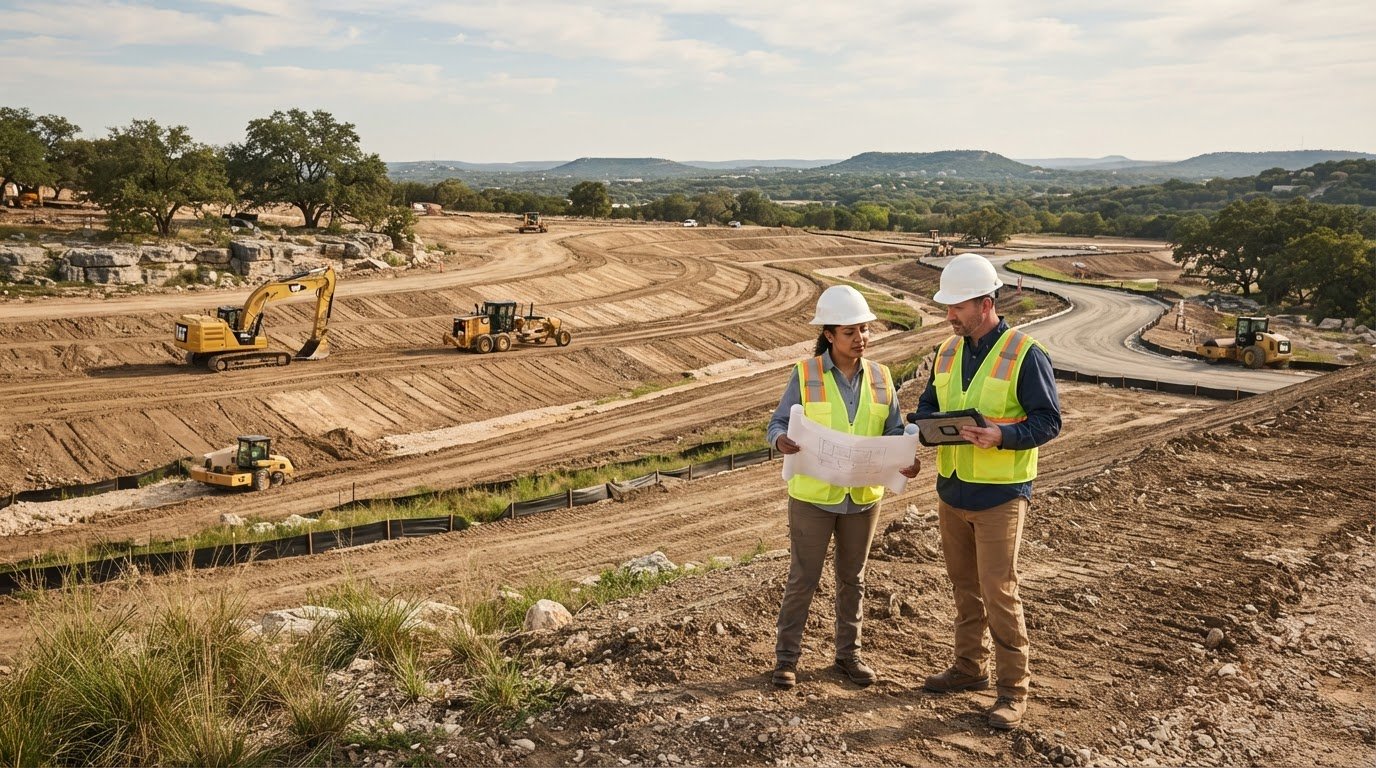
The lowest bid may be the least complete proposal. If quantities, soil assumptions, erosion controls, or handoffs to utility and building crews aren’t aligned, prices can be difficult to compare and site work can create downstream delays. That’s why choosing among earthwork and grading contractors Austin has to offer should start with the project scope, not the number at the bottom of a bid.
It’s reasonable to expect a clear price and a dependable schedule, but both depend on a well-defined scope and a contractor who understands the site conditions and coordination the work requires. This guide explains how to define the work before requesting bids, compare proposals on consistent terms, and assess each contractor’s qualifications, safety approach, and project fit.
You’ll also learn what to clarify about quantities, site assumptions, schedule, and coordination with utilities and follow-on construction. Born Integrated Construction lists earthwork, mass soil excavation, detention pond construction, paving stabilization, and turnkey civil work among its capabilities. These services may suit projects that include those specific elements.
Key Takeaways
- Break the requested work into defined components, such as excavation, soil handling, stabilization, and drainage, so bidders can price a clear scope.
- Use survey data, geotechnical findings, drainage design, and site access information to identify conditions that could affect planning and sequencing.
- Compare earthwork and grading contractors Austin proposals against the same drawings and work areas, then review quantities, assumptions, exclusions, schedule, and coordination responsibilities.
- Follow a consistent selection process that includes document review, project-specific coordination checks, reference checks, and final scope alignment.
- Consider Born Integrated Construction when its listed earthwork and civil capabilities align with the project, and confirm grading scope, qualifications, and availability directly.
What Austin Earthwork and Grading Contractors Should Include in Their Scope
For a construction project, earthwork and grading prepare site elevations and ground conditions for the planned improvements. The work may involve cutting or filling soil, shaping grades, and coordinating related site components. The broader civil engineering context is outlined in Earthworks (engineering), but a bid scope should be specific to the project documents, site information, and defined work areas.
Before inviting earthwork and grading contractors, Austin project teams should divide the requested work into components rather than relying on a general description such as “site preparation.” Depending on the plans, those components may include excavation, grading, soil handling, stabilization, and drainage. State what is included, what is excluded, and which party is responsible for each interface.
Which site-preparation tasks belong in an earthwork bid?
List work only when it appears in the project documents or has been clearly requested. Depending on the design, this could include mass excavation, grading to specified elevations, moving soil within the site, or disposal. Identify detention pond construction, paving stabilization, and related civil work as separate items when they form part of the project.
Distinguish contractor work from owner-provided or separately contracted work. For example, clarify who supplies design information, handles tasks outside the defined work area, and coordinates with other contractors. Don’t assume a broad term such as “earthwork” settles these boundaries.
What information should Austin project owners provide?
Issue the same current information to each bidder. Include available site plans, geotechnical information, design documents, project phasing, and a clear description of the work areas. Note known access constraints and interfaces with utilities or follow-on construction. Specify the bid format so each proposal addresses the same requested components.
Where quantities or site conditions remain unresolved, ask bidders to state their assumptions in writing. The project team can then review those assumptions and decide whether it needs more information before comparing proposals.
Scope checklist before requesting proposals:
- Identify excavation, grading, soil movement, and disposal only where shown or requested.
- List applicable stabilization, detention pond, drainage, or other civil work as distinct items.
- Define work limits, access conditions, phasing, and known interfaces.
- Separate contractor responsibilities from owner-provided and separately contracted work.
- Provide available plans and site information, and request written assumptions for unresolved items.
A defined scope gives bidders a consistent basis for pricing and helps the project team identify gaps before work is awarded. It also creates a clearer starting point for evaluating qualifications and coordinating the work with the wider construction team.
How Austin Site Conditions Shape Earthwork and Grading Plans
A site address is not a substitute for site information. Conditions can vary across the Austin area, and assumptions based on location alone may lead to different interpretations of excavation quantities, soil handling, access, or sequencing. Use available surveys, geotechnical findings, design documents, and field observations to establish a shared basis for planning.
This record matters during procurement. If bidders receive different drawings, rely on different versions of a survey, or interpret uncertain subsurface conditions differently, their proposals may not describe comparable work. A consistent information set gives project teams a stronger basis for comparing earthwork and grading contractors Austin project owners are considering. Ask each bidder to identify missing, outdated, or conflicting information and explain how it affects the proposal.
How do geotechnical and survey information guide grading?
Survey data helps define existing elevations and project boundaries, while available geotechnical findings inform planning for the conditions described in those documents. Design plans establish the intended grading and how it relates to proposed construction. None of these documents replaces the others, so confirm that they cover the same work area and are current for bidding.
If information is incomplete or inconsistent, record the issue and request a written assumption rather than accepting an unsupported quantity or soil description. The project team can then determine whether clarification or additional evaluation is appropriate.
How should drainage and utility interfaces be coordinated?
Review grading plans alongside drainage design and stormwater features to understand how the work connects. Then map the sequence against underground utility work, site access, and follow-on construction. Confirm who is responsible for coordinating each handoff, maintaining access, and addressing conflicts between work areas. These responsibilities should be clear in the bid documents, not left to interpretation after award.
Confirm jurisdiction-specific requirements and project conditions with the relevant authority and design professionals. The Associated General Contractors of America (AGC) provides construction-industry resources, but membership or general guidance is not a substitute for project-specific review or contractor qualification checks.
Before bids are finalized, document:
- Which survey, geotechnical, and design documents bidders should use.
- Any missing, outdated, or conflicting information, with written assumptions for unresolved items.
- How drainage features, utilities, access, and work sequencing connect.
- Which jurisdiction and project-team contacts will confirm applicable requirements.
These clarifications make proposal differences visible and give the team a practical basis for resolving them before award. For additional context, review the construction project portfolio from Born Integrated Construction.
How to Compare Austin Earthwork and Grading Contractor Bids
A bid total is meaningful only when proposals cover comparable work. Even contractors pricing the same project may use different drawings, quantity sources, or assumptions about site conditions. Before weighing price, confirm that each bidder has priced the same document set, revisions, and defined work areas. A lower total doesn’t establish equivalent scope or execution approach.
Use a comparison table to make differences visible. Give each bidder a column and compare consistent categories, such as:
- Scope and quantities: Work included, measured quantities, and the source documents used.
- Assumptions and exclusions: Unresolved conditions, allowances, and work omitted from the proposal.
- Schedule: Proposed sequencing, dependencies, and conditions that could affect timing.
- Coordination: Responsibilities for access, interfaces with other contractors, and project-team communication.
Ask bidders to identify the plan sheets and revisions they used. If one proposal uses a different quantity basis or excludes an item another bidder included, resolve the difference before treating the totals as comparable. Record clarifications consistently so the selection team can review the same information for every contractor.
What qualifications should an Austin earthwork contractor demonstrate?
Request relevant project examples, then verify the work performed, location, and similarity to your project. Ask who will supervise the defined work, how the contractor communicates changes or field issues, and how coordination with the project team will be managed. Discuss safety practices directly and request project-relevant supporting information. Confirm the contractor can take on the proposed scope without assuming a particular fleet, crew size, or staffing plan.
Which bid differences require clarification before award?
Review exclusions, allowances, quantity assumptions, quantity sources, and unresolved site conditions. A proposal may appear less costly because it excludes work or relies on assumptions that differ from the project documents. Ask each bidder to explain material differences in writing, including what would trigger a scope adjustment under its proposal.
Schedule and handoffs deserve the same scrutiny. Clarify dependencies on access, design information, utilities, or other contractors, and establish who is responsible for each coordination step. Where Austin-specific requirements may affect the work, confirm what applies to the project with the relevant authority and design professionals rather than treating a bidder’s general statement as verification.
Evaluate earthwork and grading contractors Austin teams are considering against documented qualifications and the project’s actual requirements, not unsupported rankings. A consistent bid review helps distinguish a comparable proposal from one that needs clarification before award.
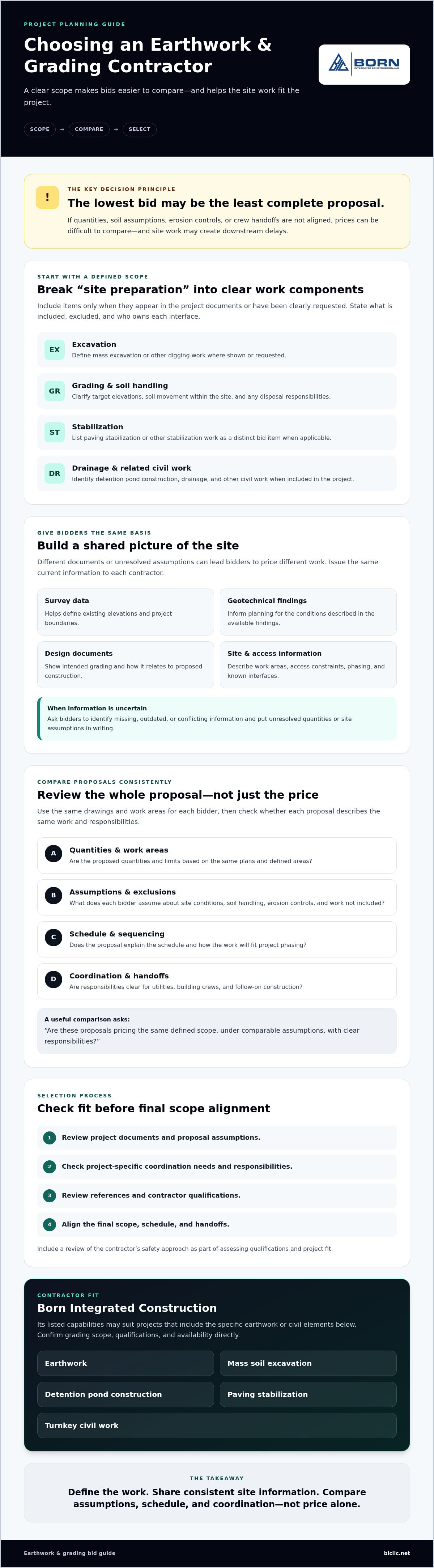
An Austin Earthwork Contractor Selection Checklist for Project Teams
A dependable award process turns proposal review into a documented decision. Use the steps below to close information gaps, verify project fit, and align responsibilities before work begins.
Before requesting final proposals
- Confirm the document set. Identify the current drawing revisions, available site and geotechnical reports, defined bid boundaries, and known open questions.
- Set the intended sequence. Clarify the expected construction phases and interfaces with utilities, drainage work, and follow-on trades so bidders can identify dependencies.
- Resolve project-specific coordination. Confirm the project jurisdiction and ask the owner, design team, utility contacts, or relevant authority to address questions within their responsibility.
- Issue consistent bid instructions. Provide each bidder with the same scope documents, response format, and requirements for listing assumptions, exclusions, quantities, and schedule dependencies.
Do not treat unresolved conditions as settled facts. Assign each open question to the appropriate project-team member and record the response or the assumption that remains in place for bidding.
Before awarding the work
- Verify qualifications and references. Request relevant project examples and contact references to confirm the contractor’s actual scope, project setting, communication, and coordination performance. Compare the examples to your project rather than relying on broad claims.
- Reconcile the final scope. Review inclusions, exclusions, quantity assumptions, schedule interfaces, and any clarifications issued during bidding. Confirm all parties are working from the same document revisions and work boundaries.
- Assign responsibilities. Document who will handle field coordination, communicate changes, and obtain or provide decisions through the project’s agreed process. Clarify approval milestones before work proceeds at key interfaces.
- Record the decision. Keep the final proposal, written clarifications, reference notes, responsible parties, and agreed scope together so the basis of award is clear to the project team.
For a relevant example, review the project portfolio from Born Integrated Construction and verify the project’s scope and similarity directly. The company lists earthwork, mass soil excavation, detention ponds, paving stabilization, and turnkey civil work among its capabilities. Confirm grading scope and project fit before award.
Using this checklist to assess earthwork and grading contractors Austin project teams are considering helps connect qualifications to the work actually required. The final award should reflect a shared understanding of scope, site-specific assumptions, and coordination responsibilities.
When Born Integrated Construction May Fit an Austin Earthwork Project
Contractor fit depends on the match between the documented project scope and the work a company lists among its capabilities. Born Integrated Construction identifies earthwork and mass soil excavation as offerings, with detention pond construction, paving stabilization, and turnkey civil work also listed. These capabilities may be relevant when they appear in the project documents, but they don’t establish that every grading task or site condition is within the company’s scope.
Which project scopes align with the company’s listed capabilities?
Consider the company for a project that includes earthwork or mass excavation, then compare the specific bid requirements with its confirmed scope. If detention pond construction or paving stabilization is part of the plans, ask whether that work fits the proposed package and how it would coordinate with adjacent civil construction. Confirm grading responsibilities, project-specific qualifications, Austin availability, and any relevant local experience directly. Don’t infer particular methods, equipment, staffing, or certifications from a general service listing.
Fit also depends on the interfaces. For example, a project combining earthwork with a detention pond and paving stabilization may require clear sequencing and defined handoffs among trades. Ask who would coordinate those interfaces and what information the project team should provide. Confirm the answers against the drawings and scope documents before comparing proposals.
How can project teams begin a useful scope discussion?
Prepare a concise project package before contacting a prospective contractor. Include the project location, current plans and revisions, expected schedule or phasing, defined work areas, available site information, and known constraints. Identify unresolved conditions rather than presenting them as settled. This gives the company a sound basis to discuss which listed services may align and what additional information it needs to assess the work.
Born Integrated Construction states that it prioritizes safety, integrity, efficiency, quality, and consistent customer relationships. Ask how those priorities are reflected in communication, supervision, and coordination for the specific project. The company identifies Austin among its Texas markets, but confirm current availability and project-specific qualifications directly before proceeding.
Review the company’s background and operating principles, then prepare the project documents and discuss which listed services fit the scope, what remains to be clarified, and what the next review step should be. Keeping the conversation focused on project requirements makes it easier to identify information gaps and assess fit.
Set Your Project Up for a Clear Start
A well-defined scope, project-specific site information, and comparable bids give your team a sound basis for selecting a contractor. Confirm that proposals address the same documents and work areas, then resolve assumptions, exclusions, and coordination responsibilities before award. These steps help you evaluate earthwork and grading contractors Austin projects may require on more than price alone.
Born Integrated Construction lists earthwork, mass soil excavation, detention ponds, and paving stabilization among its capabilities, and identifies Austin among its Texas service markets. The company also states a commitment to safety, integrity, efficiency, and quality. Confirm that its scope, qualifications, and availability align with your project.
Prepare your current plans, schedule expectations, and known site constraints, then discuss your Austin project scope with Born Integrated Construction. With clear information and careful coordination, your team can move forward with greater confidence.
Frequently Asked Questions
What does an earthwork and grading contractor do?
An earthwork and grading contractor prepares ground and site elevations for planned construction. Work may include excavation, moving soil, shaping grades, or other defined civil tasks. Earthwork concerns moving or handling earth; excavation removes material, while grading shapes the surface to meet design intent. These services aren’t automatically bundled. Exact responsibilities depend on the contract and project documents, so owners should confirm work limits, inclusions, exclusions, and interfaces in writing.
How do I choose an earthwork contractor in Austin?
Compare earthwork and grading contractors Austin project teams are considering by relevant project experience, scope clarity, documented assumptions, safety practices, communication, and coordination. An Austin location alone doesn’t establish that a contractor fits your project. Check references and confirm availability, applicable jurisdiction requirements, and site-specific conditions with the appropriate project team. Ask each contractor to explain how its experience and proposed responsibilities relate to your defined scope and project documents.
What should an earthwork and grading bid include?
A bid should identify defined work areas, the plan revisions used, quantities or quantity assumptions, inclusions, exclusions, schedule dependencies, and interfaces with other work. Proposals are easier to compare when every contractor responds to the same documents and work boundaries. If a site condition or quantity remains unresolved, request a written clarification that states the bidder’s assumption. Don’t infer that omitted work is included; confirm responsibilities before award.
Do I need a geotechnical report before hiring a grading contractor?
There isn’t a universal answer. The project team should review available geotechnical and survey information and determine what’s needed for design and construction. The necessary information can depend on the project and its documented conditions. Note any missing, outdated, or conflicting material, and ask the project engineer or another qualified professional for guidance. Bidders should identify the information they relied on and document assumptions rather than treating unknown conditions as established facts.
How can I compare earthwork bids with different totals?
Compare scope, quantities, assumptions, exclusions, schedule, and responsibilities before comparing totals. A lower figure may reflect different work boundaries or unresolved conditions, so the total alone doesn’t establish equivalent value. Ask every bidder the same written questions about material differences, then document responses for the owner and design team. Confirm that proposals use the same drawings, revisions, and defined areas. Resolve gaps before selection so the comparison supports an informed decision.
Does Born Integrated Construction provide earthwork services in Austin?
Born Integrated Construction identifies Austin among its Texas markets and lists earthwork and mass soil excavation among its offerings. Its listed Texas markets include Houston, Austin, San Antonio, Dallas, Fort Worth, San Marcos, New Braunfels, Boerne, Beaumont, Conroe, Woodlands, and Arlington. Confirm directly whether its grading scope, project-specific qualifications, and current availability fit your needs. Prepare current project documents, schedule expectations, and known site constraints for a focused discussion.