
Preventing Concrete Cracks in Hot Weather: Professional Mitigation Strategies
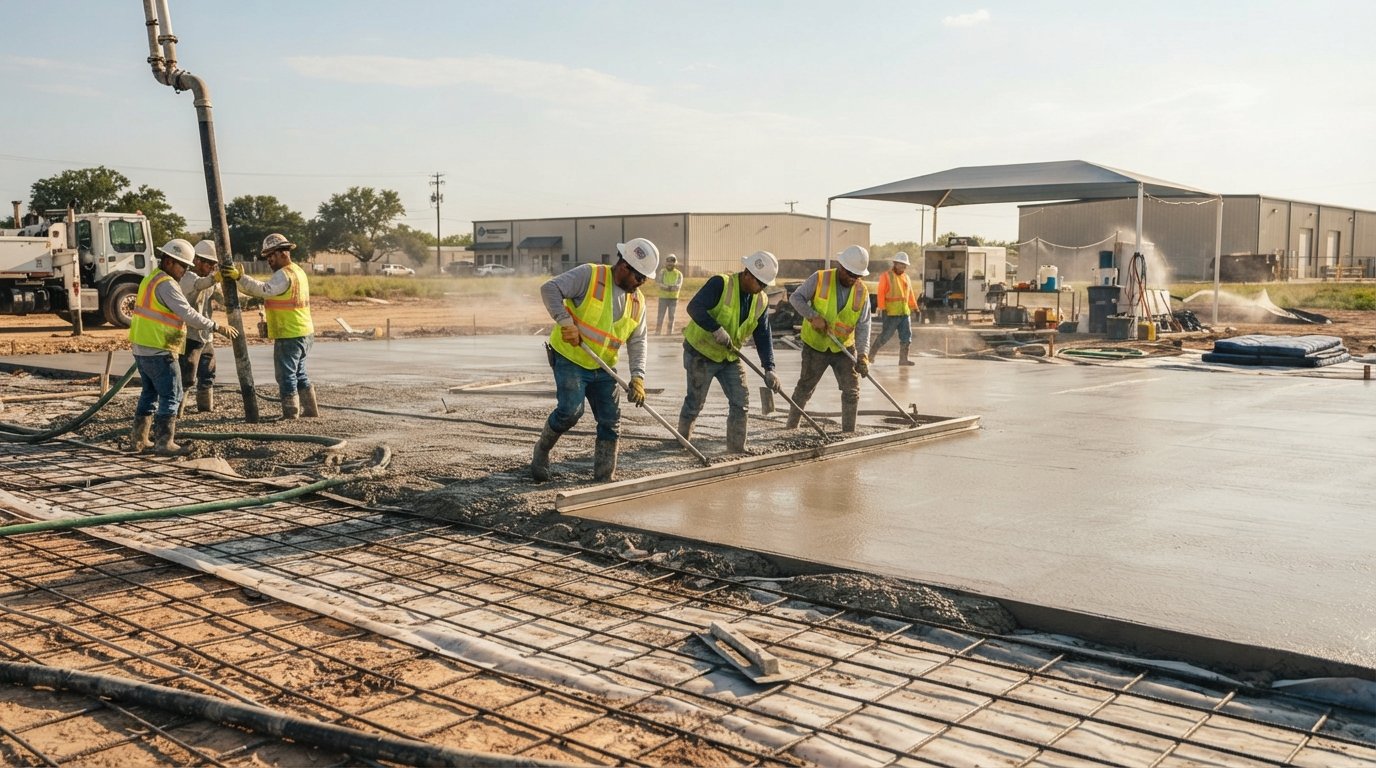
In high-temperature environments, the structural integrity of a commercial slab is often decided within the first 120 minutes of the pour. When ambient temperatures rise, the window for successful execution narrows significantly, leaving no room for error in moisture management or thermal control. Professional contractors recognize that preventing concrete cracks in hot weather is not merely about aesthetic preference; it's a fundamental requirement for structural viability and regulatory compliance.
You likely understand the frustration of managing unplanned costs and project delays that stem from failed inspections or surface defects. We share your commitment to high standards and the belief that a foundation should endure for decades without compromise. By mastering the technical protocols and site-prep strategies detailed here, you'll gain the expertise to ensure a high-strength finish that aligns with ACI standards for hot weather. This guide explores the precise evaporation control measures, specialized mix adjustments, and site-specific protocols that define professional-grade execution in extreme conditions.
Key Takeaways
- Identify the critical ACI 305R temperature thresholds that define hot weather conditions and accelerate the hydration process.
- Learn the technical necessity of pre-wetting subgrades and implementing thermal barriers to protect the moisture content of the mix.
- Discover how set-retarding admixtures and supplementary cementitious materials like fly ash extend workability and manage hydration heat.
- Master the specific finishing and wet-curing protocols that are essential for preventing concrete cracks in hot weather.
- Ensure long-term structural integrity and compliance with commercial standards by prioritizing professional site-prep over standard shortcuts.
The Impact of High Temperatures on Concrete Integrity
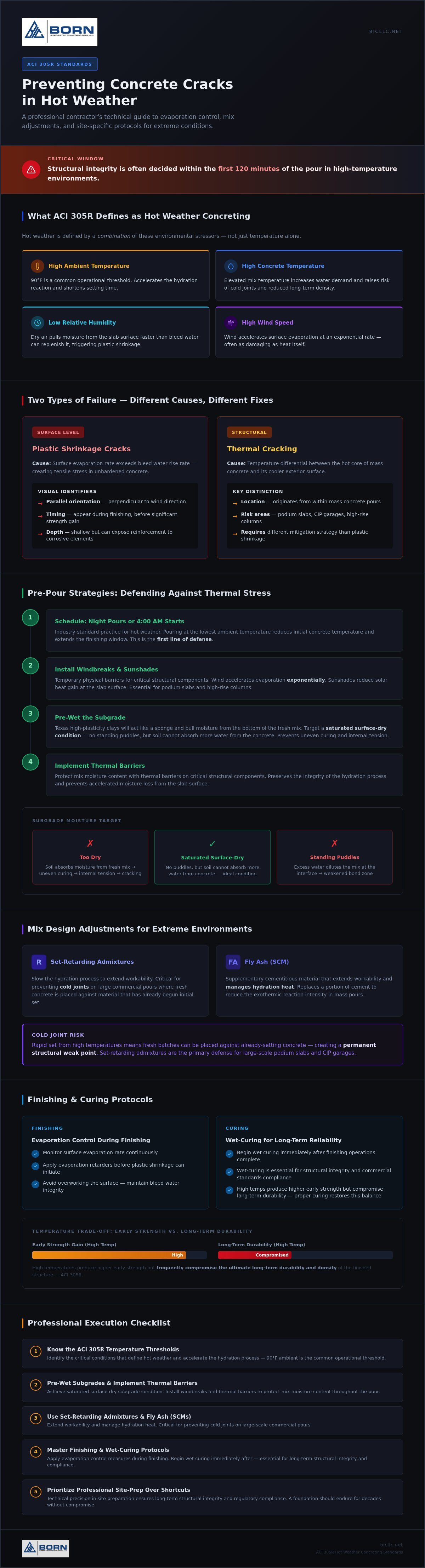
Professional concrete placement is governed by strict environmental parameters, particularly when ambient temperatures rise. According to ACI 305R standards, hot weather concreting is defined by a combination of high ambient temperature, high concrete temperature, low relative humidity, and high wind speed. While 90°F is a common operational threshold, the cumulative effect of these variables often dictates the risk to the slab. Professional execution requires a deep understanding of these environmental stressors to ensure success in preventing concrete cracks in hot weather.
The Science of Rapid Hydration
Heat serves as a catalyst for the chemical reaction between cement and water, known as hydration. This acceleration significantly shortens the setting time and increases the initial water demand of the mix. In high-stakes commercial environments, such as large-scale podium slabs or CIP garages, this rapid set increases the risk of cold joints. These occur when a fresh batch of concrete is placed against a layer that's already begun its initial set, creating a permanent structural weak point. While high temperatures may produce higher early strength, they frequently compromise the ultimate long-term durability and density of the finished structure.
Identifying Plastic Shrinkage Cracks
Plastic shrinkage occurs when the rate of surface evaporation exceeds the rate at which bleed water rises to the top of the slab. This imbalance creates tensile stresses while the concrete is still in its "plastic" or unhardened state. These cracks are typically shallow and run parallel to one another, often appearing before the finishing process is even complete. Understanding these concrete degradation mechanisms is vital for any team focused on preventing concrete cracks in hot weather. Identifying the visual cues early is essential for maintaining professional standards:
- Parallel Orientation: Cracks usually appear perpendicular to the direction of the wind.
- Timing: They manifest during the finishing stages, often before the concrete has gained any significant strength.
- Depth: While often shallow, they can penetrate deep enough to expose reinforcement to corrosive elements.
It's vital to distinguish these surface-level issues from structural thermal cracking. Thermal cracking results from the temperature differential between the hot core of a mass concrete pour and its cooler exterior. Both types of failure threaten the longevity of commercial paving and structural elements, but they require different mitigation strategies. By prioritizing technical precision over standard shortcuts, contractors can maintain the steadfast reliability required for commercial infrastructure.
Pre-Pour Strategies: Preparing the Site for Thermal Stress
Success in commercial concrete placement isn't achieved at the moment of the pour; it's secured through rigorous site preparation. In extreme environments, the environment is actively working against the stability of the mix. Preparation isn't just a checklist; it's a defensive strategy against the environmental variables that compromise structural integrity. Scheduling is the first line of defense. Night pours or 4:00 AM starts are industry standards for preventing concrete cracks in hot weather. By pouring when the ambient temperature is at its lowest, you reduce the initial temperature of the concrete and extend the window for finishing operations.
Beyond timing, physical barriers play a critical role. Wind speed is often as damaging as heat, as it accelerates surface evaporation at an exponential rate. Implementing temporary windbreaks and sunshades for critical structural components, such as podium slabs or high-rise columns, preserves the moisture needed for hydration. These measures represent a steadfast commitment to quality that separates professional-grade infrastructure from standard builds.
Subgrade Saturation and Paving Stabilization
Texas soil presents unique challenges that require technical precision. High-plasticity clays can be incredibly thirsty. If the subgrade is dry, it'll act like a sponge, pulling essential moisture out of the bottom of the fresh mix. This leads to uneven curing and internal tension. Proper paving stabilization requires a subgrade that's thoroughly dampened before placement begins. The goal is a saturated surface-dry condition. There shouldn't be standing puddles, but the soil shouldn't be capable of absorbing more water from the concrete. This moisture retention is a pillar of hot weather concreting best practices, ensuring the mix stays workable from the bottom up.
Logistical Precision for Commercial Slabs
On high-stakes commercial sites, logistics must be airtight. A concrete truck sitting in the sun for even twenty minutes is a structural liability. The drum's rotation adds heat through friction, and the chemical reaction is already accelerating. We prioritize zero-wait logistics to maintain a continuous placement rate. This involves calculating exact travel times and managing truck queuing to avoid over-mixing in the drum. It's also vital to ensure sufficient manpower is on-site for rapid finishing. If you're managing a complex commercial foundation project, these logistical details often determine the long-term viability of the slab. Preventing concrete cracks in hot weather requires a team that values substance and operational precision over speed alone.
Mix Design Adjustments for Extreme Environments
While site preparation establishes a defensive perimeter, the chemical composition of the concrete itself determines its resilience against thermal stress. Technical proficiency in mix design is the most reliable method for preventing concrete cracks in hot weather. Standard mixes often lack the necessary induction period when temperatures climb, leading to flash sets and structural vulnerabilities. By incorporating supplementary cementitious materials like fly ash or slag, we can significantly reduce the heat of hydration. These materials replace a portion of the Portland cement, creating a denser matrix that generates less internal thermal energy during the curing process.
For large-scale commercial paving or structural podium slabs, lowering the initial temperature of the mix is a steadfast requirement. This is frequently managed through the use of chilled water or liquid nitrogen at the batch plant. Starting with a cooler mix provides a vital buffer against the ambient heat of a Texas afternoon, ensuring the concrete reaches the site at a temperature that supports long-term viability rather than immediate failure.
Chemical Admixtures and Retarders
Set-retarding admixtures are essential tools for maintaining operational precision during extreme heat. These chemicals temporarily inhibit the hydration of cement, extending the workability window for finishing crews. It's not a one-size-fits-all solution; the dosage must be carefully calibrated based on real-time ambient temperature forecasts. We also utilize high-range water-reducing admixtures, often called superplasticizers. These allow us to maintain a high slump for easy placement without the structural risks associated with excessive water content.
Managing the Water-Cement Ratio
One of the most significant risks on a hot job site is the temptation of "tempering" or adding water to the drum on-site to restore workability. This practice is a high-risk shortcut that compromises the structural integrity of the slab. Adding water dilutes the cement paste, increases permeability, and often leads to surface scaling caused by excess bleed water. Maintaining a disciplined approach to the water-cement ratio is a core value in professional concrete construction. The ideal water-cement ratio for commercial durability typically ranges between 0.40 and 0.45 to ensure maximum compressive strength and resistance to environmental degradation.
Placement and Finishing Protocols to Minimize Tension
Execution on the job site is where the technical stability of a mix design meets the reality of environmental stress. To succeed in preventing concrete cracks in hot weather, placement must be rapid and finishing must be disciplined. Direct exposure to sunlight and high winds quickly depletes the surface moisture needed to prevent plastic shrinkage. Professional crews utilize fogging nozzles to maintain high relative humidity above the slab. This creates a micro-environment that protects the surface from the drying effects of the Texas sun, providing a vital buffer during the most vulnerable stages of the pour before the concrete has gained sufficient tensile strength.
Accelerating Placement and Consolidation
For complex structural CIP solutions, uniform density is achieved through rapid, continuous placement. Delays in the delivery or spreading of concrete create internal temperature gradients that lead to tension. While consolidation is necessary, crews must avoid over-vibration. Excessive vibration draws fines and water to the surface, which increases the risk of scaling and dusting in high-heat conditions. A steadfast focus on methodical, efficient movement ensures the slab remains structurally sound from the base to the surface.
Surface Evaporation Retarders
Immediately after screeding, applying evaporation retarders is a critical protocol. These monomolecular films form a protective barrier that significantly reduces moisture loss without affecting the final finish or bond of the concrete. It's vital to distinguish these from curing compounds. Evaporation retarders are used while the concrete is still plastic, specifically between floating and final troweling operations. This temporary shield is essential for preventing concrete cracks in hot weather when wind speeds or low humidity levels threaten to pull moisture from the slab faster than it can be replaced by bleed water.
The timing of joint cutting is the final critical step in managing early-age tension. Early-age shrinkage occurs with increased velocity in extreme heat, and delayed sawing often results in random cracking that bypasses intended control joints. In commercial paving and slab-on-grade work, we prioritize early entry sawing to provide the necessary relief for internal stresses. This methodical approach to jointing ensures that the inevitable contraction of the concrete is controlled and managed. This level of operational precision results in a durable, high-strength finish that meets the most demanding commercial specifications. If you require a partner who prioritizes these technical details for your next project, view our commercial concrete capabilities.
Curing Best Practices for Long-Term Reliability
Curing represents the final, non-negotiable phase in preventing concrete cracks in hot weather. While site preparation and mix design establish a foundation for success, curing ensures the chemical hydration process reaches its full potential. Without disciplined moisture retention, even a technically perfect mix will succumb to late-stage shrinkage and compromised surface hardness. In high-temperature environments, the window for effective curing opens the moment finishing is complete. Delaying this process by even an hour can lead to irreversible moisture loss and structural vulnerability. Precision in curing is vital.
Advanced Curing Compounds
Liquid membrane-forming compounds provide a reliable barrier for large-scale commercial paving and CIP garages. In regions with high solar intensity, white-pigmented curing compounds are the professional choice for thermal management. These resins are specifically engineered to reflect UV radiation, keeping the slab's surface temperature significantly lower than clear alternatives. This reflection reduces the temperature differential between the core and the surface, which is a primary driver of thermal cracking. For maximum effectiveness, these compounds must be applied at a consistent rate to ensure an unbroken film that locks in hydration moisture for the duration of the strength-gain period.
The Importance of Wet Curing
Wet curing remains the gold standard for high-strength structural elements like podium slabs and CIP midrise buildings. This method involves maintaining a state of continuous saturation using wet burlap, ponding, or specialized curing blankets. By providing an external source of water, the hydration process continues uninterrupted, resulting in a denser and more durable concrete matrix. Managing the logistics of a continuous water supply on a large infrastructure site requires meticulous organization, but it's a necessary step for ensuring long-term structural integrity. Preventing concrete cracks in hot weather is only possible when curing is treated with the same technical rigor as the pour itself.
To ensure a successful, crack-free commercial project, the following protocols should be strictly observed:
- Initiate curing immediately after the final finishing pass is completed.
- Maintain continuous moisture for the full duration specified by the structural engineer.
- Ensure all edges and vertical surfaces are protected as thoroughly as the horizontal slab.
- Monitor the curing environment for breaches in the membrane or dry spots in the burlap.
By prioritizing these steadfast practices, contractors can deliver a finished product that stands as a testament to professional craftsmanship and operational precision. It's the commitment to these final details that defines a truly durable foundation.
Securing Structural Integrity in Extreme Thermal Conditions
Maintaining the durability of commercial concrete during high-temperature fluctuations requires more than just standard effort; it demands a disciplined adherence to technical protocols. From the initial pre-wetting of the subgrade to the precise application of white-pigmented curing membranes, every step is a safeguard against environmental degradation. We've explored how preventing concrete cracks in hot weather is a multi-phase process involving sophisticated mix adjustments, rapid site logistics, and rigorous moisture management. These strategies ensure that your infrastructure projects achieve the high-strength finish and long-term viability required for commercial success.
At Born Integrated Construction, we prioritize safety and technical precision in every infrastructure and residential development we undertake. We specialize in commercial concrete paving and complex CIP structures, offering the attentive service needed to navigate the challenges of the Texas climate. Our commitment to long-term structural integrity means we never compromise on the standards that define professional craftsmanship. Partner with Born Integrated Construction for your next structural project to ensure a foundation that remains steadfast for decades. We look forward to delivering the reliable results your project deserves.
Frequently Asked Questions
What temperature is too hot to pour concrete for commercial projects?
Ambient temperatures above 90°F are generally considered the threshold for hot weather concreting according to ACI 305R standards. However, the risk isn't determined by heat alone. High wind speeds and low humidity also accelerate moisture loss. In Texas cities like Houston and Austin, we successfully manage pours at high temperatures by cooling the mix with chilled water or nitrogen. This technical precision ensures the concrete reaches its intended strength without premature setting or structural failure.
How can I slow down the drying time of concrete in the sun?
Slowing the drying time requires a combination of chemical and physical barriers. Set-retarding admixtures are essential for extending the workability window during the intense Texas sun. Additionally, using fogging nozzles above the slab maintains high relative humidity. These methods are critical for preventing concrete cracks in hot weather by ensuring the surface doesn't dry faster than the bleed water can rise. Strategic use of sunshades also helps protect critical structural components during placement.
Does wetting the subgrade really prevent concrete cracks?
Pre-wetting the subgrade is a mandatory step for maintaining the moisture balance of the mix. Dry Texas soil, particularly high-plasticity clay, will aggressively absorb water from the fresh concrete if not properly saturated. This leads to uneven curing and bottom-up cracking. For effective paving stabilization, the base should be damp but free of standing water. This practice prevents the subgrade from thirsting for the mix's hydration water, ensuring a uniform and durable cure.
Why is my new concrete slab cracking despite using a high-strength mix?
High-strength mixes often contain more cement, which generates significant internal heat during the hydration process. If the exterior of the slab cools much faster than the core, the resulting temperature differential creates internal tension. This often manifests as structural thermal cracking. Even the strongest mix will fail if the rate of surface evaporation isn't controlled. Professional execution focuses on managing these thermal gradients through precise curing and cooling strategies to protect the long-term viability of the slab.
What are evaporation retarders and when should they be used?
Evaporation retarders are monomolecular films sprayed onto the surface of plastic concrete immediately after screeding. They shouldn't be confused with curing compounds. These chemicals form a temporary protective layer that reduces moisture loss while the concrete is still workable. They are specifically used between the initial floating and final troweling stages. This protocol is vital when wind or heat threatens to cause plastic shrinkage cracks before the finishing process can be completed.
Is it better to pour concrete at night during a Texas summer?
Scheduling pours at night or in the early morning is a standard practice for commercial projects in Dallas and San Antonio. Lower ambient temperatures reduce the initial temperature of the concrete and the rate of hydration. This provides finishing crews with a more manageable workability window. It also reduces the demand for chilled water at the batch plant. By avoiding peak solar radiation, we can ensure a more stable and predictable curing process for complex CIP structures.
How long should commercial concrete be cured in hot weather?
Commercial slabs generally require a minimum curing period of seven days in hot weather to reach their specified strength. However, the duration may be extended for high-stakes structural projects like podium decks or CIP garages. Monitoring strength gain through field-cured cylinders helps determine when the concrete has achieved sufficient durability. Continuous wet curing or the use of high-reflectance white-pigmented compounds is essential during this entire period to protect the slab from late-stage shrinkage.
Can adding extra water to the concrete mix prevent it from drying too fast?
Adding extra water to the mix on-site, known as tempering, is a dangerous shortcut that compromises structural integrity. While it might temporarily restore workability, it dilutes the cement paste and increases the water-cement ratio. This leads to lower compressive strength, higher permeability, and increased risk of surface scaling. Instead of adding water, professional contractors use set-retarding admixtures or superplasticizers to maintain slump without sacrificing the long-term durability and safety of the commercial paving.