
Thin Shell Cast-in-Place Concrete for Modern Hotel and Residential Construction
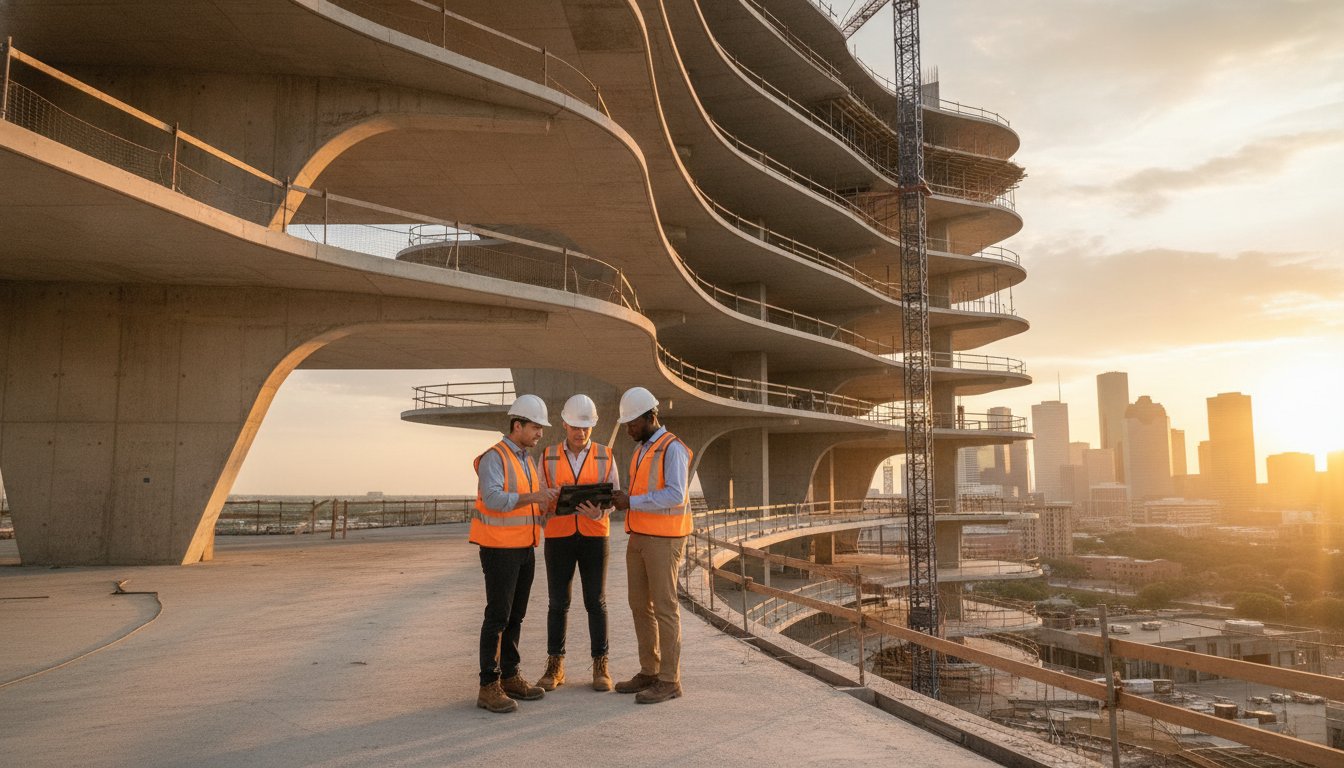
Traditional framing methods are no longer sufficient to meet the aggressive 2026 delivery timelines and stringent structural requirements of the Texas hospitality market. Developers in Houston and Austin are facing a perfect storm of rising material costs and the necessity for buildings that can withstand extreme weather events. Utilizing thin shell cast-in-place concrete for hotel construction offers a path forward that balances speed with uncompromising strength. You likely recognize that the foundation of a successful high-density project rests on its ability to endure both economic shifts and environmental pressures. It's a challenging environment that demands operational precision and technical proficiency.
This article explores how thin shell cast-in-place concrete provides unparalleled structural efficiency, durability, and design flexibility for modern hospitality and residential developments in Texas. We'll provide a clear framework for evaluating these systems against traditional slabs and outline why a steadfast local partner is essential for maintaining high standards. By the end, you'll have the technical insight needed to select a construction method that ensures the long-term viability of your next development.
Key Takeaways
- Understand the technical transition of thin shell designs from industrial applications to efficient, monolithic solutions for high-density residential and hospitality projects.
- Discover why cast-in-place concrete for hotel construction provides a superior strength-to-weight ratio and critical fire resistance for modern urban developments.
- Evaluate the structural integration of podium slabs with thin shell upper floors to achieve greater design flexibility for balconies and complex roof geometries.
- Learn how to mitigate the risks of expansive Texas soils through integrated site readiness, including professional soil stabilization and mass excavation.
- Establish a framework for selecting a reliable concrete partner based on their commitment to safety, integrity, and a proven portfolio of complex Texas developments.
Understanding Thin Shell Cast-in-Place Concrete in Hotel and Residential Design
The evolution of structural engineering has brought thin shell design from the industrial fringes to the forefront of high-density urban development. A Concrete shell is a monolithic structure characterized by its thin, geometric profile that utilizes shape rather than mass to resist external forces. In the 2026 construction market, we're seeing a significant shift. Developers are moving away from the heavy, industrial spans of the past toward thin shell efficiency for residential and hotel projects. This method allows for a reduction in material volume without sacrificing the structural integrity required for multi-story builds. By utilizing high-strength concrete mixes and specialized reinforcement, builders can achieve complex architectural forms that were previously cost-prohibitive.
Cast-in-place (CIP) concrete offers a level of on-site customization that precast alternatives simply can't match. While precast components are limited by transportation dimensions and factory molds, CIP allows for fluid, organic geometries and immediate adjustments during the pour. For developers targeting the luxury market in the Texas Triangle, this flexibility is a core requirement for unique architectural signatures. It's about establishing a permanent, high-quality result that reflects a commitment to long-term viability.
The Monolithic Advantage for Multi-Family and Hospitality Structures
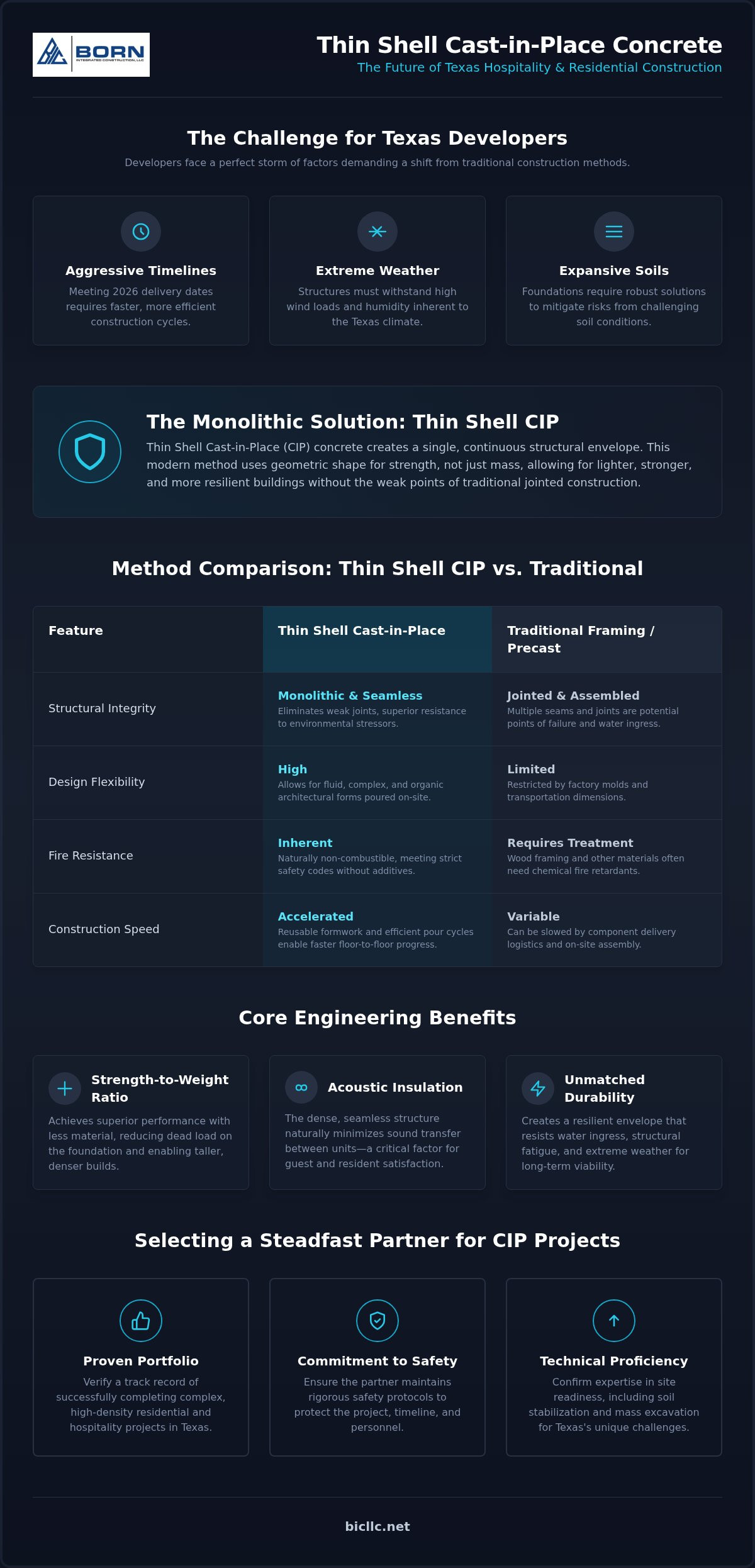
The primary benefit of utilizing cast-in-place concrete for hotel construction is the creation of a monolithic envelope. Monolithic CIP concrete is a single, continuous structural element engineered to provide a seamless foundation and frame for 2026 builds. This approach eliminates the weak joints and seams common in modular or precast assemblies. In regions like Houston and San Antonio, where environmental stressors such as high wind loads and humidity are constant factors, a seamless structure is a critical safeguard. Eliminating joints reduces the risk of water ingress and structural fatigue over time. You can see how these principles are applied in various past Texas projects that prioritize durability in high-density environments.
Thin Shell vs. Conventional Concrete Pours
Modern thin shell applications differ significantly from conventional slab-on-grade or podium pours in terms of thickness and weight. While a standard residential slab might require substantial depth to manage loads, a thin shell can often achieve the same performance with a fraction of the material. This reduction in dead load is particularly advantageous for cast-in-place concrete for hotel construction, as it lessens the pressure on the foundation and soil. Lightweight, reusable formwork technology plays a vital role here. These advanced forming systems reduce site congestion and allow for faster cycling between floors. It's a methodical approach that prioritizes operational precision and safety while maintaining a steady construction rhythm.
Engineering Benefits for High-Density Structures: Strength, Efficiency, and Longevity
High-density developments require structural systems that provide more than just a frame. They must ensure safety and comfort while maximizing the usable footprint. Cast-in-place concrete for hotel construction delivers an exceptional strength-to-weight ratio, which is vital for midrise and highrise foundations. This efficiency allows developers to build taller and denser without over-engineering the base. It creates a stable environment that supports the heavy mechanical systems and constant foot traffic common in hospitality settings.
Beyond structural capacity, monolithic concrete serves as a critical safety pillar. Its natural fire resistance is unmatched by traditional framing. It doesn't require additional chemical treatments to meet strict urban safety codes. Additionally, the density of cast-in-place concrete provides superior acoustic insulation between units. This minimizes sound transfer, a non-negotiable requirement for guest satisfaction. You won't have to worry about noise complaints from adjacent rooms when the structure itself acts as a sound barrier.
Wind and Hurricane Resistance in Coastal Texas
Coastal regions like Houston and Beaumont present unique challenges for high-rise envelopes. The aerodynamic advantages of shell geometries allow structures to deflect wind loads more effectively than flat-sided buildings. CIP structures maintain their integrity during Gulf Coast extreme weather events by acting as a single, rigid unit. Integrating structural concrete solutions into the early design phase ensures the building envelope meets the most rigorous high-performance standards. This approach instills a sense of security for both the developer and the eventual occupants.
Material Efficiency and Cost-Effectiveness
Modern 2026 designs focus on reducing the total volume of concrete per square foot. Thin shell techniques allow for material reduction without compromising load-bearing capacity. This lowers the carbon footprint of hotel developments and reduces the total dead load on the soil. When implementing cast-in-place concrete for hotel construction, a lighter structure often leads to less intensive foundation requirements. This is particularly beneficial in areas with complex soil profiles where foundation depth can drive up costs.
Commercial property managers value long-term viability and predictable operational budgets. Concrete structures require significantly fewer maintenance cycles compared to traditional framing or modular systems. This durability translates to lower insurance premiums and reduced repair costs over the decades. It's a steadfast choice for those who prioritize professional stability and high standards. Choosing a seasoned partner ensures these engineering benefits are realized through meticulous management of every detail.
Residential and Hospitality Applications: From Podium Slabs to High-Rise Envelopes
Modern hospitality design increasingly demands large, unobstructed spaces and intricate exterior profiles. Utilizing thin shell cast-in-place concrete for hotel construction allows architects to achieve these goals while maintaining structural stability. By integrating thin shell components for innovative roof structures and luxury balconies, developers can create a distinctive aesthetic that stands out in competitive markets like Austin and San Antonio. This method provides a seamless transition from the heavy-duty podium slabs at the base to the more refined upper floors. The synergy between these structural elements ensures that the entire building operates as a single, cohesive unit. It allows for a more efficient load distribution that simplifies the engineering of the midrise envelope.
Open-concept hotel lobbies often require spans that traditional framing cannot support without excessive interior columns. Cast-in-place concrete offers the design flexibility to eliminate these obstructions, creating a more inviting guest experience and more functional floor plans. In Austin’s mixed-use residential sector, this versatility is essential for combining commercial retail on the ground floor with high-density living units above. This integrated approach ensures that the structural requirements of different occupancy types are met within a single, unified pour. It's about delivering a product that meets the functional needs of the developer while providing a safe, enduring environment for the end user.
Thin Shell CIP vs. Traditional Wood Framing
When evaluating multi-family assets, construction timelines are a primary concern. While wood framing might appear faster in the short term, the long-term benefits of cast-in-place concrete for hotel construction are significant. Concrete-framed buildings often command lower insurance premiums due to their superior fire resistance and durability. The professional stability offered by a concrete structure also enhances the resale value of the asset. Investors recognize the enduring nature of concrete, making it a more secure long-term commitment. It's a matter of establishing a foundation that retains its value through decades of use.
Optimizing Floor-to-Ceiling Heights
Texas municipalities often impose strict height restrictions on new developments. Thin profile slabs allow developers to maximize the number of floors within these constraints without compromising ceiling heights. This efficiency extends to HVAC and utility routing; monolithic structures provide predictable paths for mechanical systems. For luxury residential units, these slabs also offer aesthetic opportunities for exposed concrete finishes. It is a sophisticated look that communicates quality and craftsmanship without the need for additional cladding. You'll find that this approach reduces both material waste and the need for complex interior finishes.
Executing CIP Projects in Texas: Soil Stabilization and Site Readiness
Constructing high-density structures in Texas requires a deep understanding of the local geography. The expansive clay soils found across Houston, Dallas, and San Antonio present a significant challenge for any foundation. For cast-in-place concrete for hotel construction, these soils can lead to structural movement if not properly managed. Meticulous mass soil excavation and paving stabilization are required to treat or replace reactive earth before the first pour. This process establishes a reliable base that prevents the shifting and cracking that often plagues lesser builds.
Managing the logistics of a major pour in a dense urban environment requires a high level of operational precision. Coordinating a continuous stream of ready-mix trucks through high-traffic corridors in Houston or Dallas demands disciplined scheduling. Site readiness also involves managing the specific climatic conditions of the region. Texas humidity and high temperatures can significantly impact the curing process. We utilize specialized curing compounds and strategic pouring schedules to maintain moisture levels and ensure the concrete reaches its full design strength without thermal cracking.
The Role of Foundational Soil Stabilization
Thin shell structures derive their strength from their geometry, making them sensitive to even minor foundational shifts. Soil stabilization is the unseen hero of Texas CIP projects, providing the rigid platform necessary for high-performance structural envelopes. Integrating detention ponds and site drainage into the initial structural CIP planning prevents water accumulation that could destabilize the ground. This holistic approach to site work ensures that the structural concrete remains secure throughout its multi-decade lifespan.
Navigating Local Texas Building Codes
Permitting for innovative cast-in-place concrete for hotel construction in cities like Austin and San Antonio involves strict adherence to local amendments of the International Building Code. Quality control is maintained through rigorous testing standards, including regular cylinder breaks to verify the compressive strength of residential concrete pours. Safety remains our highest priority on midrise sites, where high-traffic urban environments require robust protocols to protect both workers and the public. To ensure your project meets these exacting standards, it's essential to partner with a team that offers integrated civil and structural services to manage every detail from the ground up.
Selecting a Steadfast Partner for Texas Residential and Hotel CIP Projects
Choosing a structural partner for high-density developments is a decision that impacts the long-term viability of the entire asset. Integrity and reliability serve as the bedrock of a successful construction partnership. When managing cast-in-place concrete for hotel construction, you need a contractor who prioritizes professional stability and safety above all else. A steadfast partner doesn't just deliver a shell; they manage the meticulous details that ensure a building's longevity. Evaluating a firm's portfolio of past Texas projects provides a clear window into their ability to execute complex designs in challenging environments like Houston and Austin.
The true value of a seasoned contractor lies in their ability to offer integrated civil and structural services. Having a single entity handle everything from mass soil excavation to the final structural pour minimizes logistical friction and communication gaps between trades. This coordination is especially critical in dense urban markets where site constraints leave little room for error. It's about establishing a disciplined workflow that maintains a steady rhythm from the ground up. You'll find that a partner who values substance over style provides the most predictable and high-quality results for your investment.
The Born Integrated Commitment to Quality
Born Integrated Construction (BIC) prioritizes consistent performance across every phase of a development. We understand that multi-story sites require a specialized approach to safety and operational precision. Our team acts as a quiet leader on the job site, focusing on execution and the meticulous management of safety protocols. You can learn more about our steadfast commitment to structural excellence and how we maintain high standards in the most demanding Texas markets. We take pride in craftsmanship and the enduring nature of our professional output.
Next Steps for Your Development
The path to a successful project begins with an initial consultation to align your structural goals with the realities of the site. We work closely with architects and engineers to ensure that the chosen methods, such as cast-in-place concrete for hotel construction, are executed with total precision. Coordinating these details early in the process prevents costly delays and ensures a seamless transition from design to delivery. Contacting Born Integrated for a project-based concrete construction assessment allows you to move forward with the confidence that your structural foundation is in expert hands.
Establishing a Permanent Foundation for Texas Developments
The structural integrity of a high-density development depends on the precision of its execution and the quality of its foundation. Thin shell cast-in-place concrete for hotel construction offers a sophisticated balance of design flexibility and commercial-grade durability. It's a method that addresses the unique geotechnical challenges of the Texas Triangle while providing the fire resistance and acoustic insulation essential for modern hospitality. Success in these complex projects requires more than just technical knowledge; it demands a partner with a deep-rooted commitment to high standards and long-term viability.
Born Integrated Construction brings a grounded reputation for reliability and safety to every site in Houston and Austin. By providing integrated earthwork and structural concrete services, we ensure that every phase of your project is managed with operational precision. We act as seasoned experts who value substance over style, focusing on the enduring nature of our craftsmanship. Whether you're navigating expansive clay soils or intricate high-rise envelopes, our team is ready to deliver consistent value. Contact Born Integrated Construction for a Structural CIP Consultation to begin aligning your structural goals with our proven execution framework. We look forward to building a lasting foundation for your next project.
Frequently Asked Questions
What is the primary difference between thin shell and standard cast-in-place concrete?
The primary difference lies in the structural logic and profile thickness. Thin shell concrete utilizes geometric shape, such as curves or folds, to resist external forces rather than relying solely on mass. This allows for a significantly thinner profile compared to standard slabs. Standard cast-in-place concrete relies on its thickness for load-bearing capacity. By using geometry instead of bulk, thin shell designs reduce overall material volume while maintaining high standards of professional stability.
Is thin shell concrete more expensive than traditional hotel framing?
Upfront costs for thin shell applications can be higher due to specialized formwork and engineering requirements. However, the reduction in total material volume and faster construction cycles often mitigate these initial expenses. When evaluating cast-in-place concrete for hotel construction, developers should also consider long-term savings. Lower insurance premiums and reduced maintenance cycles provide a steady return on investment, making it a financially sound choice for high-density hospitality assets.
How does thin shell concrete perform in hurricane-prone areas like Houston?
Thin shell concrete performs exceptionally well in high-wind environments like Houston. Because the structure is poured as a single, monolithic unit, it doesn't have the weak joints found in traditional wood or steel framing. This rigidity prevents wind uplift and provides a robust barrier against wind-borne debris. It's a reassuring choice for coastal developments where structural integrity is a non-negotiable requirement for long-term viability and occupant safety.
Can thin shell CIP be used for single-family residential homes?
While thin shell CIP is most common in high-density developments, it is entirely viable for custom single-family residential homes. It is often chosen for its ability to create expressive, curved rooflines or disaster-resistant building envelopes. For residential owners who prioritize durability and fire resistance, this method offers a level of security that traditional framing cannot match. It establishes a permanent foundation that maintains its value and structural integrity for decades.
How long does the curing process take for a monolithic thin shell pour?
The curing process follows a methodical timeline to ensure maximum structural strength. Initial setting typically occurs within 24 to 48 hours, allowing for formwork removal in some cases. However, full design strength is generally reached after 28 days of hydration. In the Texas climate, we manage moisture and temperature levels with operational precision to prevent thermal cracking. This careful management ensures the monolithic structure remains free of defects during its critical early stages.
What kind of maintenance does a thin shell residential building require?
Maintenance requirements for these structures are significantly lower than those for traditional wood-framed buildings. Owners should conduct periodic inspections of sealants and expansion joints to ensure the envelope remains weather-tight. Because concrete is naturally resistant to rot, termites, and fire, it doesn't suffer from the common degradation issues of organic materials. This durability simplifies the workload for commercial property managers and ensures the asset remains a steadfast part of their portfolio.
Does Born Integrated Construction handle the site prep for these projects?
Born Integrated Construction provides comprehensive site preparation as part of our integrated service model. This includes mass soil excavation, earthwork, and paving stabilization to address the reactive clay soils common in Texas. By managing the site readiness phase, we ensure that the cast-in-place concrete for hotel construction is placed on a perfectly stable base. This seamless transition from earthwork to structural execution reduces logistical friction and maintains a high standard of safety.
Are there specific architectural styles that work best with thin shell concrete?
Modernist, organic, and contemporary architectural styles benefit most from the flexibility of thin shell designs. The material allows for the creation of large, unobstructed spans and complex geometric shapes that are difficult to achieve with other methods. Architects often use it to design expressive rooflines or cantilevered balconies in luxury residential units. It's a master's tool that allows for a focus on substance and form without the limitations of standard linear framing.